
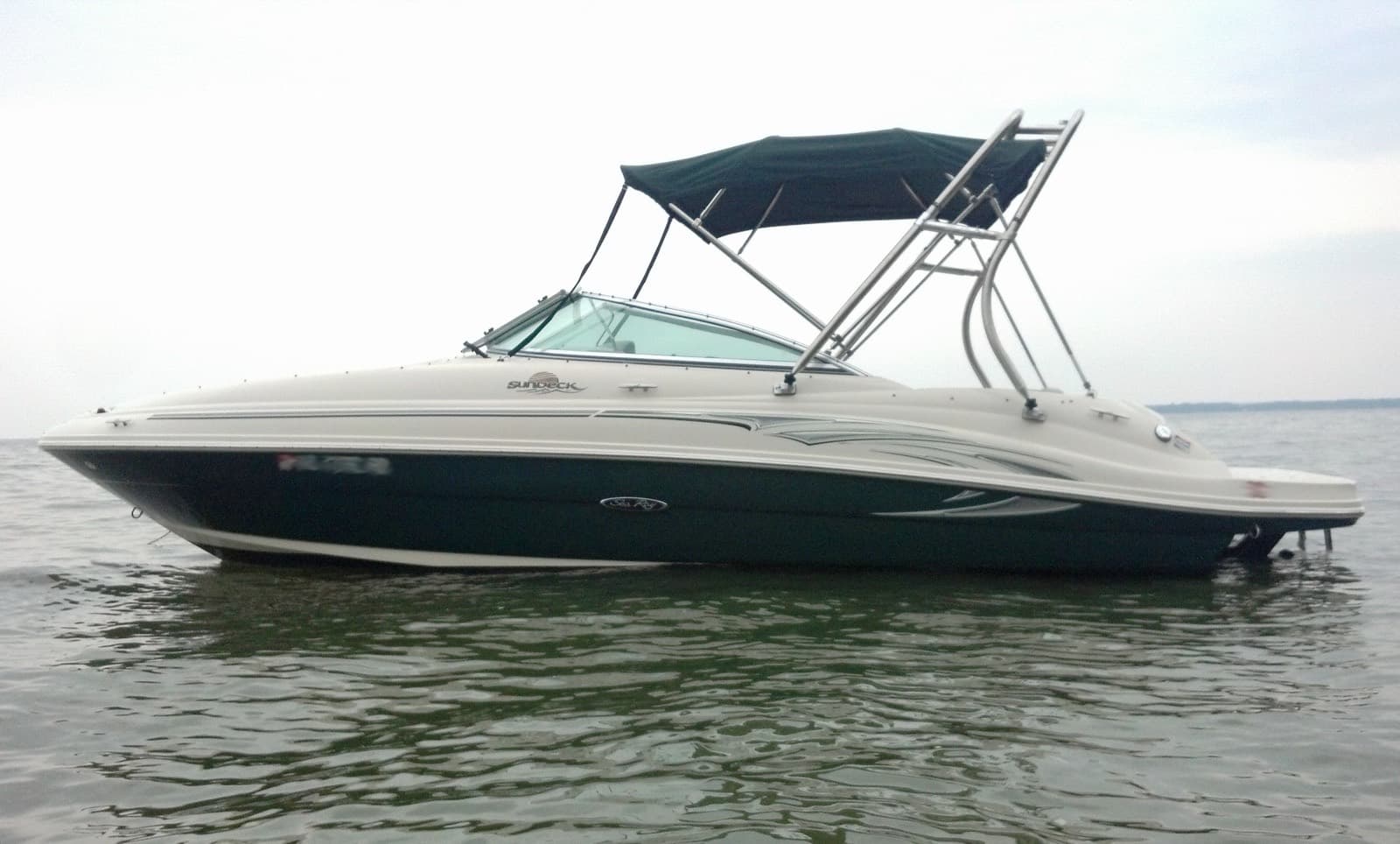
Boat Detailing Guide: Understand
Cleaning a Bimini Top, Boat Cover and Canvas
Canvas is the hardest-working fabric on a boat. A bimini top sits in full sun every time you are on the water, a mooring cover takes pollen, bird droppings, leaves and rain for weeks at a time, and both get folded, zipped and snapped more often than anyone counts. Cleaned and stored well, quality marine canvas lasts for years. Neglected, it mildews, leaks and fades well before its time.
This guide follows the care instructions published by Glen Raven for Sunbrella marine fabrics and by boat builders for the canvas they install, with the reasons behind each step.
The short answer
Rinse canvas with fresh water about once a month, and when it needs a real cleaning, brush off loose dirt, scrub gently with mild soap and a soft brush, let the solution soak in, rinse until no soap remains and air dry. For mildew, Sunbrella allows 1 cup of bleach and 1/4 cup of mild soap per gallon, with cautions. Never pressure wash or machine dry it, and retreat for water repellency after repeated cleanings.
Key points
- Sunbrella recommends hosing canvas off monthly and a thorough cleaning about every two to three years in most environments.
- Mildew grows on dirt left in the fabric, not on the acrylic fibers, so regular cleaning is the real mildew control.
- Bleach mixes are allowed on solution-dyed acrylic but can weaken thread, discolor other fabrics and harm the lake; use them on land, sparingly.
- Cleaning gradually removes the water-repellent finish; retreat once the fabric is clean and completely dry.
- Air dry only, never machine dry or steam press, and never fold clear vinyl windows.
Know your fabric
What Your Canvas Is Made Of
- Solution-dyed acrylicMost biminis and enclosures
- Woven acrylic with color through the fiber and a water-repellent finish on top. Sunbrella is the best-known example. Breathable, fade resistant and tolerant of the bleach mixes its maker publishes.
- Coated acrylic and polyesterCovers needing more waterproofing
- Fabrics with a coating on the back for extra water resistance. Sunbrella cautions that the coated back of its Plus, Supreme and Clarity fabrics should only be sprayed with its bleach solution and rinsed, not scrubbed or blotted.
- Vinyl-coated polyesterHeavy covers and some tops
- Polyester fabric with a vinyl coating. Grady-White describes its own canvas as vinyl and warns that petroleum-based or ammonia cleaners will yellow it.
- Clear vinyl windowsEnclosure and dodger panels
- Soft clear vinyl scratches easily and has its own care rules. Clear vinyl care
Routine
The Monthly Rinse Most Owners Skip
Sunbrella's single most useful instruction is the simplest: hose fabrics off with clean water about once a month. A regular rinse keeps dirt from becoming deeply embedded in the weave and reduces how often you need a vigorous cleaning. In most environments, Sunbrella says, a thorough cleaning is needed only every two to three years.
In the Upstate, the calendar suggests extra rinses. Spring pine pollen coats every horizontal surface, summer thunderstorms wash leaves and debris onto covers, and a cover that sits under trees collects sap and droppings. Rinse after each of those, before the deposits bake in.
Thorough cleaning
Cleaning a Bimini or Cover, Step by Step
Decide: on the boat or off
Sunbrella says canvas can be cleaned on the boat or, size permitting, removed and cleaned on the dock. Grady-White recommends removing canvas from the frame for heavily soiled fabric. Off the frame lets you reach both sides and keeps cleaner off the seats and gelcoat.
Brush off loose dirt and hose it down
Use a soft brush to knock off dry dirt, leaves and pollen, then wet the fabric thoroughly with a gentle hose stream.
Wash with mild soap and a soft brush
Mix water with a mild soap and scrub gently with a soft-bristle brush. Sunbrella's guidance uses mild soap; Grady-White suggests warm water. Avoid detergents with ammonia or petroleum solvents.
Let the solution soak in
Give the soapy water a few minutes in the fabric. Soaking lifts dirt out of the weave so you do not need to scrub hard, which wears the finish.
Rinse until every trace of soap is gone
Rinse thoroughly. Soap left in canvas attracts dirt, feeds mildew and can interfere with the water-repellent finish.
Air dry completely
Sunbrella says its fabric should only be allowed to air dry. Grady-White warns not to steam press or put canvas in an electric or gas dryer, which damages the fabric. Let it dry fully before folding, rolling or covering anything.
Mildew
Removing Mildew and Stubborn Stains Safely
Sunbrella states that its fabrics do not promote mildew growth, but mildew grows on dirt and other substances left in the fabric. That is why the black spots appear on the seams, the folds and the low spots where water and debris collect.
For mildew and stubborn spills, Sunbrella's marine canvas guide gives a solution of 1 cup of bleach and 1/4 cup of mild soap per gallon of clean water, allowed to soak in for up to 15 minutes, then rinsed until all residue is gone and air dried. Grady-White's manual gives a similar soak for its canvas, at 1/2 cup of bleach and 1/4 cup of mild soap per gallon of warm water, brushed with a kitchen brush and rinsed in cold water.
The cautions matter as much as the recipe. Sunbrella warns that bleach and fabric age can deteriorate sewing thread and other non-Sunbrella parts, that bleach can discolor other fabrics nearby, and that it does not advise using bleach where runoff can reach a lake or other sensitive environment. Mix only what you need, clean on land away from the shoreline and storm drains, protect seats and carpet, and rinse thoroughly.
Never mix bleach with ammonia or ammonia-based cleaners; the EPA warns the combination produces toxic fumes.
Oily stains
Sap, Sunscreen and Other Oily Spills
For oil-based spills, Sunbrella's marine tops guide says to apply an absorbent such as cornstarch right away, let it sit about 10 minutes, scrape off the excess with a straight edge, and then clean normally. For stubborn oily stains and roof runoff, it allows a strong degreaser or an oil-based stain remover, followed by thorough rinsing. Test any degreaser on a hidden area first, and rinse well, because degreasers also strip water repellency.
Water repellency
Restoring the Water-Repellent Finish
New marine canvas leaves the mill with a water-repellent finish. Grady-White notes that some of that repellent diminishes after extended cleaning, and Sunbrella says that after repeated thorough cleanings or years of exposure, you may choose to refresh the fabric with a retreatment product.
The order matters. Clean the canvas, let it dry completely, then apply the retreatment outdoors in a well-ventilated area following the container's directions. Grady-White specifies a water-based repellent and warns against wax-based products. A simple test tells you when it is time: sprinkle water on clean, dry canvas. If it beads and rolls off, the finish is working; if it darkens and soaks in, retreat.
Avoid
Mistakes That Shorten Canvas Life
- Pressure washing. None of the fabric maker or builder instructions cited here call for it; they specify a soft brush, gentle scrubbing and a hose.
- Machine drying or steam pressing, which Grady-White and Sunbrella both rule out.
- Petroleum-based and ammonia cleaners, which Grady-White says yellow canvas and clear vinyl.
- Storing canvas damp. Grady-White's instruction is to dry all canvas before storing to prevent mildew.
- Folding clear vinyl panels. Grady-White says to roll them; folding cracks them.
- Trailering with the bimini up or loose canvas flapping; Grady-White says to store and secure canvas before trailering.
- Scrubbing hard with stiff brushes, which wears the finish faster than the dirt does.
Covers
Boat Covers, Storage and the Hardware
A cover is only as good as the air under it. A cover pulled over a wet boat traps moisture against the seats and carpet, which is how mildew starts in a humid South Carolina summer. Support poles or vents that let the cover shed water and let humid air escape keep both the cover and the boat underneath healthier.
Snaps and zippers fail before the fabric does. Grady-White recommends lubricating snaps and zippers with a product made for marine canvas hardware every few months, and using a snap tool to release snaps so the fabric around them does not tear. Leaking seams can be treated with a seam sealer; Grady-White notes needle holes in canvas can stretch and leak over time.
Torn panels, failed stitching, worn-through chafe points and new canvas are jobs for a canvas shop, a separate trade from cleaning.
Getting the Boat Ready for the Season?
The Auto Show details boats inside and out. Ask in your quote request whether your canvas can be included, tell us what you have and its condition, and we confirm the scope in our reply.
Common questions
Can I put my bimini top in the washing machine?
Glen Raven's marine canvas instructions describe cleaning by hand, on the boat or on the dock, and builders like Grady-White describe soaking and brushing. Biminis have frame pockets, webbing and hardware that a washer can damage. Sunbrella allows machine washing for some removable upholstery covers, not tops. Hand wash, rinse and air dry.
How often should I clean my boat cover?
Rinse it about monthly with fresh water, plus after pollen season, storms or a stretch under trees. Sunbrella says a thorough soap cleaning is typically needed every two to three years in most environments. A cover kept clean between deep cleanings stays more water repellent and resists mildew far better.
Is bleach safe on Sunbrella canvas?
Sunbrella publishes a bleach and mild soap mix for mildew and stubborn spills on its acrylic fabrics, with cautions: bleach can weaken thread and other components, discolor non-Sunbrella fabrics, and harm nearby water. Be careful on coated backs. Use it sparingly, on land, and rinse thoroughly. Other canvas types may not tolerate bleach; check the maker.
Why is my bimini leaking even though the fabric looks fine?
Usually the water-repellent finish has worn off after cleanings and sun, or needle holes in the seams have stretched. Clean the top, let it dry, and do the water bead test. Retreat if water soaks in. If drips come through seams, a seam sealer helps, and badly worn stitching needs a canvas shop.
Sources
- Clean Sunbrella Marine Canvas, Glen Raven / Sunbrella (https://global.sunbrella.com/en-us/how-to-clean/clean-sunbrella-marine-canvas), accessed October 2026
- Sunbrella Marine Tops and Covers Care and Cleaning (REV 06-2023), Glen Raven, hosted by Trivantage (https://www.trivantage.com/itemfiles/pdfs/cleaning/Sunbrella_Marine_Tops_Cleaning.pdf), accessed October 2026
- Clean Sunbrella Marine Upholstery, Glen Raven / Sunbrella (https://global.sunbrella.com/en-us/how-to-clean/clean-sunbrella-marine-upholstery), accessed October 2026
- Owner's Manual, Model 300 (2006), Maintenance and Service, Grady-White Boats (https://marketingmaterials.gradywhite.com/electronic-media/owners-manuals/?wpdf_download_file=L3Zhci93d3cvdmhvc3RzL2dyYWR5d2hpdGUuY29tL21hcmtldGluZ21hdGVyaWFscy93cC1jb250ZW50L3VwbG9hZHMvZG9jdW1lbnRzL21hbnVhbHMvMjAwMHMvMjAwNi8yMDA2LTMwMC5wZGY%3D), accessed October 2026
- A Brief Guide to Mold, Moisture and Your Home, US Environmental Protection Agency (https://www.epa.gov/mold/brief-guide-mold-moisture-and-your-home), accessed October 2026
- How to Clean a Boat: Boat Cleaning Basics, Discover Boating / National Marine Manufacturers Association (https://www.discoverboating.com/resources/boat-cleaning), accessed October 2026
- South Carolina State Climate Summary 2022, NOAA NCEI and North Carolina Institute for Climate Studies (https://statesummaries.ncics.org/report_section/sc/1/), accessed October 2026
Boat detailing is quoted per boat, so this guide does not list boat prices. Product directions and warranty terms come from the manufacturer: follow your boat builder’s care instructions where they differ from general advice here.