Auto Detailing Guide: Compare
Detail Add-Ons: Engine Bay, Headlights, Extraction, Leather and Odor
A detail package covers the work most cars need. Add-ons cover the problems some cars have: a coffee stain in the passenger seat, a dog's worth of hair in the back, headlights gone yellow, a smell that will not leave. Booking them is easy. Knowing which ones are worth paying for is the harder part.
This page takes each add-on on The Auto Show's price list in turn: what it is for, when it is the right answer, what it cannot do, and what to ask before you add it.
The short answer
Add-ons are extra jobs booked on top of a detail package for problems the package does not cover. Choose them by problem: extraction for stains and spills in fabric, leather cleaning and conditioning for grimy leather, an odor treatment for a smell that outlasts cleaning, pet hair removal for hair woven into carpet, headlight restoration for hazy lenses, an engine bay detail for a grimy engine compartment, and glass coatings for rain repellency.
Key points
- Each add-on fixes one problem. Add the ones your car has, not the whole list.
- Most add-ons are priced "starting at", because the work depends on the vehicle and how bad the problem is.
- Ozone treats odor only, in an empty vehicle that is aired out afterwards; it is not a cure for mold or germs.
- Some stains lighten rather than disappear, and badly clouded headlights may be better replaced than restored.
- Ask what is covered for the engine bay and the coating upgrade before you add them; details vary by vehicle.
Next: decide: Interior car detailing: what it covers and what costs extra. Most add-ons are interior work. See what the standard interior clean already covers before you add anything.
How they work
How add-ons are priced and booked
Add-ons are booked on top of one of the three detail packages: Essentials Detail, Paint Decontamination or Paint Enhancement. Here is the shop's current list. Most are priced "starting at" because the job grows with the size of the vehicle and the severity of the problem; pet hair removal is an additional charge set by how much hair there is.
The simplest way to book them is to list what you want in the message box when you request a booking, along with a word about the problem: "coffee stain on the passenger seat", "two dogs, cloth back seat". The vehicle is looked over with you at drop-off and the price, add-ons included, is confirmed before any work starts.
- Engine Bay Detail
- Starting at $75
- Headlight Restoration
- Starting at $99
- Leather Cleaning & Conditioning
- Starting at $49
- Ozone Odor Treatment
- Starting at $75
- Carpet & Upholstery Extraction
- Starting at $100
- Windshield Ceramic Coating
- $100
- Exterior Glass Coating
- Starting at $150
- Ceramic Coating Upgrade
- $599
- Pet Hair Removal
- Additional charge
Additional charges may vary based on vehicle size, condition, and severity.
Inside
Interior add-ons: stains, leather and pet hair
Every package already includes a full interior vacuum and a hand clean of the hard surfaces and glass. These add-ons are for what goes deeper than that.
- Carpet & Upholstery ExtractionFor stains and spills in fabric
- Cleaning solution is worked into carpet or cloth seats and pulled back out with suction, taking dirt and residue with it. Right for food and drink spills, muddy carpets, kids' seats and fabric that smells sour. It is not a repair: old stains and anything that has dyed the fibers, such as ink or a bleach mark, may lighten without disappearing, so point out the ones that matter and ask what to expect.
- Leather Cleaning & ConditioningFor grimy or dry leather
- Body oils, sunscreen and dirt work into the grain and leave leather shiny and dark, most of all on the driver's seat bolster and the steering wheel. Cleaning lifts that out, and conditioning follows. It will not repair leather that has already cracked, split or worn through to the backing; that is upholstery work. Leather care vs leather coatings
- Pet Hair RemovalAdditional charge
- Hair that weaves into carpet and cloth does not come out with a normal vacuum and has to be worked out of the fabric section by section. The charge depends on how much there is and where. If you have pets, this is often the add-on that matters most, so mention it when you book.
What the standard interior clean covers, and what an interior detail cannot fix: interior car detailing.
Odor
Ozone Odor Treatment: what it is for and what it is not
The Ozone Odor Treatment is for a smell that is still there after the interior has been cleaned and the source removed. It is done with nobody in the vehicle, and the cabin is aired out afterwards. The reason is safety: the US Environmental Protection Agency says that when inhaled, ozone can damage the lungs, and that high concentrations are only used in unoccupied spaces, with conditions controlled so no person or pet is exposed.
The EPA is also frank about the limits. At levels within public health standards, ozone is not effective at removing many odor-causing chemicals, and it does not effectively remove viruses, bacteria, mold or other biological pollutants. So think of this add-on as an odor treatment and nothing more. If the smell comes from water getting into the cabin, the leak and the wet materials have to be dealt with first.
Ask when you book how long the vehicle stays closed during treatment and how long it is aired out, so you can plan pickup.
Outside
Exterior add-ons: engine bay, headlights and glass
- Engine Bay DetailFor a grimy engine compartment
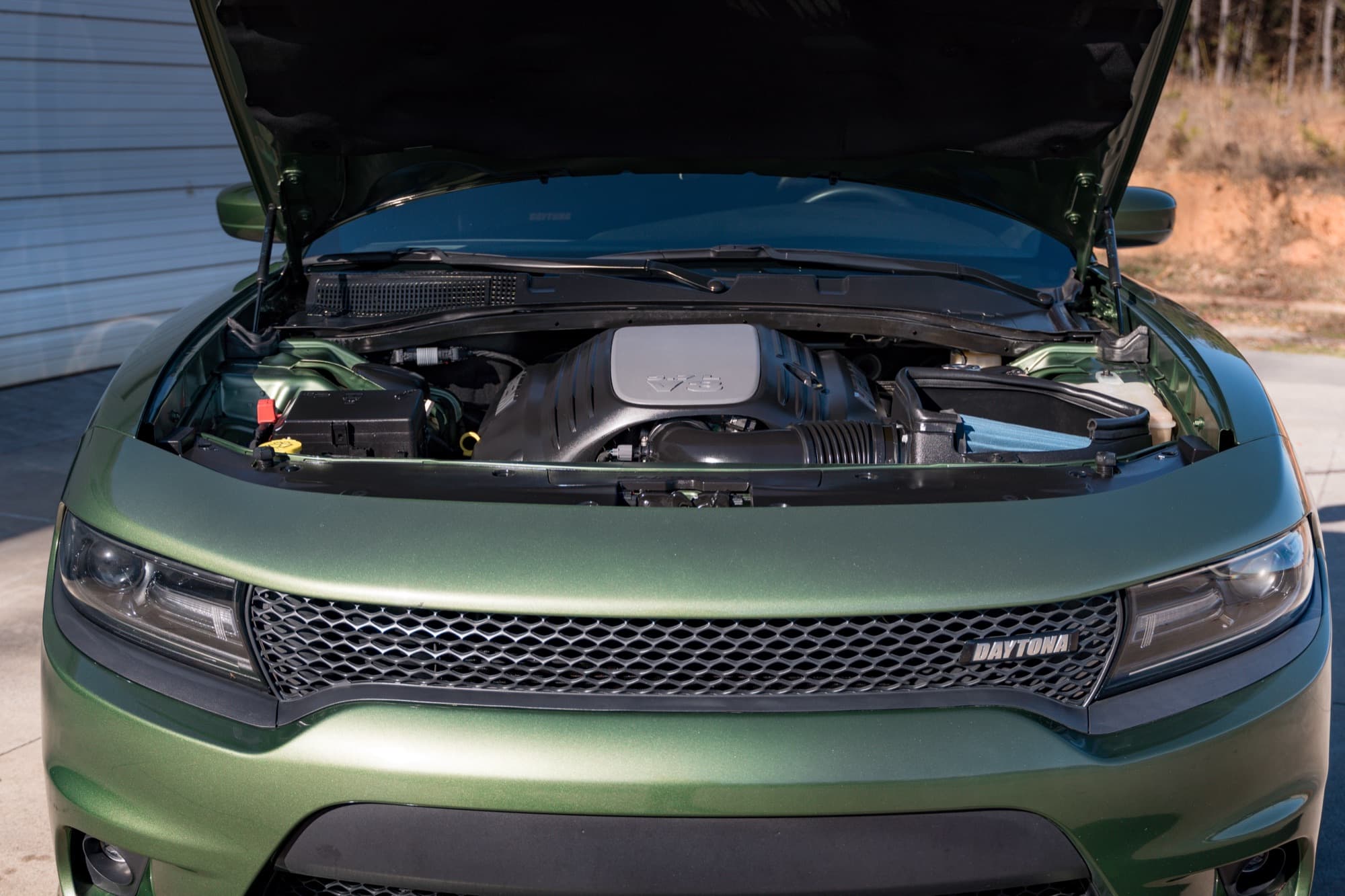
- A cleaning of the engine compartment, where dust, leaves and road grime collect on the covers, hoses and painted surfaces. Owners usually add it before selling a car, after buying one, or because they open the hood often and want it clean. It is cosmetic: it is not a mechanical inspection and it does not fix leaks. Ask what is covered and protected on your vehicle, especially if it is a hybrid or an electric car.
- Headlight RestorationFor yellow or hazy lenses
- Most headlight lenses are plastic with a protective coating. AAA's testing found that sunlight damages that coating, that lenses can start to deteriorate in as little as three to five years, and that clouded or yellowed headlights put out a fraction of the light of new ones. In AAA's tests, restoration meant sanding off the damaged layer, polishing the lens and applying a protectant film. Ask how the lens is protected afterwards and what to expect over time.
- Windshield Ceramic CoatingFor rain repellency
- A glass coating on the outside of the windshield that makes water bead and run off, so rain clears more easily at speed. It does not replace good wiper blades.
- Exterior Glass CoatingFor all the outside glass
- The same idea applied to the side windows, rear glass and mirrors, which helps visibility in rain and makes the glass easier to keep clean.
- Ceramic Coating UpgradeCoating on top of a detail
- A coating add-on to a detail package. A coating needs clean, decontaminated paint underneath, and at The Auto Show a vehicle needs at least Paint Decontamination before it is coated. Ask what the upgrade includes and which packages it can be added to before you book it. Coating vs sealant
Headlights
When restoring headlights is not the right answer
Headlight restoration makes a real difference to how a car looks and to how much light gets through a hazy lens. But AAA's lab tests are worth knowing before you choose it. Restored lenses got back to roughly 70 percent of the light output of new headlights, and in AAA's tests restoration produced more glare than the federal criteria allow. AAA recommends replacement as the option that improves light output most.
So restoration is a good fit for lenses that are hazy or yellow on the outside and otherwise sound. If the lens is cracked, if there is fogging or water on the inside of the housing, or if you do a lot of night driving and the headlights are badly deteriorated, ask a parts counter or your mechanic about replacement instead.
By situation
Which add-ons fit common situations
You do not need every add-on. These are the combinations that come up most often, as a starting point.
- A used car you just bought: Carpet & Upholstery Extraction, and the Ozone Odor Treatment if a smell remains after cleaning. Leather Cleaning & Conditioning if the seats are leather.
- Dogs that ride along: Pet Hair Removal, plus extraction if there are muddy paw prints or accidents in the fabric.
- Getting ready to sell: an Engine Bay Detail and Headlight Restoration, because buyers open the hood and notice yellow lenses.
- Lake trucks and tow vehicles: extraction for sand, mud and wet gear, and pet hair removal if the dog comes too.
- Lots of highway driving in the rain: the Windshield Ceramic Coating or Exterior Glass Coating.
Buying or selling? See detailing a used car for the package that fits each situation.
Limits
What add-ons cannot do
Each add-on cleans, treats or protects what is there. None of them repairs damage, and it is worth knowing where the line is before you pay.
- Extraction cannot mend torn, burned or worn-through fabric, and some stains will not come out fully.
- Leather conditioning cannot repair cracks or splits; an auto upholstery shop can.
- Ozone treats odor only. It does not deal with mold, a leak, or a wet carpet.
- Headlight restoration works on the outside of the lens. It cannot fix a cracked lens or moisture inside the housing.
- An engine bay detail is cosmetic. It does not find or fix mechanical problems.
- A coating does not hide swirls or scratches; it seals in whatever is under it.
Book a detail with the add-ons you need
Choose a package on the booking form and list the add-ons in the message box, with a word about the problem. We confirm the time and the price, add-ons included, before any work starts.
Not sure which add-ons the car needs? Request an estimate and describe it, or call or text us.
Common questions
Can I book an add-on without a detail package?
The add-ons are listed as additional services to the three detail packages, and that is how they are priced. If you only want one of them, such as headlight restoration, call or text the shop and ask before you book, so you know what is possible and what it costs.
Will an engine bay detail show me if something is leaking?
A clean engine bay makes a fresh leak easier to spot later, because new oil or coolant shows up against clean surfaces. But the detail itself is cosmetic. It is not an inspection, and it does not diagnose or fix leaks. If you suspect a leak, have a mechanic look at it.
Is the ozone treatment safe for my car's interior?
Ask about your vehicle and its materials when you book. What the EPA makes clear is that ozone is a lung irritant, so the treatment is done with nobody in the vehicle and the cabin is aired out before it is returned. It is an odor treatment only and is not a substitute for cleaning out the source of a smell.
Is headlight restoration worth it, or should I replace the headlights?
For lenses that are hazy or yellow on the outside and otherwise sound, restoration is a sensible fix. AAA's tests found restored lenses recovered about 70 percent of new-headlight output, while replacement recovered more, and AAA recommends replacement for the most light. If the lenses are cracked or fogged inside, replace them.
Which add-ons are worth it before selling a car?
The ones a buyer will notice: an interior that smells clean and has no stains, a clean engine bay when the hood is opened, and clear headlights. Extraction, an odor treatment if needed, an engine bay detail and headlight restoration cover those. Pair them with a package that suits the paint.
Sources
- Ozone Generators that are Sold as Air Cleaners, US Environmental Protection Agency (https://www.epa.gov/indoor-air-quality-iaq/ozone-generators-are-sold-air-cleaners), last updated 19 February 2026, accessed November 2026
- AAA Illuminates the Dangers of Driving with Cloudy Headlights, AAA Newsroom, 11 December 2018 (https://newsroom.aaa.com/2018/12/dangers-driving-cloudy-headlights/), accessed November 2026
- Auto Detailing in Anderson, SC: Detail Packages, The Auto Show (https://www.andersonautoshow.com/detailing), add-on list and pricing notes, accessed November 2026
Detail prices on this page come from the shop’s published price list and are starting prices. The Auto Show confirms the price for your vehicle before any work starts.