
Ceramic Coating & PPF Guide: Understand
Leather and Interior Coatings: What They Protect
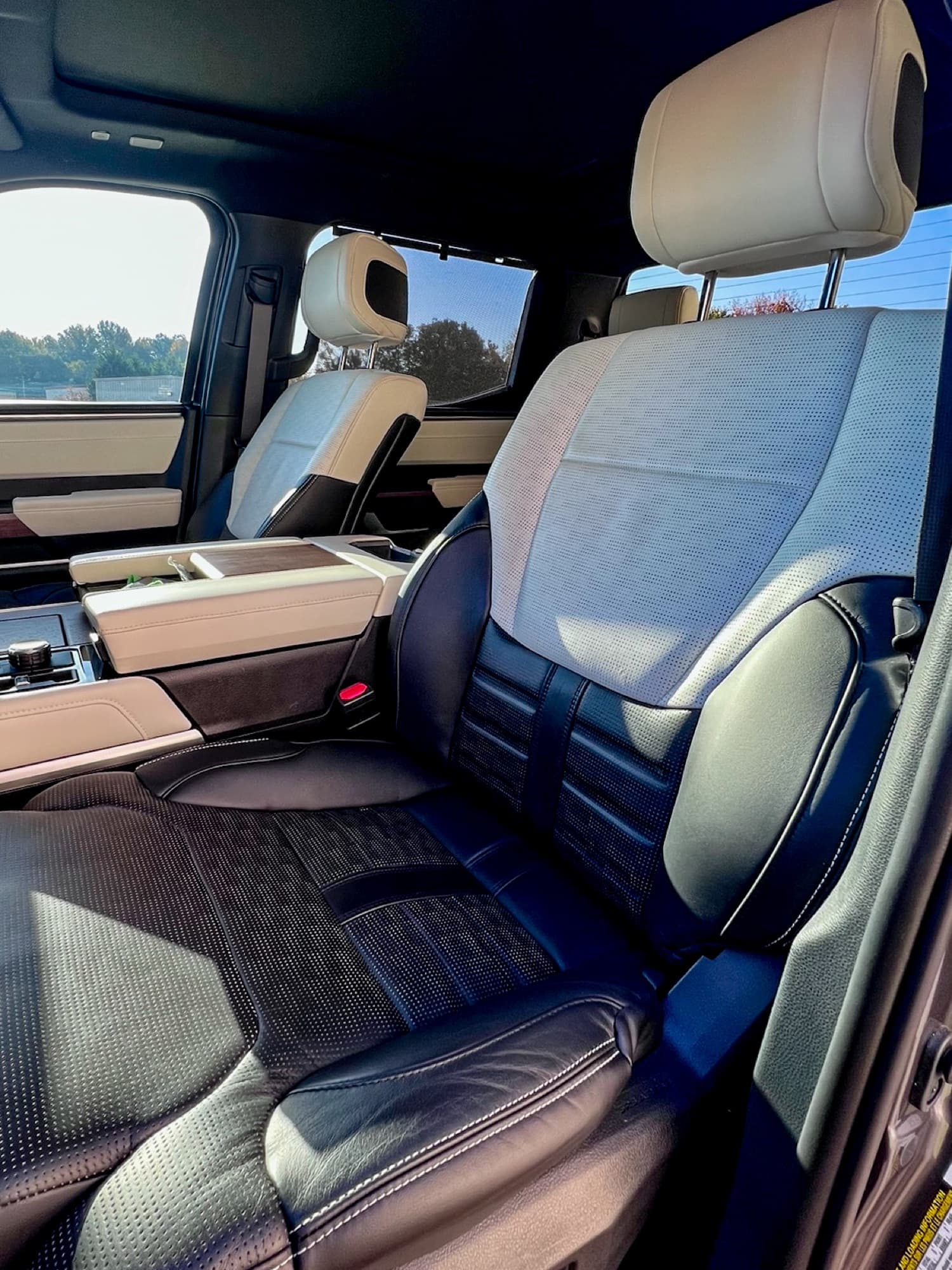
Most people think of coatings as something for paint. Inside the car, the surfaces that take the most abuse are the ones you sit on and touch: the driver's seat bolster, the steering wheel, the center console and the light-colored leather that picks up every pair of new jeans.
An interior coating is a thin, clear, repellent layer for those surfaces. It does not make leather indestructible, and it is not a conditioner. What it does is make the surface easier to keep clean and buy you time before a spill or a dye mark sets in. Here is how that works on each material.
The short answer
A leather or interior coating is a thin, clear layer that bonds to the finish on leather, vinyl and plastics, or wraps the fibers of fabric, and makes the surface repel liquids and resist dye transfer. Spills bead instead of soaking in, denim dye sits on the coating instead of the leather's finish, and cleaning takes less scrubbing. It does not repair cracks or worn color and does not stop punctures or sun damage on its own.
Key points
- On finished car leather, the coating protects the factory top coat, which is the layer that actually wears, stains and picks up dye.
- Blue-jean dye transfer is easiest to remove when it sits on a coating and is cleaned early, before heat and time work it into the finish.
- Fabric coatings are repellents: they make liquids bead long enough to blot, not stain-proof upholstery.
- Parking position and shade matter more for sun damage than any coating; sun-parked cabins get far hotter than shaded ones.
Start here
Know What Your Seats Are Made Of
The right protection depends on the material, and car interiors use several. Leather is graded partly by how it is finished. Leather International summarizes the common industry definitions below, and the differences matter because a coating bonds to whatever is on the surface.
- Pigmented (finished) leatherMost protected
- A finish containing pigment is applied to the surface and hides the hide's natural characteristics. The finish, not the leather underneath, is what you touch, clean and wear down. This is the type a coating suits best.
- Semi-aniline leatherLight finish
- The finish contains only a small amount of pigment, so the natural grain still shows. It is softer to the touch and more vulnerable to wear and staining in high-use spots.
- Aniline leatherLeast protected
- Dyed through and finished with little or no pigment, so it shows natural markings. It absorbs liquids quickly. Any product, coating included, should be tested in a hidden spot first.
- Vinyl and synthetic leatherPlastic surface
- Many trims use vinyl or a polyurethane-based synthetic. These behave like a finished leather surface: non-porous, wipeable and a good candidate for a coating.
- Cloth upholsteryFibers, not a film
- Woven or knit fabric absorbs liquid between the fibers. A fabric coating works as a repellent treatment rather than a hard layer.
If you are not sure what you have, check the window sticker, the build sheet or the owner's manual, which often names the seat material and its cleaning rules.
How it works
What an Interior Coating Does on Leather
On pigmented leather, the factory top coat is a thin protective film over the color. It is what keeps color from rubbing off and what slowly dulls and wears through on the side bolster you slide across every day. An interior coating adds a very thin, slick, repellent layer on top of that finish.
Because the coating is the outermost layer, dirt, body oils and dye make contact with it first. That has two practical effects. Liquids bead and sit on the surface instead of wicking into seams and perforations, and grime releases with a damp microfiber towel and a mild cleaner instead of a brush.
What it does not do is feed the leather. Finished automotive leather is sealed by its top coat, and a coating is not a conditioner. Leather that is already dry, cracked or faded needs cleaning and repair first; coating it only locks in how it looks today.
Dye transfer
Blue Jeans and Light-Colored Seats
The textile industry has a name for color rubbing off a fabric onto another surface: crocking. AATCC, the textile testing association, publishes a standard crockmeter test to measure how much color a dyed fabric transfers by rubbing. Dark new denim is the classic offender, and a cream or gray driver's seat is the classic victim.
The transfer usually starts on the side bolster and the seat base, where your jeans rub hardest as you get in and out. At first the dye sits loosely on the surface. Left for weeks, especially through hot Upstate summers when the seat warms up under you, it becomes much harder to lift without aggressive cleaning that can damage the finish.
A coating changes where that dye lands. Instead of rubbing into the leather's own top coat, it sits on a slick layer that releases more easily. That makes regular cleaning effective. It does not make the seat dye-proof: a coated light seat still needs a wipe every week or two if you wear dark denim daily.
- Wash new dark jeans a few times before long drives on light seats.
- Wipe the driver's bolster with a damp microfiber towel weekly.
- Use a pH-balanced interior cleaner, never household degreasers or magic erasers, which are abrasive.
- Deal with blue marks early; old dye stains on uncoated leather may need professional cleaning or color repair.
Spills
Coffee, Sunscreen and Everyday Messes
A coated seat buys time. Coffee, soda or a juice box spill beads up and stays on the surface long enough to blot with a towel. On perforated or ventilated seats, that matters even more, because liquid that runs into the holes is very hard to get back out.
Oily messes are the other half. Sunscreen, lotion, hand oils and fast-food grease darken the steering wheel and the top of the bolsters over time. A repellent surface makes those oils easier to wipe away before they build into a shiny, sticky film.
The rule for any spill is the same: blot, do not rub. Rubbing pushes liquid into seams and grinds grit across the finish. With a coating, a gentle blot usually lifts most of it.
Heat and sun
Heat, UV and Why Parking Matters More
Interiors age fastest from sun and heat. In a 2018 Arizona State University and UC San Diego study, cars parked in the sun for an hour on hot days averaged 116°F cabin air, 157°F dashboards, 127°F steering wheels and 123°F seats. Cars parked in the shade reached about 100°F inside, with seats around 105°F and dashboards around 118°F.
That gap is why parking choices and sunshades do more for dashboards and seat tops than any product. Repeated heat cycles dry out finishes and soften plastics, and UV fades color on the surfaces that face the glass. Some interior coatings include UV inhibitors, which can help slow fading, but they cannot stop it if the car bakes in a summer parking lot every afternoon.
Window tint attacks the problem at the glass. If interior fading is your main worry, pair a coating with a sunshade, shade parking where you can, and consider tint.
Fabric
Fabric Seats and Carpets: What a Coating Can Do
Cloth seats and carpets work differently. There is no top coat to bond to, so a fabric coating coats the individual fibers and makes them repel water-based spills. The fabric still looks and breathes like fabric; liquid simply beads on top for a while instead of soaking in immediately.
That window is the point. A spilled drink on a treated seat can be blotted up before it reaches the foam. A muddy paw print can be vacuumed after it dries instead of being ground in. Over time, wear, sun and deep cleaning reduce the repellency, so ask how long to expect it to last and whether it should be reapplied after a heavy extraction cleaning.
Fabric coatings will not remove stains already there. Clean first, then coat. A deep interior clean with steam extraction is the usual starting point for a stained cloth interior.
Process
How an Interior Coating Is Applied
Inspect and identify materials
Each surface is checked: finished leather, semi-aniline, vinyl, plastic or fabric. Worn color, cracks and existing stains are noted, because the coating will not hide them.
Deep clean
Seats and trim are cleaned with an interior-safe cleaner and soft brushes to remove body oil, dirt and old dressings. Silicone dressings in particular can stop a coating from bonding.
Test a hidden spot
On delicate or unknown leather, the product is tried in an inconspicuous area first to check for darkening or a change in feel.
Apply thin and even
The coating is wiped on in small sections and leveled with a microfiber towel so it does not leave a shiny or tacky finish. Fabric coatings are usually misted on evenly and allowed to dry.
Let it cure before heavy use
Follow the cure time you are given before sitting in the seats for long drives or cleaning them. Early friction and cleaners can disturb a coating that has not set.
Limits
What an Interior Coating Will Not Fix
The Auto Show offers leather coating as an add-on; ask for a price for your interior. Whoever does the work, these are the limits to expect.
- It will not repair cracks, creases, worn bolsters or color that has rubbed away. Those need leather repair or re-dyeing.
- It will not stop punctures or tears from dog claws, tools or rivets on work pants.
- It will not remove dye or stains that are already set into the finish.
- It is not a conditioner and does not soften leather.
- It is not permanent. Friction and cleaning wear it down, fastest on the driver's bolster and steering wheel.
| Surface | Main benefit | Main limit |
|---|---|---|
| Finished leather seats | Repels spills, holds denim dye on the surface, easier cleaning | Does not repair worn or cracked finish |
| Perforated or ventilated leather | Liquids bead before they reach the holes | Coating must be thin so holes stay open |
| Steering wheel and shift knob | Less buildup of hand oils and lotion | Wears fastest from constant grip |
| Vinyl and plastic trim | Easier dusting, fewer fingerprints | Cannot reverse heat or sun damage |
| Cloth seats and carpet | Time to blot spills before they soak in | Repellency fades with wear and deep cleaning |
Protect your interior along with your paint
We clean and coat leather and interior surfaces as an add-on to a detail or coating package. Ask for a quote and we will look at your seats and recommend what makes sense.
Common questions
Does a leather coating change how the seats feel?
A properly applied coating is very thin and leveled with a towel, so most people notice the seats feel slightly smoother and less grippy rather than shiny or plastic. A heavy, uneven application can leave a tacky or glossy look, which is one reason prep and technique matter more than the product.
Can I still use leather conditioner on coated seats?
Finished car leather is sealed by its factory top coat, and a coating adds another sealed layer, so heavy conditioners mostly sit on top and can leave a greasy film. Use the cleaner recommended in your care instructions instead. If your seats are aniline or semi-aniline, follow the carmaker's guidance for that leather.
Is an interior coating worth it on dark leather?
Dark seats hide dye transfer, so the benefit there is mostly spills, body oils and easier cleaning, plus less shine building up on the bolsters and steering wheel. On light-colored seats the dye-transfer protection is the bigger reason. For families, pet owners and work trucks, both colors benefit from the easier cleanup.
How do I get blue jean stains off light leather?
Start gentle: a pH-balanced leather or interior cleaner, a soft brush or microfiber towel, and light pressure, then wipe dry. Repeat rather than scrub harder. Avoid solvents, magic erasers and household degreasers, which can strip the finish. Old, set-in transfer may need professional cleaning or color repair.
Do interior coatings help with pet hair and dog drool?
They help with the drool and muddy paw prints, which bead and wipe off more easily. Pet hair still clings to fabric and needs vacuuming, though it releases a little more easily from coated leather. A coating does not protect against claw scratches or punctures, so a seat cover is still the best tool for a big dog.
Sources
- Aniline, semi-aniline or what?, Leather International (https://leathermag.com/?p=5298), accessed October 2026
- TM008 Test Method for Colorfastness to Crocking: Crockmeter, AATCC (https://members.aatcc.org/store/tm8/), accessed October 2026
- Study: Hot cars can hit deadly temperatures in as little as one hour, ASU News, Arizona State University (https://news.asu.edu/20180516-discoveries-asu-study-hot-cars-can-hit-deadly-temperatures-within-one-hour), accessed October 2026
- Research Highlight: Hot Cars Can Hit Life-Threatening Levels in Approximately One Hour, Scripps Institution of Oceanography, UC San Diego (https://scripps.ucsd.edu/news/research-highlight-hot-cars-can-hit-life-threatening-levels-approximately-one-hour), accessed October 2026
- Technical Data Sheet: IGL Coatings Ecocoat Trim (coating for interior and exterior plastics), version 2.10, revised 24 June 2025, IGL Coatings (https://iglcoatings.com/wp-content/uploads/2026/06/tds_ecocoat_trimv2_154286.pdf), accessed October 2026
- Semi-Aniline Leather, Furniture Clinic (https://www.furnitureclinic.co.uk/Semi-aniline_Leather), accessed October 2026
Prices on this page are The Auto Show’s published starting prices and are confirmed after we inspect the vehicle. Product ratings and warranty terms come from the manufacturers.