
Ceramic Coating & PPF Guide: Understand
Caring for Coated Leather and Interior Surfaces
A leather coating is a thin, flexible protective layer applied over your seats' existing finish. Its job is to make everyday mess easier to deal with: jeans dye, coffee, sunscreen, kids and pets. It works best when it is cleaned gently and often, and it can be undone by the same harsh products that damage uncoated leather.
This guide covers how modern car leather is built, what a coating adds, how to clean it, the conditioner question, and how to look after the other surfaces around it: plastics, screens, fabric and perforated seats.
The short answer
Care for coated leather by vacuuming grit regularly, wiping seats with a damp microfiber or a mild, pH-balanced leather cleaner, then drying them. Blot spills quickly instead of rubbing. Avoid alcohol, bleach, solvents, all-purpose degreasers and oily dressings, which can wear the coating and the leather's own finish. Coated leather rarely needs heavy conditioning; follow your installer's advice and keep seats out of long direct sun.
Key points
- Most modern car leather already has a protective top finish; a coating adds another thin layer on top of it.
- Grit is the main enemy: Mazda's manual warns that sand and dust can damage the leather's overcoat and accelerate wear.
- Mazda tells owners never to clean leather with alcohol, chlorine bleach or solvents such as thinner, benzene or petrol.
- A coating makes dye transfer and spills easier to clean; it does not stop cuts, punctures or heat damage.
- Long sun exposure dries and shrinks leather; sunshades and window tint help.
How it is built
What is on the surface of car leather
Most leather in modern cars is not bare hide. It is dyed, then finished with a pigmented layer and a thin protective top coat. Mazda's owner's manual refers to this as the leather's overcoat, and warns that sand and dust sitting on the seat can damage it and speed up wear.
That finish is why car leather wipes clean and resists stains better than an old leather jacket. It is also why many traditional leather care habits do not apply. Heavy oils and waxes made to soak into raw leather mostly sit on top of a finished surface instead.
A leather coating goes on over that finish. It adds a slick, flexible layer that makes dirt and dye less likely to grip, so cleaning takes less effort. Think of it as protecting the protector: the factory finish lasts longer because the coating takes the first round of wear.
Expectations
What a leather coating does and does not do
- Helps with
- Dye transfer from new jeans, spills that would otherwise soak into seams, sunscreen and body oils, light abrasion from getting in and out, and making routine wipe-downs quicker.
- Does not stop
- Cuts from keys or tools, pet claws, punctures, cigarette burns, or leather that is already cracked. It does not restore color or reverse wear that has already happened.
- Wears over time
- The driver's side bolster gets the most friction, and the coating wears fastest there, just as the leather does. That area deserves the most attention. Leather and interior coatings explained
Routine
A simple cleaning routine
Vacuum first
Use a soft brush attachment to remove sand and crumbs from the surface and the seams. This is the single most useful step.
Wipe with a damp microfiber
For light dust and fingerprints, a microfiber dampened with clean water is often enough on coated leather.
Use a mild leather cleaner when needed
For more soil, Mazda suggests a soft cloth with a leather cleaner or mild soap. Apply to the cloth, not the seat.
Wipe off residue
Follow with a cloth dampened in clean water and wrung out well, as Mazda recommends, so no cleaner is left behind.
Dry it
Dry with a soft cloth and let the seats finish drying in a shaded, ventilated spot. Mazda warns that leftover moisture can cause hardening and shrinkage.
Mazda recommends periodic leather maintenance about twice a year; light wipe-downs in between keep the coating working.
Products
Choosing cleaners, and what to avoid
Look for a leather cleaner that is pH-balanced and made for finished automotive leather. IGL, for example, lists its own leather cleaner at pH 6 to 7 and notes that it is meant for treated leather, not suede or untreated leather. That is a good benchmark when reading other labels.
Mazda's manual is specific about what not to use: do not wipe leather with alcohol, chlorine bleach or organic solvents such as thinner, benzene or petrol, because they can cause discoloration or stains. It also warns that rubbing hard with a stiff brush or cloth can cause damage. Add to that list household all-purpose cleaners and degreasers, magic eraser sponges (they are abrasive), and baby wipes or makeup wipes, which can leave residue.
Test any new product on a hidden area first, such as the lower side of a seat. If the cloth picks up color, stop.
Conditioners
Do you need to condition coated leather?
Usually not in the traditional sense. Oily or waxy conditioners are designed to soak into leather. On a finished, coated surface they have little to soak into, so they tend to sit on top, feel greasy, attract dust and can interfere with the coating's slickness. Mazda also notes that greasy soiling on leather can lead to mold and stains.
If your seats feel dry or stiff, the cause is more often heat and sun than a lack of oil. A light, non-greasy product made for finished leather, used sparingly, is the safer choice if you want one. Ask your installer what is compatible with the coating on your seats before using anything that promises to nourish, restore or shine.
Real life
Spills, dye transfer, kids and pets
- Blot spills right away with a clean cloth, working from the outside in. Do not rub, which spreads liquid into seams and perforations.
- For dye transfer from jeans or bags, a damp microfiber usually lifts it from a coated seat if you catch it within days. Mazda also warns that vinyl items left on seats for long periods can affect leather color, especially in heat.
- Sunscreen, lotion and hand sanitizer can leave marks. Wipe them off promptly with a damp cloth, then dry.
- Child seats press and rub on the same spot for years. A thin protective mat under the seat, cleaned regularly, helps; check your car seat's manual first, since some prohibit mats.
- For pet hair, use a rubber brush or vacuum; for claws, a seat cover is still the only real protection.
Special seats
Perforated, ventilated and synthetic leather
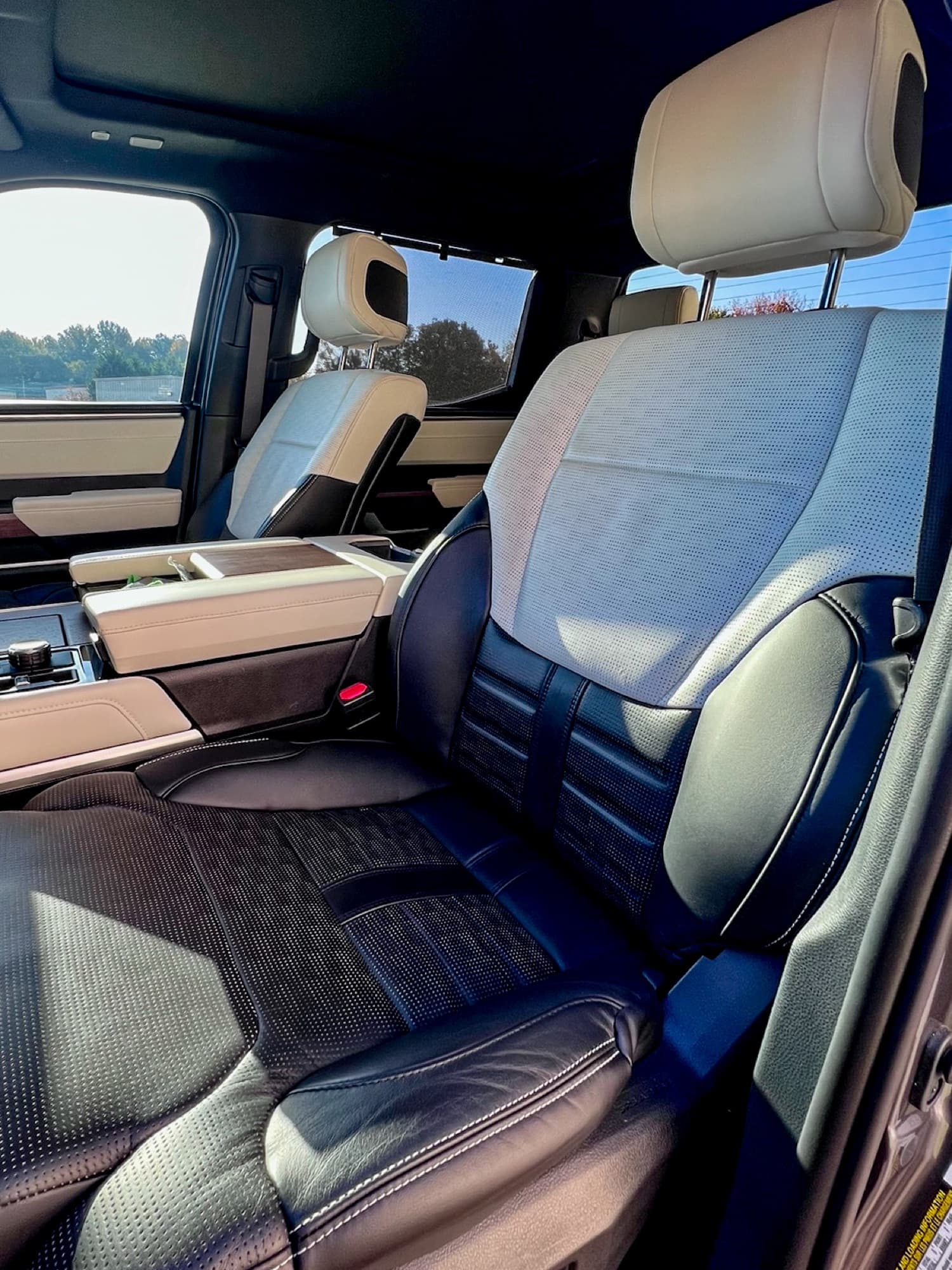
Perforated and ventilated seats need less liquid, not more. Moisture that runs into the holes can soak the cushion and fan units underneath. Spray cleaner onto a towel, never onto the seat, and use a soft brush to lift dirt from the holes before wiping.
Synthetic leather is cleaned a little differently. Mazda's manual suggests vacuuming, then wiping with a soft cloth in a mild detergent solution of about 5 percent, followed by a clean damp cloth. Many synthetic materials can also be coated, and the same gentle rules apply.
Around the cabin
Sun, screens, plastics and fabric
Sun is the slow enemy of every interior surface. Mazda notes that long exposure to direct sunlight can cause leather to deteriorate and shrink, and recommends shading the interior with sunshades. In an Upstate summer, a windshield sunshade and quality window tint are some of the best interior protection you can buy.
For dashboards and trim, a damp microfiber removes most dust. Mazda recommends a mild detergent solution of about 5 percent for heavier soil, followed by a clean damp cloth, and warns that hard brushes can scratch high-gloss panels and metallic trim in ways that may not be repairable. For screens, use an ammonia-free cleaner sprayed onto a microfiber cloth, never onto the screen.
Fabric seats and carpets should be cleaned promptly before stains set. Mazda advises using only recommended cleaners on fabric, noting that others can affect appearance and fire resistance.
Thinking about protecting your seats?
Leather coating is available; ask for a price. Our Interior Micro Detail is $149.99, or from $129.99 when added to a package, and gets the leather properly clean first.
Common questions
How long should I wait to use coated leather seats?
Follow your installer's instructions, since cure times vary by product. Many leather coatings are touch-dry quickly but take longer to reach full resistance, so it is wise to avoid spills, heavy cleaners and rough use for the first days. Normal sitting and driving are usually fine once you pick the car up. Ask what timeline applies to the product used on your seats.
Can I use saddle soap on car leather?
It is not a good match. Saddle soap is made for tack and heavier leathers and can leave residue on finished automotive leather and on a coating. A pH-balanced cleaner made for car leather, or a mild soap solution as some owner's manuals suggest, is gentler. Whatever you use, wipe off the residue with a clean damp cloth and dry the seat.
Will a leather coating make my seats shiny or slippery?
A quality leather coating should keep a natural, low-sheen look. Factory leather is usually matte or satin, and shine on old seats is often built-up body oil and dirt, not the leather itself. A coating may feel slightly smoother to the touch, but it should not feel slick or greasy. If it does, ask the installer to check the surface.
How do I know if my leather coating is wearing off?
Spills start soaking in instead of sitting on top, dye transfer becomes harder to wipe away, and the driver's bolster begins to look darker or shinier with use. A simple check is a drop of water on a hidden spot: on a well-protected seat it should sit as a bead for a while rather than darkening the leather. Worn areas can be cleaned and recoated.
Keep reading
Sources
- Mazda CX-3 Owner's Manual: Interior Care, Mazda (https://owners-manual.mazda.com/gen/en/2016/cx-3_en/contents/07040202.html), accessed October 2026
- Ecoshine Leather, IGL Coatings (https://iglcoatings.com/products/ecoshine-leather/), accessed October 2026
- Ecoclean Clear, IGL Coatings (https://iglcoatings.com/products/ecoclean-clear/), accessed October 2026
Prices on this page are The Auto Show’s published starting prices and are confirmed after we inspect the vehicle. Product ratings and warranty terms come from the manufacturers.