
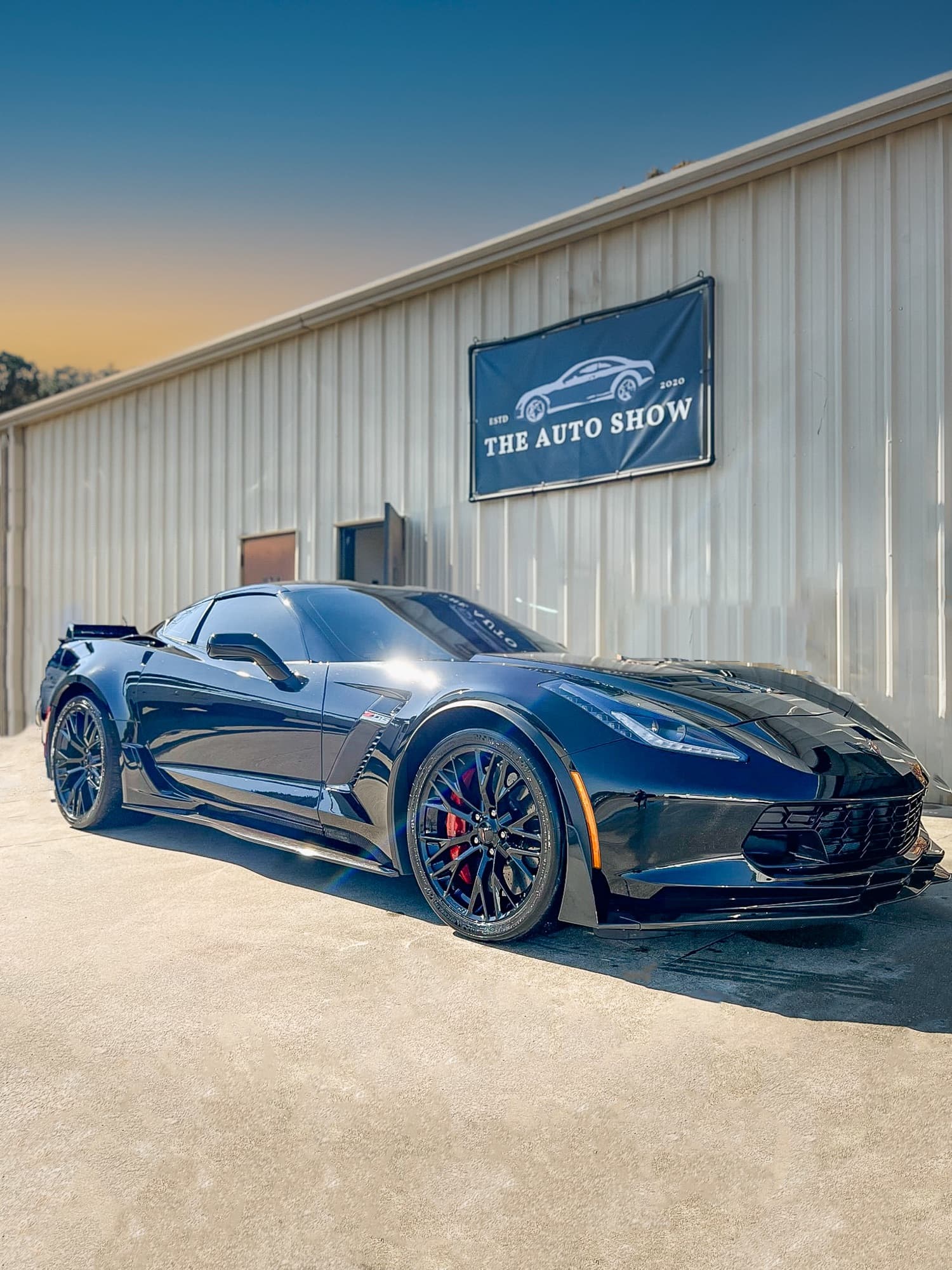
Ceramic Coating & PPF Guide: Understand
Summer Heat, UV and Your Car's Paint in South Carolina
From June through August, a car parked in the Upstate spends most of its life in hard sun. The normal daily high at Greenville-Spartanburg sits right around 90°F through July, and the midday UV Index regularly reaches the levels the EPA tells people to seek shade from.
Paint does not get sunburned overnight. It ages slowly, and heat speeds up almost every other kind of damage: bird droppings etch faster, bug splatter bakes on, and water spots form the moment you wash in the sun. Here is what is actually happening to the finish, and what helps.
The short answer
South Carolina summer sun damages paint two ways. UV light slowly breaks down the clear coat's resin and its built-in UV absorbers, which leads to fading, chalky oxidation and, eventually, clear coat failure. Heat speeds up everything else: droppings and bugs etch faster and washing in the sun leaves mineral spots. Shade, washing early or late in the day, prompt cleanup and a protective layer (sealant, coating or film) slow all of it.
Key points
- The clear coat is the paint's sunscreen: it carries UV absorbers and light stabilizers that are slowly spent over years of exposure.
- Heat is an accelerator: acidic droppings, bug remains and hard-water minerals do more damage on a hot panel.
- Dark paint absorbs far more sunlight than silver or white, so it runs hotter and shows heat-related problems sooner.
- Wash in the shade or early in the morning, never on a hot panel in full sun.
- A coating or film adds a sacrificial layer on top of the clear coat; neither one makes paint immune to neglect.
The climate
What an Upstate summer actually looks like to your car
The National Weather Service's 1991 to 2020 daily normals for Greenville-Spartanburg put the normal high at about 90°F for nearly every day in July. That is air temperature in the shade. A dark roof or hood sitting in direct sun gets considerably hotter than the air around it, because paint absorbs sunlight and turns it into heat.
UV is a separate problem from heat. The EPA's UV Index scale calls 8 and above very high to extreme, and the EPA's own rule of thumb is simple: if your shadow is shorter than you are, UV is strong. In an Upstate summer, that describes most of the day from late morning to mid-afternoon. Your car does not move into the shade on its own, so it collects that exposure every day it sits outside.
Humidity adds a third factor. Morning dew and afternoon storms leave water on hot panels, and when that water evaporates it leaves its minerals behind.
UV damage
How sunlight ages a clear coat
Modern car paint is a system: primer, a colored base coat, and a clear coat on top. The clear coat does the protecting. Paint and additive makers formulate automotive clear coats with UV absorbers, which soak up ultraviolet light and release it as a tiny amount of heat, and hindered amine light stabilizers (HALS), which mop up the reactive molecules UV creates before they can break down the resin.
Those additives work for years, but they are not unlimited. As they are spent and the resin starts to break down, the surface loses gloss, then turns hazy or chalky. BASF describes the end of that road plainly: without UV protection, automotive coatings fade, crack and discolor, water gets in, and corrosion and failure follow.
That is why the top of the car ages first. Roofs, hoods and trunk lids face the sky and take the most direct sun, while door panels and lower bumpers see it at an angle. If your roof looks duller than your doors, UV is the likely reason.
- Early stage: gloss fades, the color looks flatter, water stops beading as readily.
- Middle stage: oxidation, a dull or chalky film, often fixable with machine polishing if enough clear coat remains.
- Late stage: clear coat peeling or flaking. No polish or coating can fix this; the panel needs refinishing.
Heat damage
Why heat makes every other problem worse
Heat rarely damages paint by itself. What it does is speed up the chemistry of whatever is sitting on the surface. Bird droppings are acidic, and on a hot panel the clear coat softens and expands slightly while the dropping dries and contracts, which is how you end up with a dull, etched outline even after the mess is gone.
Bug remains behave the same way. Clemson's Home and Garden Information Center notes that lovebug body fluids are acidic and can damage paint finishes, and recommends removing splattered bugs within a day or so. In July heat, sooner is better.
Water is the sneakiest one. When a sprinkler, a storm or your own hose leaves droplets on a hot panel, the water evaporates fast and leaves a ring of calcium and magnesium behind. Wiped off quickly, those rings come away. Left to bake day after day, they can etch into the clear coat.
Color matters
Dark cars run hotter, and it is measurable
Researchers at Lawrence Berkeley National Laboratory measured it: a black car shell reflects only about 5% of incoming sunlight, while a silver shell reflects about 60%. In their test, a silver car parked in the sun for an hour had cabin air about 9 to 11°F cooler than an otherwise identical black car.
For paint, that means a black, dark blue or dark gray car sits hotter in the same parking spot, so heat-driven problems like etching and water spotting show up sooner. Dark paint also shows every swirl and spot, so the damage is more visible as well as more likely. Lighter colors are not immune to UV; they just hide its early stages better.
Inside the car
The interior takes a beating too
Sun through the glass ages dashboards, door panels, steering wheels and seats. Leather dries out and fades on the side that faces the windows, plastics fade and can eventually crack, and the heat itself is hard on adhesives and trim. The worst exposure is usually the top of the dash, which sits under the steeply raked windshield all day.
A folding windshield shade is the cheapest fix for the dash. For the side glass and the cabin heat, quality window film blocks much of the UV and a good share of the solar heat; The Auto Show installs LLumar carbon and ceramic tint, but any reputable film beats bare glass. Clean and condition leather regularly, and use a UV-protectant dressing on vinyl and plastic surfaces.
What helps
Summer habits that slow the damage
Park for the afternoon sun
A garage or carport is ideal. If you park outside, think about where the shade will be between noon and 4 pm, not where it is when you arrive. Avoid parking under trees that drop sap or host birds, which trades one problem for another.
Wash early or late, in the shade
Wash in the morning before the panels heat up, or in the evening. IGL Coatings' own care guidance says washing in direct sun and heat causes water spots. If a panel is too hot to keep your hand on, it is too hot to wash.
Dry the car right away
Do not let the car air-dry in summer. Use a clean, plush microfiber drying towel or a blower so minerals never get a chance to settle.
Clean droppings and bugs the same day
Keep a quick detailer spray and a couple of clean microfiber towels in the car. Soak the spot for a minute to soften it, then lift it off gently rather than scrubbing.
Keep a protective layer on the paint
Wax, sealant, ceramic coating or paint protection film all give contamination something to attack before it reaches the clear coat. The longer-lasting the layer, the less often you have to think about it.
Protection options
What each layer of protection does in the heat
- WaxWeeks, not months
- Adds gloss and some protection, but natural waxes soften in high heat and wear away quickly in a Southern summer. Fine as a short-term layer if you enjoy reapplying it. Ceramic coating vs wax
- Paint sealantMonths
- A synthetic polymer layer that holds up to heat better than wax. A reasonable middle ground, but it still needs reapplying a couple of times a year. Coating vs sealant
- Ceramic coatingYears, with proper washing
- A hard silica-based layer bonded to the clear coat. It resists chemical etching better than wax and makes droppings and bugs release more easily, but it does not stop etching if contamination is left to bake for days. What a coating is
- Paint protection filmPhysical barrier
- A clear urethane film. LLumar states its film can handle excessive heat with proper care, and its top coat uses heat, including sunlight, to level out light surface scratches. It is the strongest option for the front end and other high-exposure areas. What PPF is
| Threat | What it does | What helps |
|---|---|---|
| UV exposure | Spends the clear coat's UV additives; fading, oxidation, eventual failure | Shade, garage, a maintained coating or film |
| Panel heat | Speeds up etching from droppings, bugs and minerals | Prompt cleanup, protective layer, lighter parking spot |
| Washing in sun | Water evaporates fast and leaves mineral spots | Wash early or late, dry immediately |
| Bird droppings | Acidic; etches a dull outline into hot clear coat | Remove the same day with a soak, not a scrub |
| Bug splatter | Acidic remains bake on during summer drives | Remove within a day; coating or PPF on the front end |
| Interior sun | Fades and dries leather, dash and plastics | Windshield shade, window film, UV-protectant dressing |
Give your paint a layer that lasts the summer
Ask us whether a ceramic coating, paint protection film or both make sense for how and where you park. We will look at the paint first and tell you honestly what it needs.
Common questions
Can the sun really damage car paint in just one summer?
One summer rarely ruins healthy factory paint, but it does add up. The visible damage in a single season usually comes from heat-accelerated contamination: bird droppings, bugs and water spots that were left to bake. UV fading and oxidation build over several years, faster on roofs and hoods and faster on cars that live outside with no protective layer.
Is it bad to wash my car in the afternoon sun?
Yes, if the panels are hot. Soap and water dry before you can rinse and towel them, which leaves mineral spots and soap residue that can etch over time. Wash early in the morning, in the evening or in the shade, and dry each panel promptly. If a panel is too hot to rest your hand on, let it cool first.
Does a car cover help in the summer?
A clean, breathable, well-fitted cover blocks UV and keeps droppings off, which helps a car that sits for long periods. The catch is that a cover on a dirty car or flapping in the wind can rub fine scratches into the paint. For a daily driver that gets used and parked repeatedly, shade and a protective layer are usually more practical.
Do white and silver cars need sun protection too?
Yes. Lighter colors reflect more sunlight, so they run cooler and hide early fading better, but their clear coat still takes the same UV. They also show different problems, such as stains, tree sap and orange iron specks. The difference is in how fast damage becomes visible, not whether it happens.
Will heat make a ceramic coating or PPF fail faster?
Heat itself is not the main enemy. Coatings and quality films are designed to live outdoors in hot climates. What shortens their life is neglect in the heat: contamination left to bake, harsh chemicals, and washing in the sun. Wash regularly, clean droppings promptly, and follow the care instructions you received at installation.
Sources
- Greenville/Spartanburg SC Daily Normals for Years 1991-2020, July, National Weather Service Greenville-Spartanburg (https://www.weather.gov/media/gsp/Climate/GSP/GSPJULNORM.pdf), accessed October 2026
- UV Index Scale, U.S. Environmental Protection Agency (https://www.epa.gov/sunsafety/uv-index-scale-0), accessed October 2026
- Learn About the UV Index, U.S. Environmental Protection Agency (https://www.epa.gov/sunsafety/learn-about-uv-index), accessed October 2026
- Cool Cars, Heat Island Group, Lawrence Berkeley National Laboratory (https://heatisland.lbl.gov/coolscience/cool-cars), accessed October 2026
- A new UV absorber and light stabilizer blend enters the ring, BASF Insights (https://insights.basf.com/home/article/read/a-new-uv-absorber-and-light-stabilizer-blend-enters-the-ring), accessed October 2026
- Lovebugs, Clemson University Home and Garden Information Center (https://hgic.clemson.edu/factsheet/lovebugs/), accessed October 2026
- Just got a Ceramic Coating Done and you're not sure how to maintain it?, IGL Coatings (https://blog.iglcoatings.com/how-to-maintain-ceramic-coatings/), accessed October 2026
- Paint Protection Film Frequently Asked Questions, LLumar (https://llumar.com/en/resources/paint-protection-film-frequently-asked-questions/), accessed October 2026
Prices on this page are The Auto Show’s published starting prices and are confirmed after we inspect the vehicle. Product ratings and warranty terms come from the manufacturers.