
Ceramic Coating & PPF Guide: Understand
Car Paint Oxidation: Causes, Signs and Fixes
Oxidation is what people mean when they say paint looks tired: a hood that has lost its gloss, a red that has gone pinkish, a roof that leaves a chalky film on your hand. It is slow, it starts where the sun hits hardest, and in a hot, sunny climate it never fully takes a break.
Whether it can be fixed depends on what kind of paint you have and how far the damage has gone. Here is how to tell.
The short answer
Paint oxidation is the slow breakdown of the paint's resin binder by UV light, heat, oxygen and moisture. It shows as dullness, fading and, on single-stage paint, a chalky residue. Early oxidation on single-stage paint and light dullness on clear coat can usually be polished away. Once a clear coat has gone cloudy, cracked or started to peel, it has failed and needs repainting.
Key points
- UV light, moisture and some chemicals generate free radicals that break down paint's binder; the first signs are color change and lost gloss.
- Chalking means the binder itself has broken down; a black cloth rubbed on the surface picks up a powdery residue.
- Single-stage paint oxidizes at the surface and often polishes back; clear coat paint hides the problem until the clear itself fails.
- Roofs, hoods and trunk lids oxidize first because they face the sun most directly.
- Shade, regular washing and a protective layer slow oxidation; nothing reverses failed clear coat.
The chemistry
What oxidation actually is
Paint is pigment held in a resin binder. A technical bulletin from paint maker Dunn-Edwards explains that prolonged exposure to UV light, moisture or certain chemicals creates free radicals in the paint film, highly reactive molecules that break chemical bonds in the binder. The most obvious early signs are a change in color and a loss of gloss.
Automotive paint chemists see the same process. Ford researchers studying clear coat and base coat systems wrote that the long-term weathering performance of car paint is determined primarily by how well it resists photooxidative degradation, meaning breakdown driven by light and oxygen. Car paint fights back with UV absorbers and light stabilizers mixed into the clear coat, but those additives are gradually consumed with outdoor exposure.
Heat speeds most of these reactions up. Dark horizontal panels in summer sun get far hotter than the air; researchers measuring black test panels in a Florida summer recorded surface temperatures up to 174 degrees Fahrenheit.
Chalking vs fading
Two different problems that look similar
- ChalkingThe binder has broken down
- The resin at the surface degrades and leaves a white, powdery layer of loose pigment and binder fragments. Rub a dark cloth or your hand on the panel and some of it transfers. This is classic single-stage oxidation.
- Color fadeThe pigment has changed
- The pigment itself loses color in sunlight, like a red sign turning pink, while the binder stays intact. The surface can still be glossy. Dunn-Edwards notes this is a different failure from chalking, caused by pigments with poor lightfastness.
- Clear coat hazeEarly clear coat aging
- On base and clear paint, the clear starts to lose gloss and look slightly milky, especially on the roof and hood. The color underneath is usually still fine at this stage.
- Clear coat failurePast the point of polishing
- The clear cracks, clouds over in patches and begins to peel, exposing a flat base coat underneath. This is a repaint, not a detailing job. Clear coat failure
Paint types
Single-stage vs clear coat: why they oxidize differently
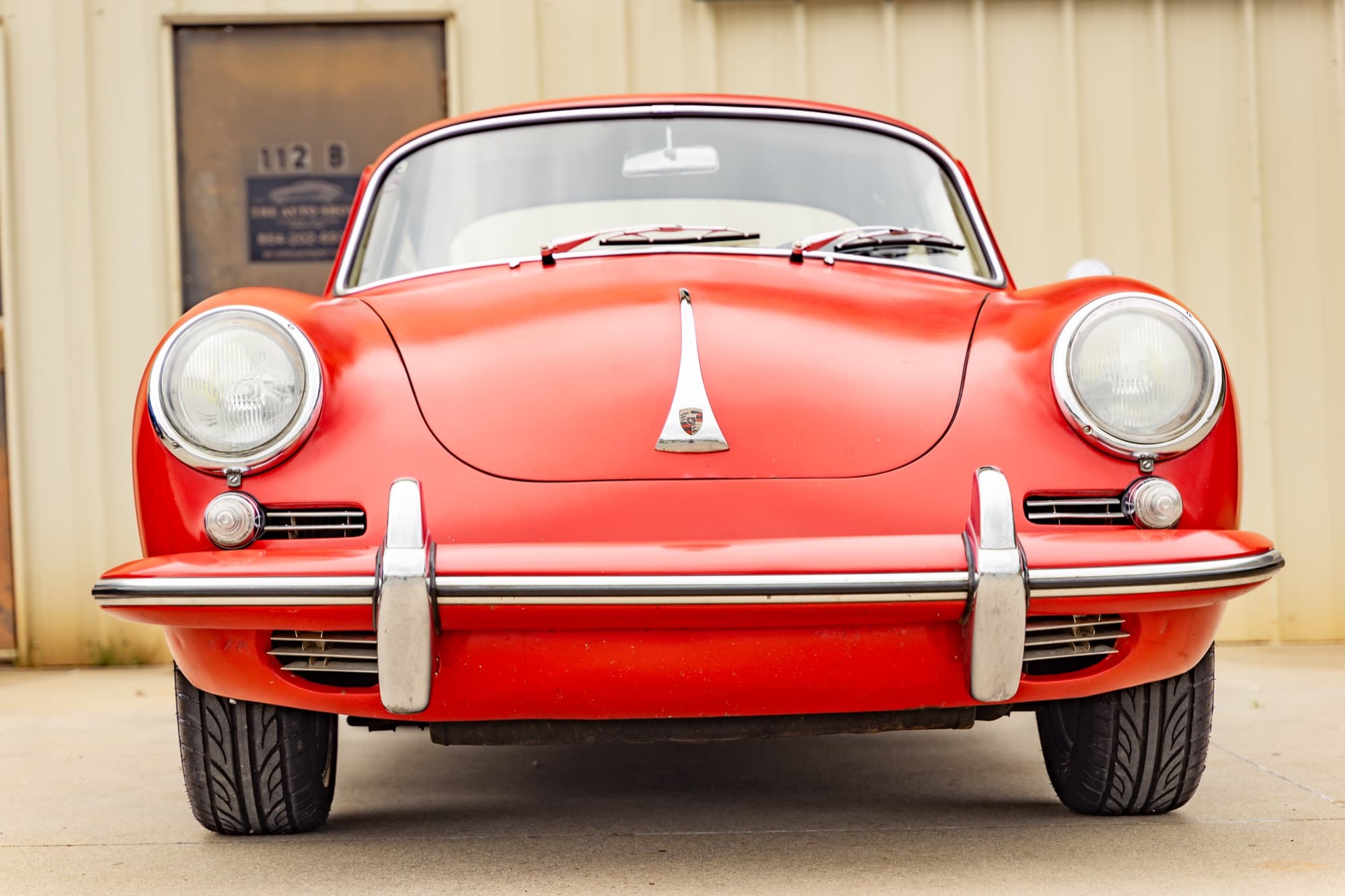
Single-stage paint has color and gloss in one layer. It was standard on cars into the 1980s and is still used on some solid colors, commercial vehicles and restorations. When it oxidizes, the damage is right at the colored surface, so you see it early: the paint goes flat and chalky. The good news is that the damaged layer is often thin, and polishing removes it to reveal fresh color. You will see the paint's color on the polishing pad, which is normal for single-stage.
Base and clear paint, used on nearly all modern cars, puts a transparent clear coat over the color. The clear absorbs UV and protects the pigment, so the color can look fine for years. The trade-off is that when the clear finally breaks down, it tends to go suddenly from slightly dull to cloudy, cracked or peeling, and there is nothing underneath it that polishing can bring back.
That is why an older single-stage classic can sometimes be revived with a careful correction, while a fifteen-year-old car with a peeling roof cannot.
Diagnosis
How to tell how far oxidation has gone
Wash and dry the panel
Dirt and old wax can look like oxidation. Start with a clean, dry surface in daylight.
Do the cloth test
Rub a clean dark microfiber firmly on the dullest area. Color or white powder on the cloth means chalking: the surface binder is breaking down.
Compare panels
Look at the roof, hood and trunk against the doors and lower panels. A big difference points to sun damage rather than a wash problem.
Look for cracks and flakes
Fine cracking, cloudy patches or edges where clear is lifting mean clear coat failure. Polishing will not help and can make peeling worse.
Test a small spot
A detailer will polish a small test area first. If gloss and color return evenly, the panel is a good candidate for correction.
The fixes
What can be done, from light to severe
After any correction, the fresh surface needs protection. Polishing removes the oxidized layer, but the paint is still exposed to the same sun the next day.
- Light dullness on clear coat: a thorough wash, decontamination and a single machine polishing stage usually restores gloss.
- Moderate oxidation on single-stage paint: a cutting stage followed by a refining polish, done carefully because single-stage layers can be thin.
- Heavy chalking on single-stage paint: may still respond to correction, but test first and measure paint thickness, because there may be little left.
- Hazy clear coat with no cracking: correction can improve it, but the clear is aging and protection afterward matters more than ever.
- Cracked, cloudy or peeling clear coat: no polish, coating or film will fix it. The panel needs refinishing.
Prevention
Slowing oxidation in a hot, sunny climate
Shade is the biggest single factor. A car that lives in a garage or under a carport ages far more slowly than one parked in a south-facing driveway all day. Even moving a daily driver into the shade at work makes a difference over years.
Regular washing removes the bird droppings, bugs, tree residue and industrial fallout that add chemical attack on top of UV. A protective layer, whether wax, sealant, a ceramic coating or paint protection film, gives the sun and contaminants something to work on before they reach the clear coat, and it needs to be maintained or renewed to keep doing that.
Plastic trim, headlight lenses and rubber seals oxidize too, often faster than the paint. They need their own care, and the same shade-and-protection logic applies.
| What you see | Likely cause | Typical fix |
|---|---|---|
| Slight dullness, color intact | Early clear coat aging or surface film | Wash, decontaminate, light polish |
| Chalky residue on cloth | Single-stage binder breakdown | Test spot, then cut and polish |
| Pinkish red, still glossy | Pigment color fade | Polish may help single-stage; otherwise repaint |
| Milky haze on roof or hood | Clear coat aging | Correction plus protection, monitor |
| Cracks, cloudy patches, peeling | Clear coat failure | Repaint the panel |
Not sure if your paint can come back?
We will inspect it, test a spot if it makes sense, and tell you honestly whether a correction will help or whether the panel needs a painter.
Common questions
Can oxidized car paint be restored?
Often, if the damage is at the surface. Dull or chalky single-stage paint and lightly hazed clear coat usually respond to machine polishing, which removes the degraded layer. Paint where the clear coat has cracked, clouded in patches or started to peel cannot be restored by polishing or coating; it needs to be refinished.
Does wax stop paint oxidation?
Wax helps a little and briefly. It adds a sacrificial layer that keeps contaminants off the paint and can slow surface weathering, but it wears off within weeks to a few months in summer heat. Longer-lasting sealants and coatings do the same job for longer. None of them replaces shade, and none reverses oxidation that has already happened.
Is oxidation the same as rust?
No. Paint oxidation is the breakdown of the paint's resin by sunlight and the elements, and it happens to the coating. Rust is corrosion of the steel underneath, usually starting where paint has been chipped or scratched through to metal. Badly failed paint can eventually expose metal and lead to rust, but they are different problems with different fixes.
Will a ceramic coating fix oxidized paint?
No. A coating bonds to whatever surface is under it, so applying one over oxidized paint seals in the dullness. The oxidized layer has to be polished off first. Once the paint is corrected, a coating can help slow future weathering and make the car easier to keep clean, but it cannot repair failed clear coat.
Why does red paint seem to fade more than other colors?
You will hear that often, especially about older single-stage reds. Some red pigments have historically had poorer lightfastness than other colors, and fading on a bright color is simply easier to notice. Modern clear coat paint protects the pigment much better, so a faded modern red usually signals a clear coat problem rather than a red problem.
Sources
- Chalking vs. Color Fade (technical bulletin), Dunn-Edwards Corporation (https://www.dunnedwards.com/wp-content/uploads/2021/06/TB_Chalking-vs-Color-Fade.pdf), accessed October 2026
- Weathering Performance of Clearcoat/Basecoat Automotive Paint Systems, J.L. Gerlock, A.V. Kucherov and M.E. Nichols, Ford Research Laboratory, Journal of Coatings Technology, July 2001 (https://www.paint.org/wp-content/uploads/2021/09/jctJULY01-Gerlock.pdf), accessed October 2026
- Etch Damage to Automotive Coatings, K. Henderson, R. Hunt, K. Spitler (Bayer MaterialScience) and J. Boisseau (BASF), JCT CoatingsTech, July 2005 (https://www.paint.org/wp-content/uploads/2021/12/Etch-Damage-to-Automotive-Coatings.pdf), accessed October 2026
- Talc in Automotive Coatings (application leaflet on clear coat function), Elementis (https://www.elementis.com/fileadmin/elementis/About_Elementis/03-businesses/Performance_Specialties/Adding_Future/Papers_Leaflets/finntalc/0102030901_Talc_automotive.pdf), accessed October 2026
Prices on this page are The Auto Show’s published starting prices and are confirmed after we inspect the vehicle. Product ratings and warranty terms come from the manufacturers.