
Ceramic Coating & PPF Guide: Understand
Ceramic Coating Plastic Trim, Headlights and Exhaust Tips
Paint gets the attention, but the parts that make a car look old first are usually not painted. Black bumper trim and fender flares fade to a chalky gray. Headlight lenses turn yellow and cloudy. Exhaust tips go from bright to brown and sooty.
Each of those materials fails for a different reason, so each needs a different approach. This guide explains what is happening to trim, lenses and tips, where a coating genuinely helps, and where the honest answer is restoration or replacement.
The short answer
Yes, plastic trim, headlight lenses and exhaust tips can be coated, but each needs its own product. Trim coatings bond to unpainted plastic and slow UV fading; IGL rates its trim coating for up to two years of color retention. Headlights need protection after their factory hard coat breaks down. Exhaust tips need a heat-rated metal coating, since paint coatings are not made for that heat. Badly faded or cloudy parts need restoration first.
Key points
- Unpainted trim fades because sunlight breaks down the plastic surface; a dressing hides it for days, a bonded coating slows it for much longer.
- AAA found deteriorated headlights on low beam gave just 22 percent of the light of new ones, so cloudy lenses are a safety issue, not just a looks issue.
- Restored headlights need a protective layer afterward, because restoration removes what is left of the factory UV coating.
- Exhaust tips need a coating rated for heat; ask what temperature a product is rated for before it goes on hot metal.
Trim
Why Black Plastic Trim Turns Gray
Unpainted trim is textured plastic colored all the way through, used on bumpers, fender flares, cowls, mirror bases and the lower edges of trucks and SUVs. It has no clear coat over it. Every hour it spends in the sun, UV light attacks the surface, and the result is the familiar chalky gray that wipes off on your hand.
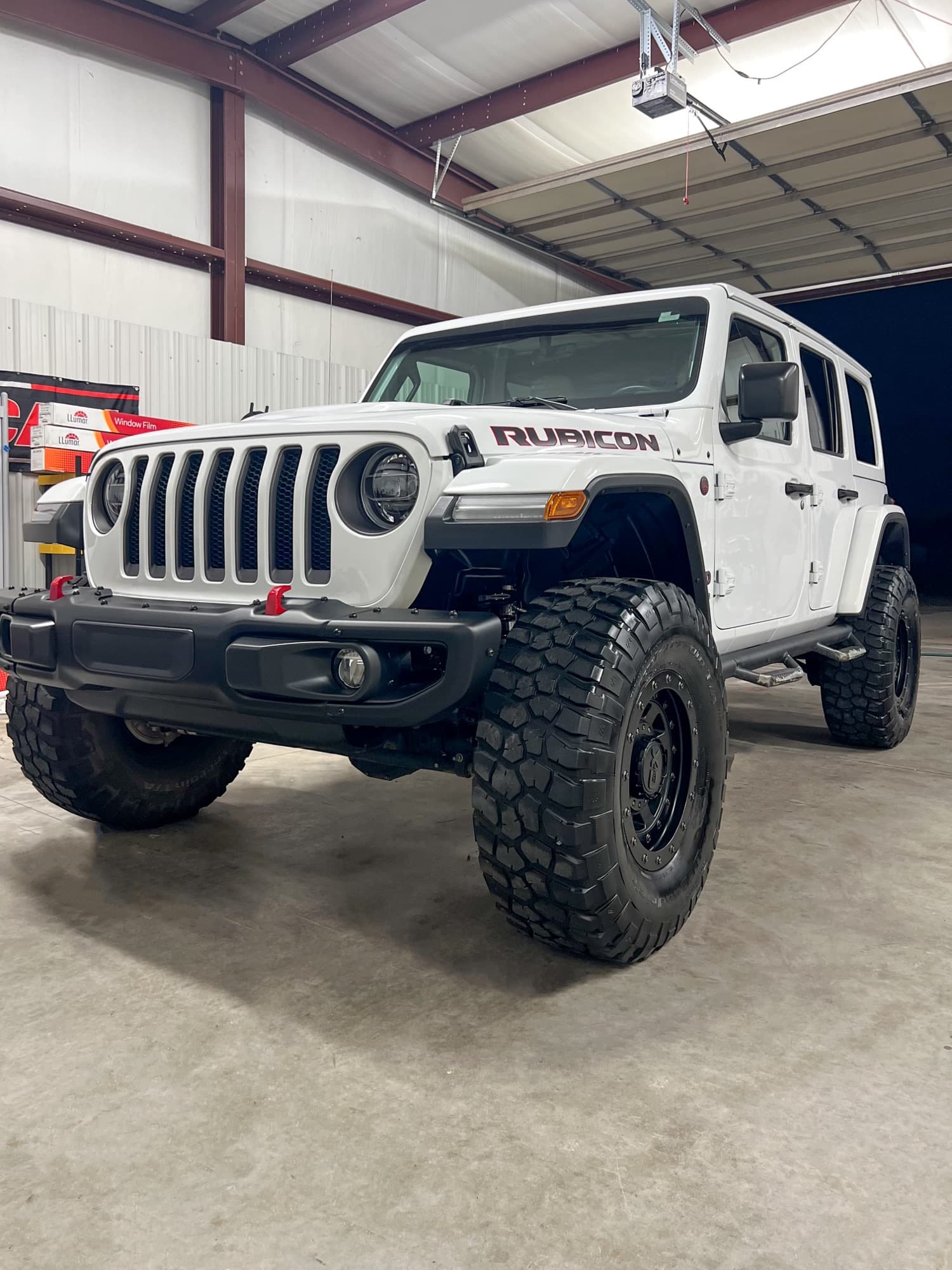
Upstate summers are hard on it. A Wrangler's flares, a pickup's bumper caps and the cowl panel below a windshield sit in direct sun for hours, then get washed with strong soaps that strip whatever protection was left. Harsh cleaners, road film and clay dust all speed it up.
Once fading starts, it does not reverse on its own. The options are to hide it, restore it, protect it, or replace the part.
Options
Dressing, Restorer, Coating or Replacement
- Trim dressingDays to weeks
- A wipe-on liquid, often silicone or oil based, that darkens trim by sitting on top of it. It looks good immediately, then rinses off in the rain and can streak onto paint and glass.
- Trim restorer or dyeMonths
- Products that re-darken faded plastic, either by re-wetting the surface or adding color back into it. They help heavily faded trim look even again but still wear away.
- Trim coatingUp to about two years
- A ceramic coating made for plastic. It bonds to the clean surface instead of sitting on it, so it survives washes and rain and slows UV fading. It is the best choice for trim that is new or freshly restored.
- ReplacementWhen the plastic is gone
- Trim that is cracked, brittle, or so oxidized it stays gray after restoration has reached the end of its life. A coating cannot rebuild it.
How it works
What a Trim Coating Does
IGL describes its trim coating as a reactive ceramic coating that forms a chemical bond with plastic. Its technical data sheet lists long-term color retention of up to two years, UV inhibition, improved resistance to light marring and a water and oil repellent surface. It is rated for interior and exterior plastic parts.
The bond is the difference. Because the coating is attached to the plastic rather than floating on it, it does not sling onto the paint the first time it rains, and it does not need to be reapplied every week. The trim also stays cleaner, since dirt and clay dust rinse off a repellent surface more easily.
Prep decides how long it lasts. IGL calls for washing, then degreasing the plastic so the coating can bond, and says any previous coating or dressing should be removed first. Coating over a silicone dressing is the most common reason trim coatings fail early.
Wash and degrease
Trim is scrubbed with a soft brush to lift old dressing and embedded dirt, then wiped with a panel prep or degreaser until it is bare and dull.
Restore if needed
Heavily faded plastic is brought back to an even color first. The coating locks in whatever color the trim has when it goes on.
Mask nearby paint
Edges next to paint and glass are taped where needed so the coating goes only where it is meant to.
Apply and layer
IGL's sheet calls for small sections, a short wait, then buffing, with a second layer after the first has set (about 30 minutes at room temperature).
Keep it gentle while it cures
IGL says full cure takes 3 to 5 days. During that time, rinse with plain water if needed and avoid harsh shampoos and all-purpose cleaners.
Headlights
Why Headlight Lenses Turn Yellow
Most modern headlight lenses are plastic, with a clear protective coating applied at the factory. AAA explains the problem simply: exposure to sunlight breaks down that plastic coating, and the lens turns yellow and cloudy.
This is a safety issue. In AAA's 2018 testing of headlights from two popular sedans about 11 years old, deteriorated headlights on low beam provided just 22 percent of the light of a new headlight. Professional and DIY restoration brought light output back to roughly 70 percent but produced more glare than federal criteria allow. Replacing with original equipment headlights restored output to 100 percent, and AAA recommends replacement as the most effective fix.
That gives you three realistic paths. Protect lenses while they are still clear. Restore lenses that are moderately hazy and then protect them. Replace lenses that are badly yellowed, cracked inside or still dim after restoration.
- New or clear lenses: a coating or clear film slows the breakdown of the factory layer.
- Hazy lenses: restoration sands and polishes off the failed layer; a protective coating must go on afterward or the bare plastic starts yellowing again.
- Yellow inside the lens, moisture or cracks: restoration cannot reach the inside; replacement is the fix.
- Rock-chipped lenses: clear paint protection film absorbs impacts better than a coating.
Exhaust tips
Coating Exhaust Tips: Heat Changes the Rules
Exhaust tips are polished or coated metal that gets hot, wet and covered in soot. Soot and condensation stain them, and baked-on deposits are hard to clean without abrasive polish that slowly wears the finish.
A standard paint coating is not designed for that heat. Coatings meant for metal and brake areas are formulated to tolerate it; IGL, for example, rates its wheel coating for metal surfaces to 300°C (572°F). How hot a tip gets depends on the vehicle, the exhaust design and how it is driven, so ask what a product is rated for before it goes on hot metal.
Coated tips are not stain-proof. The benefit is that soot wipes off with soap and water instead of metal polish, which keeps chrome or stainless looking bright longer. Tips must be completely cool, polished and degreased before coating.
Upkeep
Caring for Coated Trim and Lenses
Coated trim does not need dressings, and adding them can leave an oily film on top of the coating. Wash it with the rest of the car using a pH-neutral shampoo; IGL's sheet says neutral cleaners are enough and that strong acids and alkalis should be avoided. A soft detail brush gets clay and dust out of textured plastic without scratching.
For headlights, the same gentle wash applies. Skip abrasive cleaners and bug sponges on the lenses, which scratch the plastic. If a coated lens starts to look hazy at the edges, have it checked before it yellows all the way.
At The Auto Show, exterior plastics coating and headlight restoration are priced after a look at the vehicle; ask for a price.
Limits
What These Coatings Cannot Do
- They cannot bring back plastic that is cracked, brittle or chalky all the way through.
- They cannot fix yellowing or moisture inside a headlight housing.
- They do not stop rock chips on lenses or gravel scuffs on lower trim.
- They do not make exhaust tips stain-proof, and the wrong product can burn off a hot tip.
- They are not permanent. Sun and washing wear them down, and plastic in full sun wears coatings fastest.
| Part | What fails | Where a coating helps | When to replace instead |
|---|---|---|---|
| Black textured trim | UV fades and chalks the plastic surface | Slows fading on new or restored trim | Cracked, brittle or gray after restoration |
| Headlight lenses | Factory UV coating breaks down in sunlight | Protects clear or freshly restored lenses | Yellow inside, moisture, cracks, still dim |
| Exhaust tips | Soot and heat staining | Soot wipes off instead of polishing | Pitted or peeling tips |
| Gloss black trim pieces | Swirls and fine scratches from washing | Adds slickness so washing marks it less | Deep scratches or peeling finish |
Bring the trim back with the paint
We can add trim, plastics and glass to a coating package and look at faded headlights while the car is here. Ask for a quote and we will tell you what can be restored and what should be replaced.
Common questions
Can I put a paint ceramic coating on plastic trim?
It will stick, but paint coatings are formulated for smooth clear coat, not porous textured plastic, and they are not designed to restore color. A coating made for trim bonds to plastic and is formulated to slow fading. Gloss black painted trim pieces are different: they are paint, so a paint coating suits them.
How long does a trim coating last?
IGL lists color retention of up to two years for its trim coating. Real life depends on sun exposure, washing products and prep. Trim on the top of a cowl or a flat fender flare in full sun wears faster than a lower door molding. Strong degreasers and all-purpose cleaners shorten it, so stick to a pH-neutral shampoo.
Is it better to restore or replace foggy headlights?
AAA's testing found that original equipment replacement restored 100 percent of light output, while restoration returned about 70 percent with some glare, and AAA recommends replacement. Restoration is still a reasonable step for moderately hazy lenses on an older car, as long as the lens is protected afterward and the result is checked for light output and clarity.
Why do my headlights turn yellow again after restoration?
Restoration removes the failed factory coating along with the haze, which leaves bare plastic. Without a new protective layer, sunlight starts breaking down that bare surface again. A coating or clear film applied right after restoration is what makes the result last.
Will a coating stop my fender flares from fading on the lake or trail?
It will slow fading and make mud and clay rinse off more easily, which matters on a Wrangler or truck that sees boat ramps and gravel roads. It will not stop scratches from branches or rocks. For flares that take regular trail hits, plan on touch-up or replacement eventually.
Sources
- Technical Data Sheet: IGL Coatings Ecocoat Trim, version 2.10, revised 24 June 2025, IGL Coatings (https://iglcoatings.com/wp-content/uploads/2026/06/tds_ecocoat_trimv2_154286.pdf), accessed October 2026
- AAA Illuminates the Dangers of Driving with Cloudy Headlights, AAA NewsRoom (https://newsroom.aaa.com/2018/12/dangers-driving-cloudy-headlights/), accessed October 2026
- Ecocoat Wheel product page, IGL Coatings (https://iglcoatings.com/product/ecocoat-wheel/), accessed October 2026
Prices on this page are The Auto Show’s published starting prices and are confirmed after we inspect the vehicle. Product ratings and warranty terms come from the manufacturers.