
Ceramic Coating & PPF Guide: Understand
What PPF Protects Against (and What It Doesn't)
Paint protection film is sold on one image: a stone bouncing off a clear hood. That is the main job, but not the only one, and it is easy to come away thinking film protects against everything. It doesn't.
Here is a plain list of the damage film handles well, the damage it only reduces, and the damage it cannot do anything about, with notes on what each means for a car driven in the Upstate.
The short answer
Paint protection film protects paint from rock chips and road debris, sandblasting from highway grit, bug splatter, bird droppings, tree sap, road salt and light scratches and swirls, which its self-healing top coat can level out with heat. It reduces but does not eliminate damage from large stones and harsh chemicals. It does not stop dents, door dings, hail, collision damage or deep cuts, and it cannot fix damage already in the paint.
Key points
- Film is a physical, sacrificial barrier: anything that hits, scrapes or sits on the surface hits the film first.
- Its strongest case is the front end of highway-driven cars, where small stones and grit chip paint every week.
- Stains still need prompt cleaning; film resists them better than bare paint but is not immune.
- Anything that bends the metal, such as dents, dings and hail, goes straight through film's protection.
The principle
How Film Protects Paint
Film protects in two ways. Its thick, elastic urethane core absorbs and spreads out impacts that would crack a thin, hard clear coat. And its top coat takes the abrasion, staining and scratching that would otherwise land on the paint, healing light marks with heat and shrugging off many contaminants.
So the useful question for any threat is simple: does it hit or sit on the surface, or does it bend the panel underneath? Film is very good at the first and does nothing for the second.
Manufacturer documents back up the first part. Eastman's earlier LLumar technical specification says the film helps defend against abrasions, nicks and scratches from insects, small road debris, and winter salt and sand, and lists a pass on the SAE J400 gravelometer chip test. LLumar's current Platinum Matte page says the film guards against flying rocks, road salt, sand, bugs and oil.
Handles well
What PPF Protects Against
- Rock chips and road debrisThe main job
- Small stones thrown by tires, especially behind trucks and in construction zones, are absorbed by the urethane instead of chipping the clear coat. This is where film earns its price on the hood, bumper, mirrors and headlights. Why cars get rock chips
- Sandblasting and road gritFront-end wear
- Fine sand and grit at highway speed slowly pit and dull the leading edges of a car. Film takes that wear, and it can be replaced; paint would need refinishing.
- Bug splatterSummer evenings
- Bug remains are messy and can mark paint if left to bake. On film, they sit on the top coat and clean off more easily, which matters during Upstate summers.
- Bird droppingsStill clean promptly
- Droppings land on the film instead of the paint. LLumar's care advice still includes prompt removal of staining substances like bird droppings, because the top coat resists stains but is not immune.
- Tree sap and pollenEasier removal
- Pine sap and spring pollen stick to film rather than bonding to the clear coat, and a hydrophobic top coat like LLumar's HydroGard is designed to resist stains.
- Road salt and brineWinter mornings
- On the rare winter days when roads are pre-treated, salt spray hits the film instead of the paint. The car still needs a rinse afterward, underneath especially.
- Light scratches and swirlsSelf-healing
- Wash marring, fingernail marks around door handles and light scuffs deform the top coat without cutting it, and usually level out with sun, warm water or engine heat. How self-healing works
- Scuffs in high-touch spotsDoor cups, sills, bumpers
- Rings and keys in door handle cups, shoes on door sills and bags dragged over a rear bumper all scuff film instead of paint.
Only reduces
Damage Film Reduces but Can't Fully Prevent
Some threats are partly stopped. A large or sharp rock at highway speed can still cut film, and occasionally chip the paint underneath. Film greatly reduces how often that happens; it does not make it impossible.
Harsh chemicals are another gray area. A major film maker's installation bulletin warns that strong alkaline, acidic or alcoholic cleaning agents can do lasting damage to film. Some aggressive wheel cleaners, bug removers and traffic film removers fall into that category, so check labels before using them on filmed panels.
Water spots and etching are a third. Minerals left by sprinklers or hard water dry on film just as they do on paint. They are usually easier to remove from film, but a spot left baking for weeks can still leave a mark. The fix is the same as for paint: dry the car after washing and keep sprinklers off it.
Keying and vandalism fall here too. Film slows a casual scrape, but a deliberate scratch with a key or tool can cut through it and reach the paint.
Does not
What PPF Doesn't Protect Against
- Dents and door dings: film is thin and flexible, and it bends with the panel. If the metal moves, the dent is there under the film.
- Hail: hailstones dent panels. Film may prevent some paint cracking, but it does not stop the dent.
- Collision damage: any impact big enough to crack a bumper or crease a panel goes through film.
- Existing damage: chips, scratches, swirls and stains already in the paint are sealed in under film, not repaired. Paint is corrected first for that reason.
- Rust that has already started: film over an existing chip with rust beneath it does not stop the rust. Chips are repaired before film goes on.
- Unprotected areas: film only protects the panels it covers. A partial-front package leaves the rest of the car exposed.
Upstate SC
Local Threats and How Film Handles Them
Most of the damage film prevents is driving damage, so your commute matters. Daily trips on I-85 or US-29 behind loaded trucks, construction zones with loose gravel, unpaved roads near the lake, and red clay grit all hit the front of the car first. Spring pollen and sap, summer bugs and the occasional brined winter road are the rest of the list. The table on this page sums up how film handles each.
Placement
Where Protection Matters Most
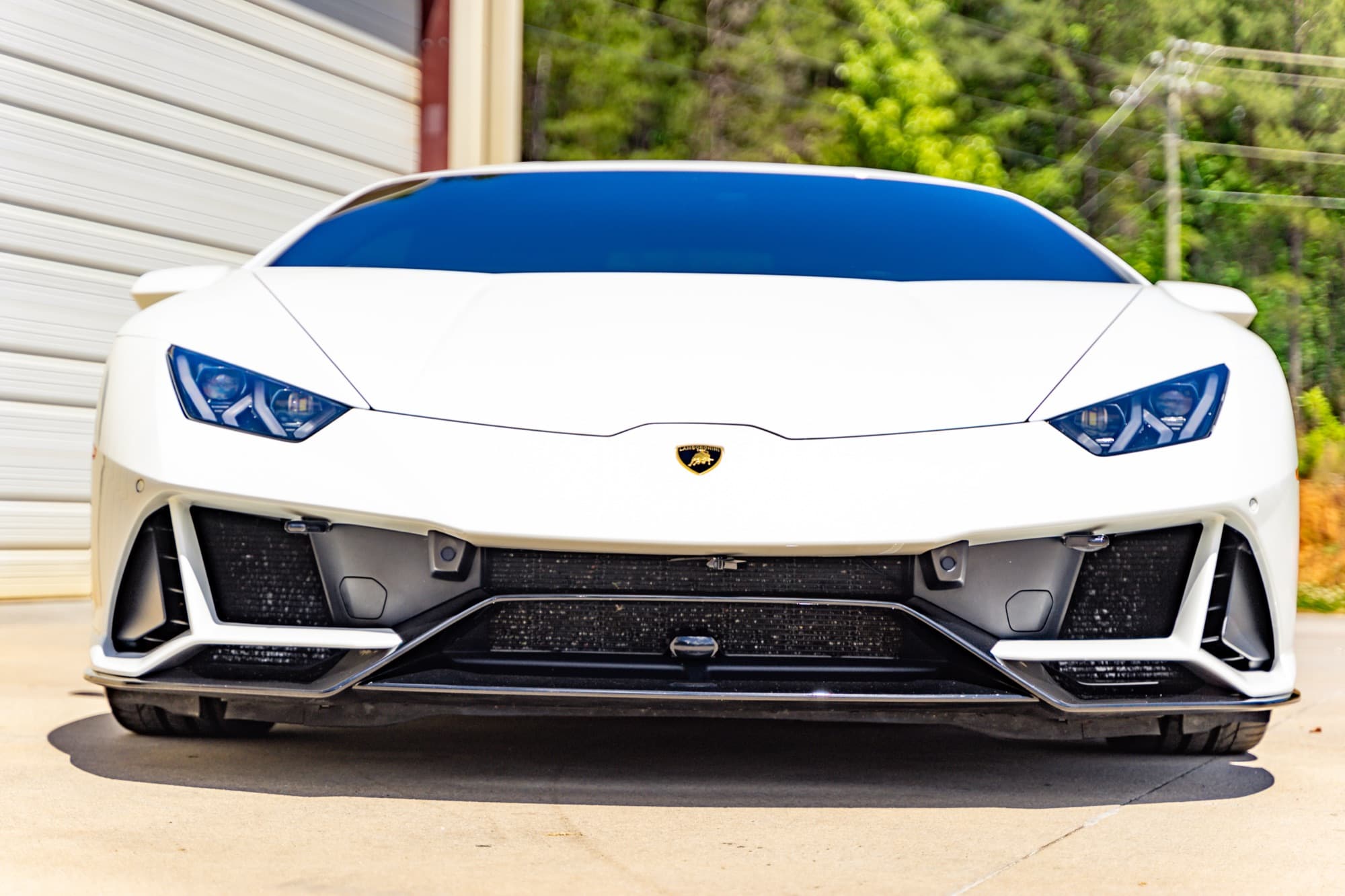
Because film only protects what it covers, placement is a real decision. The areas below take the most damage on most cars, roughly in order.
Front bumper
The lowest, most forward surface, hit first by every stone thrown up ahead of you.
Leading edge of the hood and fenders
Where stones land after clearing the bumper. A partial hood covers this zone; a full hood avoids a visible film line.
Mirrors and headlights
Mirrors stick out into the air stream; plastic headlight lenses pit and chip and are expensive to replace.
Rocker panels and lower doors
Hit by grit thrown from your own front tires, especially on trucks, lifted vehicles and cars driven on gravel or clay roads.
Door edges, door cups and rear bumper top
Small areas that get scuffed by keys, rings, shoes and cargo.
Honest take
Is Film Worth It for You?
Film is most valuable on a car you plan to keep, that sees regular highway miles, or whose paint is expensive to repair or match. It is less compelling on a car that rarely leaves town or that already has a front end full of chips, unless they are repaired first.
It is not either-or with a coating. A coating does not stop chips but makes the whole car glossier and easier to wash; film stops chips on the panels it covers. Many owners put film on the front end and coat the rest, including the film.
| Threat | How film handles it | What you still need to do |
|---|---|---|
| Gravel and debris on I-85, US-29, US-76 | Absorbs most small impacts | Keep following distance from trucks |
| Construction zones and gravel roads | Takes grit on bumper and rockers | Rinse wheel wells and lower panels |
| Spring pine pollen and sap | Sits on the top coat, washes off easier | Wash, do not dry-wipe pollen |
| Summer bugs | Cleans off with less scrubbing | Remove within a day or two |
| Bird droppings | Barrier between dropping and paint | Remove promptly; heat speeds staining |
| Winter brine pre-treatment | Shields front-end paint from spray | Rinse the car and undercarriage |
| Hail and parking lot dings | No real protection | Covered parking, insurance |
Protect the parts that take the hits
We install LLumar Platinum PPF in packages that cover the front end, high-impact areas or the whole car. Ask for a quote and we will recommend coverage for the way you drive.
Common questions
Does PPF protect against hail?
Not in any meaningful way. Hail damage is mostly dents, and film bends with the metal. Film may stop some paint from cracking where a stone or small hailstone strikes, but the panel still dents. Covered parking and comprehensive insurance are the real protection against hail.
Can PPF stop someone keying my car?
It can stop a light, accidental scrape, and some of those marks will heal. A deliberate scratch with a key, screwdriver or other hard point usually cuts through film and can reach the paint. The upside is that the damaged section of film can be replaced, and the paint may be untouched or less damaged than it would have been.
Does PPF protect against bird droppings in the summer heat?
It puts a barrier between the dropping and your clear coat, which is a big help in hot weather when droppings mark bare paint fastest. Film still benefits from prompt cleaning, because a dropping baked on for days can stain the top coat. Soak it with a quick detailer or water, then lift it off gently.
Can PPF go on headlights, carbon fiber or plastic parts?
Headlight lenses are a common and worthwhile place for film, since they chip and pit. Film can be installed on carbon fiber, but LLumar's FAQ notes carbon fiber is not OEM paint and is not eligible for its warranty. Textured unpainted plastic does not take film well; a trim coating suits it better.
Does PPF protect against road salt?
It shields the painted panels it covers from salt spray, which is useful on the few mornings Upstate roads are pre-treated. It does not protect the undercarriage, wheel wells or unfilmed panels, and salt left sitting on film should still be rinsed off. Rinse the whole car, underneath included, after driving on treated roads.
Keep reading
Sources
- Self-Healing Paint Protection Film Technical Specification (01/19), Eastman Performance Films / LLumar (https://vikiallo.dk/wp-content/uploads/data_sheets/558130_ENG_010119.pdf), accessed October 2026
- Platinum Matte Paint Protection Film, LLumar (https://llumar.com/na/en/automotive/paint-protection-film/platinum-matte), accessed October 2026
- Platinum Gloss Paint Protection Film, LLumar (https://llumar.com/na/en/automotive/paint-protection-film/platinum-gloss), accessed October 2026
- Paint Protection Film Frequently Asked Questions, LLumar (https://llumar.com/en/resources/paint-protection-film-frequently-asked-questions/), accessed October 2026
- 3M Paint Protection Film Installation Guidelines, Instruction Bulletin, October 2024, 3M (https://multimedia.3m.com/mws/media/2159838O/3m-paint-protection-film-installation-guidelines-en-we.pdf), accessed October 2026
Prices on this page are The Auto Show’s published starting prices and are confirmed after we inspect the vehicle. Product ratings and warranty terms come from the manufacturers.