
Ceramic Coating & PPF Guide: Understand
Ceramic Coating Wheels and Brake Calipers
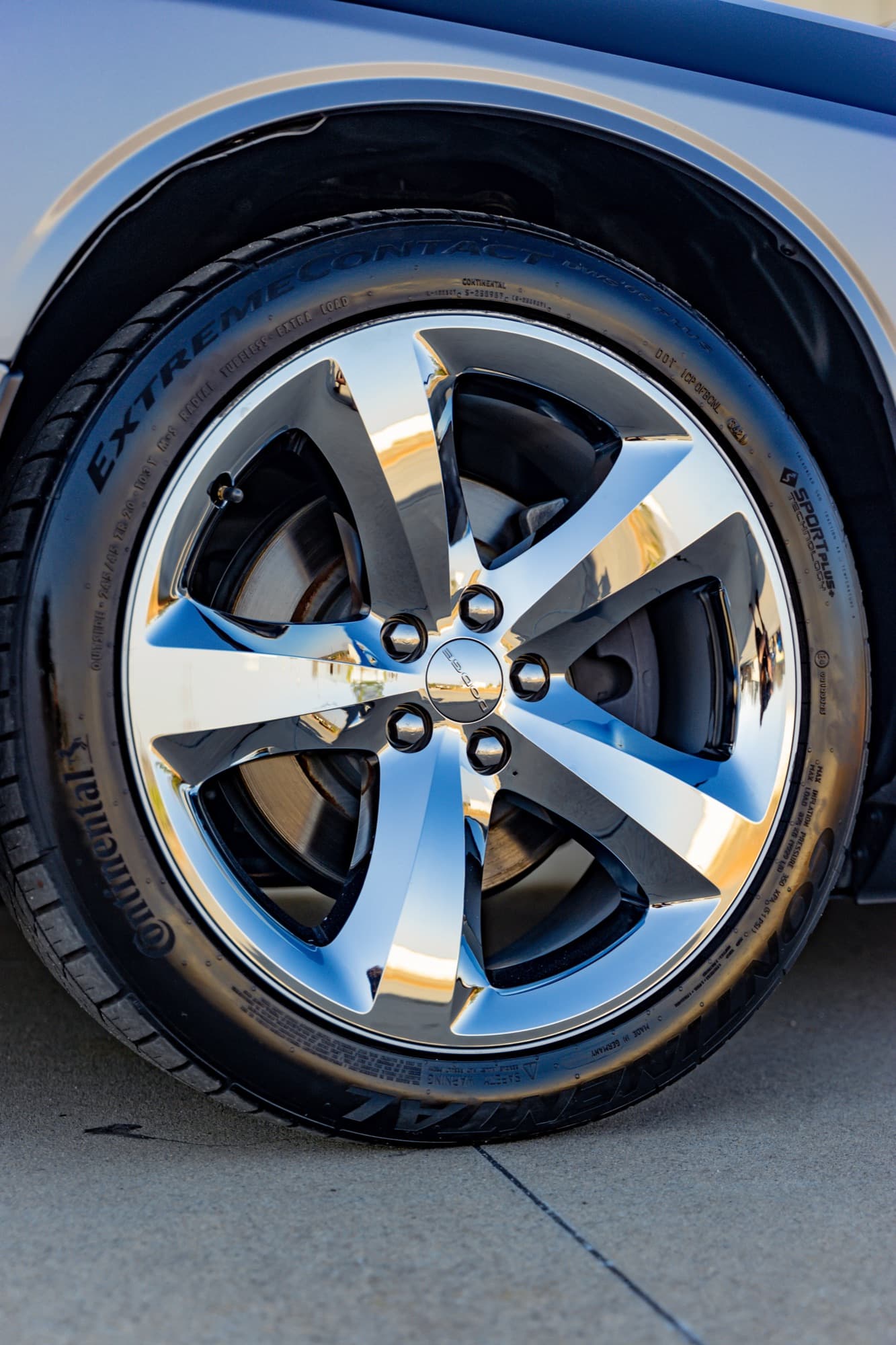
Wheels take more abuse than any painted panel. They sit closest to the road, collect hot brake dust every time you slow down, and get the harshest cleaners at most car washes. They are also where a coating makes one of the most noticeable day-to-day differences.
This guide explains what wheel coatings do against brake dust and heat, the difference between coating the faces and coating the whole wheel, how calipers fit in, and how to keep coated wheels clean.
The short answer
A wheel coating is a heat-tolerant ceramic coating applied to clean, decontaminated wheels so brake dust and road grime cannot bond as easily. Dust that would bake on rinses off with a pH-neutral cleaner and a soft brush. Coating only the wheel faces is quick and covers what you see; removing the wheels lets the installer coat the barrels and painted calipers too. Coatings reduce cleaning effort, not the need to clean.
Key points
- Brake dust is largely iron from disc wear, and it bonds to wheels when hot.
- Wheel coatings are formulated for more heat than paint coatings; check the product's rating.
- Faces-only coating is faster; wheels-off coating covers barrels and calipers.
- Wheels must be fully de-ironed and degreased first, or the coating bonds to the dust.
- Acidic or strongly alkaline wheel cleaners shorten a coating's life; use pH-neutral products.
The problem
Why brake dust is so hard on wheels
Every time you brake, the pads and discs wear a little, and the debris has to go somewhere. Much of it lands on the wheels. Research on airborne brake wear particles found iron, mostly as iron oxide, was the most abundant element at roughly a third to half of the particles' mass, with the brake disc as the main source.
That iron arrives hot. On bare or poorly protected wheels it embeds into the finish and, combined with moisture, can leave orange-brown staining that ordinary soap will not lift. That is why iron removers, which dissolve iron particles and often turn purple as they work, are a standard part of wheel cleaning.
Wheels also catch everything else the road throws: red clay spray, tar, winter brine on the occasional treated road and grime from lake ramp runoff. A coating gives all of it less to grab onto.
Heat
Why wheels need a heat-tolerant coating
Wheels get hot from the brakes, especially after repeated hard stops, long downhill grades or towing. A coating made for painted body panels is not necessarily formulated for that.
Dedicated wheel coatings are. IGL markets its Ecocoat Wheel as a high-heat coating for alloy and metal surfaces, rated by the manufacturer to resist up to 300°C, and states durability of up to 1 year. Its single-layer EZ coating is also marketed for wheels and calipers. Ratings like these are manufacturer figures; heavy track use or sustained hard braking goes beyond normal street conditions, and an installer should match the product to how you drive.
- Brake dust is not the only heat source
- Performance cars with large brakes, trucks that tow and vehicles that see mountain driving all run hotter wheels. Mention it when you discuss a wheel coating so the right product goes on.
Coverage
Wheel faces vs full wheels
There are two common ways to coat wheels, and the difference is access. With the wheels on the car, the installer can clean and coat the faces and as much of the spokes and lip as they can reach. With the wheels off, they can coat the inner barrels, the back of the spokes and every surface a brush will touch later.
- Faces onlyWheels on
- Covers what you see. Faster and less expensive, and enough for many daily drivers. The barrels behind the spokes stay uncoated, so they still collect bonded dust.
- Full wheelWheels off
- Covers faces, barrels and lips, and opens access to calipers. More labor, but cleaning becomes easier everywhere, which matters most on open-spoke designs where the barrel is visible.
At The Auto Show, wheels and wheel faces are separate coating add-ons; ask for a price for your wheel size and design.
Calipers
Coating brake calipers
Painted calipers, whether factory colored or aftermarket painted, sit right in the dust stream. Over time, brake dust and road grime dull and stain them. A heat-tolerant coating applied to clean, dry calipers makes that grime easier to rinse off and helps the color stay bright.
Calipers are realistically coated with the wheels off, because the installer needs to reach them, clean them thoroughly and work around brake lines and hardware. The coating goes only on the painted caliper body, never on the discs, pads or anything involved in braking.
Calipers with flaking or poor paint are not good candidates. A coating protects a finish; it does not hold failing paint together.
Finishes
Coating different wheel finishes
- Painted and clear-coated alloys: the most common finish, and the easiest to coat. Light marring can be polished first.
- Powder-coated wheels: coat well once clean; avoid aggressive polishing on textured powder coat.
- Gloss black: shows dust and marring quickly, so a coating has an obvious payoff.
- Matte and satin wheels: need a matte-safe product and no polishing, so the finish does not gain shine.
- Polished bare aluminum: needs to be polished and fully clean first; untreated aluminum oxidizes, and the coating must go on a clean surface.
- Chrome: can be coated after thorough cleaning; check for pitting, which a coating will not fix.
Prep
How wheels are prepared for coating
Cool down
Wheels are cleaned and coated cool. IGL's data sheets specify that surfaces must not be hot during application.
Deep clean
A wheel cleaner and soft brushes remove loose dust and grime from faces, spokes and, with wheels off, barrels.
Iron removal
An iron remover dissolves embedded brake dust. Unless the vehicle is brand new, expect this step to take time on wheels.
Tar and polish
Tar remover handles road tar; light polishing removes oxidation or marring where needed.
Degrease and coat
A prep wipe removes residue, then the coating goes on in small sections. IGL's wheel data sheet calls for a second layer after about 2 hours and about 4 hours away from water.
Care
Cleaning coated wheels
Coated wheels clean faster, but they still need cleaning. Brake dust lands on them every drive, and if it is left for weeks it will still bond. Clean them every time you wash the car.
Product choice matters. IGL's data sheets for its wheel and paint coatings recommend cleaners in the pH 3 to 9 range and warn that strong acids and alkalis are unnecessary and damaging. Many strong wheel cleaners sold for bare wheels fall outside that range, so check the label and choose a pH-neutral or coating-safe wheel cleaner.
- Clean wheels when they are cool, never right after a drive.
- Use a separate bucket, mitt and brushes for wheels so brake dust never reaches the paint.
- Use soft wheel brushes and a pH-neutral or coating-safe cleaner.
- Rinse thoroughly, including barrels and lug nut recesses.
- Use an iron remover made for coated surfaces a few times a year, or when dust starts to bond.
- Dry the wheels to avoid water spots on dark or polished finishes.
| Faces only | Wheels off | |
|---|---|---|
| Surfaces covered | Faces, visible spokes and lip | Faces, spokes front and back, barrels, lips |
| Calipers | Not practical | Can be cleaned and coated |
| Labor | Less | More |
| Best for | Daily drivers, closed-spoke wheels | Open-spoke wheels, performance cars, show-quality results |
| Cleaning afterward | Faces easy, barrels still bond dust | Easier everywhere |
Add wheels to your coating
Wheels, wheel faces, glass, plastics and seats can be added to any IGL coating package. Unless the car is brand new, wheels are de-ironed and polished where needed first. Ask for a price.
Common questions
Is ceramic coating wheels worth it?
For most drivers, yes, especially with gloss black, open-spoke or performance wheels that show dust quickly. The coating does not stop dust from landing, but it keeps it from bonding, so cleaning takes a fraction of the scrubbing. Wheels also tend to be cleaned with harsh products at car washes, and a coating plus gentle cleaning keeps the finish looking newer longer.
How long does a wheel coating last?
Less than a paint coating, as a rule, because wheels face heat, brake dust and more aggressive cleaning. IGL rates its dedicated wheel coating for up to 1 year. Real life depends on driving style, how hot the brakes run and whether the wheels are cleaned with pH-neutral products. A booster spray after washing can help between applications.
Can I use regular wheel cleaner on coated wheels?
Check the label first. Many heavy-duty wheel cleaners are strongly acidic or alkaline, and coating makers such as IGL recommend staying in the pH 3 to 9 range. Those strong cleaners can weaken a coating's water repellency over time. A pH-neutral or coating-safe wheel cleaner, soft brushes and a periodic iron remover are all a coated wheel needs.
Will coating my calipers affect braking?
Not when it is done correctly. The coating goes only on the painted outer body of the caliper, away from the pads, discs and moving parts, and it is applied with the wheels off so the installer can see exactly where it goes. Discs and pads are never coated. If you have performance or track brakes, mention it so a suitable heat-tolerant product is chosen.
Sources
- Hyman et al., Physicochemical and Toxicological Characterization of Airborne Brake Wear Particles, Environmental Science & Technology, 2026, via University of Manchester Research Explorer (https://research.manchester.ac.uk/en/publications/physicochemical-and-toxicological-characterization-of-airborne-br/), accessed October 2026
- Ecocoat Wheel, IGL Coatings (https://iglcoatings.com/products/ecocoat-wheel), accessed October 2026
- Technical Data Sheet: Ecocoat Wheel (material no. 154292, rev. 08.09.2023), IGL Coatings (https://iglcoatings.com/wp-content/uploads/2023/09/tds_ecocoat_wheel_154292.pdf), accessed October 2026
- Ecocoat EZ, IGL Coatings (https://iglcoatings.com/products/ecocoat-ez/), accessed October 2026
- Technical Data Sheet: Ecocoat Kenzo K1 (material no. 154343, rev. 08.09.2023), IGL Coatings (https://iglcoatings.com/wp-content/uploads/2023/09/tds_ecocoat_kenzo_K1_154343.pdf), accessed October 2026
Prices on this page are The Auto Show’s published starting prices and are confirmed after we inspect the vehicle. Product ratings and warranty terms come from the manufacturers.