
Ceramic Coating & PPF Guide: Understand
Windshield Glass Coating: How It Works
A glass coating is the one part of a coating package you notice every time it rains. Water that used to smear across the windshield gathers into tight beads and, once you are moving at highway speed, blows off the glass before the wipers ever reach it.
It is also the most misunderstood part. A windshield coating is not the same product as a paint coating, it does not last as long, and it does not replace your wipers. This guide explains how the chemistry works, what changes on the road, and what wears it away.
The short answer
A windshield glass coating is a thin, clear layer that chemically bonds to clean glass and makes it strongly water and oil repellent. Rain beads up and, at roughly highway speed, the airflow pushes it off the glass, so you need the wipers less and see better at night. It does not stop chips or cracks, it still needs working wipers, and it wears faster than a paint coating, typically lasting about a year.
Key points
- A glass coating bonds to the glass itself, so the windshield has to be deep-cleaned with an abrasive glass polish first or the coating will not hold.
- The benefit is biggest at speed: beads blow off the windshield on the highway, while in town you will still use your wipers.
- Worn wiper blades and glycol-based washer fluid are the usual causes of streaks on coated glass, not the coating itself.
- IGL rates its Ecocoat Window coating for up to a year; wiper strokes and harsh cleaners are what use it up.
The chemistry
What a Glass Coating Actually Is
Most professional glass coatings are two-part products. One part carries the protective ingredient in a solvent, the other carries a catalyst, and the installer mixes them just before use. IGL lists triethoxysilane as the protectant in its Ecocoat Window kit, with ethanol and isopropyl alcohol as the carriers and an acid catalyst to start the reaction.
Silane chemistry is a good match for glass because glass is mostly silica. The coating reacts with the clean glass surface and leaves behind a very thin, low-energy layer that water and oils do not want to wet. IGL describes the result as hydrophobic (water repelling) and oleophobic (oil repelling), and its technical data sheet notes that the coating's durability depends on how well it chemically bonds to the glass.
That is the main difference from a quick rain-repellent wipe-on. A spray product mostly sits on the surface. A properly applied two-part coating is bonded to it, which is why it survives more wiper strokes and more washes.
On the road
What Changes When It Rains
On untreated glass, rain spreads into a sheet with streaks and blurry patches that scatter headlights at night. On coated glass, the water pulls itself into round beads. Once the car is moving fast enough, the airflow over the windshield pushes those beads up and off the glass. On I-85 or US-76 in a summer storm, that can mean long stretches with the wipers on their lowest setting or off.
Below that speed, in town or in a parking lot, the beads simply sit there. The coating makes each wiper pass cleaner, but it does not replace the wipers. IGL's own data sheet says plainly that a coated windshield does not mean you can do without wipers and that you should run them whenever you need them for a clear view.
There is research behind the visibility claim. A 1997 University of Michigan Transportation Research Institute study tested a hydrophobic windshield coating under simulated driving conditions and found it reduced the smallest detail drivers could resolve by almost 34 percent and cut response time by more than a second. The researchers noted that they tested only freshly applied coatings, so the effect should be expected to fade as the coating wears.
- Night rain: less smearing means less glare from oncoming headlights.
- Bugs: summer splatter releases more easily during a wash, which IGL lists as a benefit.
- Frost and ice: IGL says coated glass is easier to de-ice; you will still need a scraper on a cold Upstate morning.
- Dirt film: road grime and pollen rinse off with less scrubbing.
Application
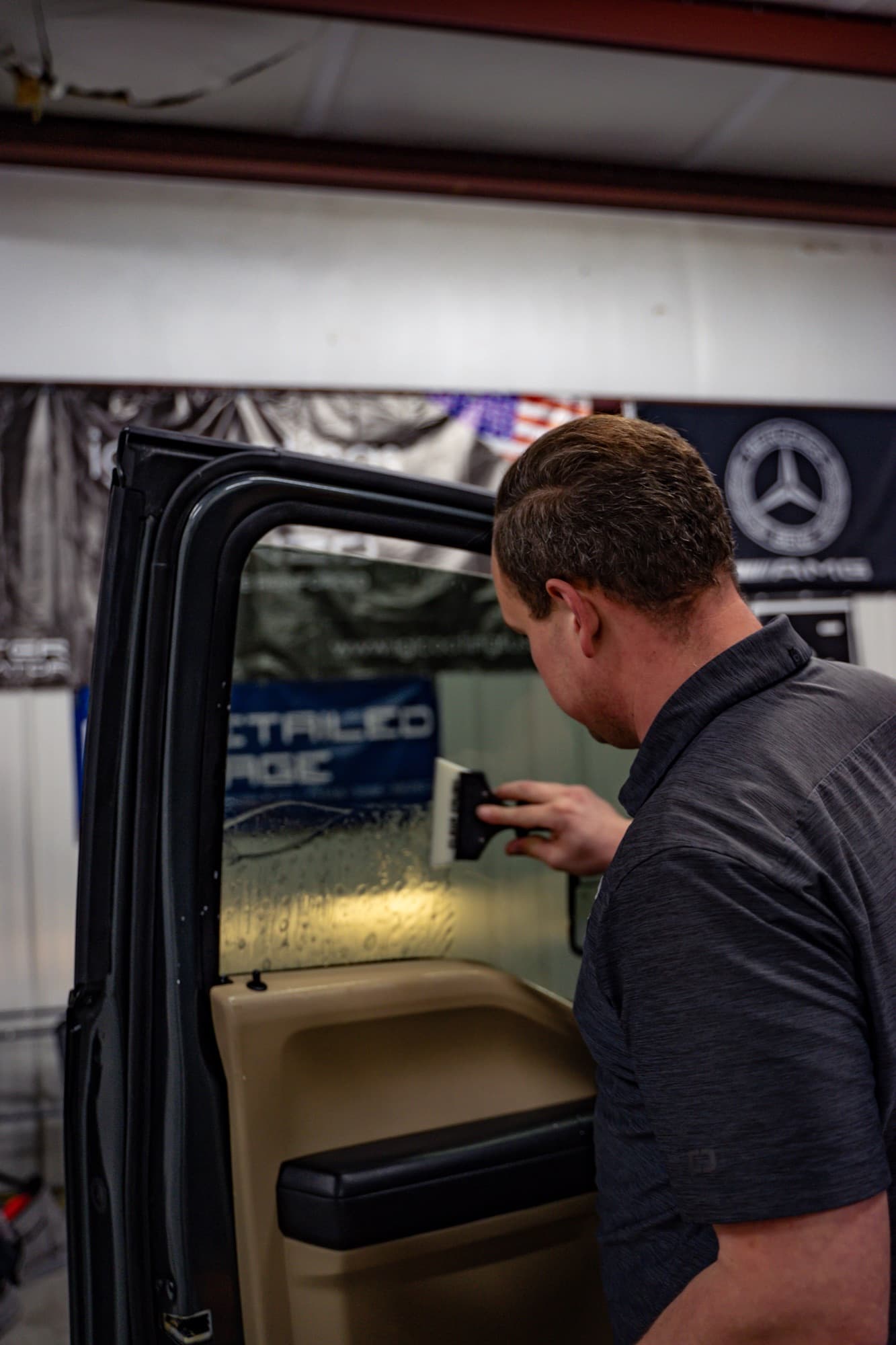
How a Windshield Gets Coated
The product is quick to apply. The preparation is the real work, because the coating can only bond to glass that is truly clean. IGL's technical data sheet lays out the steps below for its windshield coating.
Abrasive glass cleaning
The glass is polished with a fine abrasive glass cleaner, worked for several minutes until water forms a thin even film, then wiped or rinsed off completely. This removes old repellents, wiper haze and mineral film that a normal glass cleaner leaves behind.
Dry and coat right away
The glass is dried with a clean cloth and coated immediately, before dust or fingerprints can settle back on it.
Mix and apply in halves
The two parts are mixed 1 to 1 and shaken. The windshield is done one half at a time, polishing the liquid in up and down, then side to side, with overlapping passes so there is no untreated stripe down the middle.
Buff off after about an hour
Excess is buffed off with a clean microfiber towel. IGL notes you will feel some resistance as you buff; that is normal.
Keep it dry while it sets
The coated glass should air dry for about four hours without water contact, and wipers should be avoided if possible. The repellent effect shows within the first hour and strengthens over the next few hours.
IGL also says not to apply the coating in direct sun, on hot glass or below 50°F, with 59 to 77°F preferred. That is one reason glass coating is done indoors rather than in a driveway in July.
Wipers
Wipers, Washer Fluid and Streaks
Most complaints about coated windshields turn out to be wiper complaints. A blade with a torn or hardened edge leaves a thin line of water behind on any glass, and on coated glass that line beads up and looks worse. IGL's data sheet names worn wiper blades as a cause of streaks on coated glass and says the fix is to replace them.
Washer fluid matters too. IGL specifically warns against glycol-containing antifreeze agents in the washer reservoir because they can leave streaks on the coating. Check the label on your winter washer fluid before you top up, and ask for a fluid that is compatible with coated glass.
Two habits help the coating last: do not run the wipers on dry glass, and use the washer spray before the blades whenever the windshield is dusty. Dragging dry blades over red clay dust or pollen is abrasive for any windshield, coated or not.
Lifespan
How Long a Glass Coating Lasts
IGL rates Ecocoat Window for up to one year. That is shorter than a paint coating for a simple reason: no painted panel gets scraped by a rubber blade thousands of times a month. Every wiper stroke, every pass of a gas-station squeegee and every abrasive glass cleaner removes a little of the layer.
At The Auto Show, the IGL Ecocoat Window coating is $100 for the windshield or $250 to $350 for all windows, and the shop's guideline is that it lasts about 20,000 miles. Think of the year and the mileage together: a commuter who drives 25,000 miles a year will likely wear through it before the calendar does.
The wear shows up gradually. Water starts to sheet instead of bead on the lower part of the windshield, where the wipers rest and work hardest, while the top edge still beads. When the wiped area no longer clears at highway speed, the coating has done its job. IGL's recoat method is the same as the first application: remove what is left with the abrasive glass cleaner, then coat again.
Which glass
Windshield, Side Windows or Everything
- WindshieldMost benefit, most wear
- This is where you see the rain repellency at speed and at night. It is also the glass that wears out first because of the wipers.
- Front side windowsOften overlooked
- Beaded side glass makes it much easier to see your mirrors in the rain. With no wipers touching it, the coating on side glass usually holds up longer than on the windshield.
- Rear glassCheck for a rear wiper
- On SUVs and hatchbacks with a rear wiper, the same wiper rules apply. On sedans and truck back glass, coating mainly keeps the glass cleaner and improves the view in the rearview mirror.
- Tinted windowsDifferent sides
- Window film goes on the inside of the glass and a glass coating goes on the outside, so the two do not interfere. Tinting is covered separately. Window tinting
- Painted panelsA different product
- Glass coating is formulated for glass. Paint, wheels and trim get their own coatings with their own chemistry and ratings. What a paint coating is
Limits
What a Glass Coating Will Not Do
- It will not stop a rock chip or a crack. A windshield chip from a gravel truck happens the same way on coated glass.
- It will not remove pitting, deep water-spot etching or wiper scratches. Those are physical damage in the glass, and the coating sits on top of them.
- It will not fix a smeared view caused by old blades or the wrong washer fluid.
- It is not a substitute for using your wipers. Run them whenever you need them to see clearly.
- It is not permanent. Plan to have it redone once beading fades from the wiped area.
| Habit | Effect on the coating | Better option |
|---|---|---|
| Wiping dry, dusty glass | Grit under the blade abrades the layer | Spray washer fluid first, or rinse |
| Worn or hardened wiper blades | Streaks, missed spots, extra friction | Replace blades when they chatter or streak |
| Glycol-based washer fluid | Streaks on the coated surface (per IGL) | Use a fluid compatible with coated glass |
| Abrasive glass cleaners or scrub pads | Polishes the coating away | Plain water, car shampoo or a gentle glass cleaner |
| Gas-station squeegee every fill-up | Repeated scraping with grit | Rinse at home or during your regular wash |
General care guidance; follow the care instructions you receive with your coating.
Add glass coating to your next appointment
We apply IGL Ecocoat Window to windshields and full glass sets, on its own or with a paint coating. Ask for a quote and we will confirm the price for your vehicle.
Common questions
Can I apply a windshield coating myself?
Consumer kits exist, and the coating step itself is simple. The hard part is the prep: the glass must be polished with an abrasive glass cleaner until it is completely clean, then coated in the shade on cool glass. IGL lists a working range of 50 to 86°F and says not to coat in direct sun. Skipped prep is the main reason a DIY coating fades in weeks.
Why does my coated windshield chatter or streak?
On coated glass, the usual cause is the wiper blade, not the coating. A blade with a hardened or torn edge skips and leaves lines that bead up and stand out. IGL also warns that glycol-containing washer fluid can streak the coating. Replace the blades, switch fluids, and the glass normally wipes cleanly again.
Can I use a store-bought rain repellent on top of a glass coating?
There is little reason to. Layering a different product on top can change how the glass wipes and may cause smearing, and IGL's recoat process starts by removing any previous treatment with an abrasive glass cleaner. If the coating is fading, have it stripped and recoated rather than topping it with a spray.
How do I clean a coated windshield?
Wash it with the rest of the car using a pH-neutral car shampoo, or use plain water and a clean microfiber towel. For the inside, any normal glass cleaner is fine, since the coating is on the outside. Avoid abrasive pads, polishing compounds and strong cleaners on the outside, because they wear the coating away.
Is a glass coating worth it if I mostly drive in town?
You get less of the hands-free effect, since beads only blow off at higher speeds. You still get cleaner wiper passes, easier bug and grime removal, and a clearer view through side glass in the rain. For drivers who spend a lot of time on the interstate at night, the benefit is easiest to feel.
Sources
- Technical Data Sheet: IGL Coatings Ecocoat Window, version 1.19, revised 8 September 2023, IGL Coatings (https://iglcoatings.com/wp-content/uploads/2023/09/tds_ecocoat_window_154287.pdf), accessed October 2026
- Ecocoat Window product page, IGL Coatings (https://iglcoatings.com/product/ecocoat-window), accessed October 2026
- The Influence of Hydrophobic Windshield Coating on Driver Visual Performance (UMTRI-97-31), Sayer, Mefford, Flannagan, Sivak and Kojima, University of Michigan Transportation Research Institute, via TRID (https://trid.trb.org/View/471871), accessed October 2026
Prices on this page are The Auto Show’s published starting prices and are confirmed after we inspect the vehicle. Product ratings and warranty terms come from the manufacturers.