
Ceramic Coating & PPF Guide: Compare
Jeep Wrangler Paint Protection: Film, Coating and Trail Care
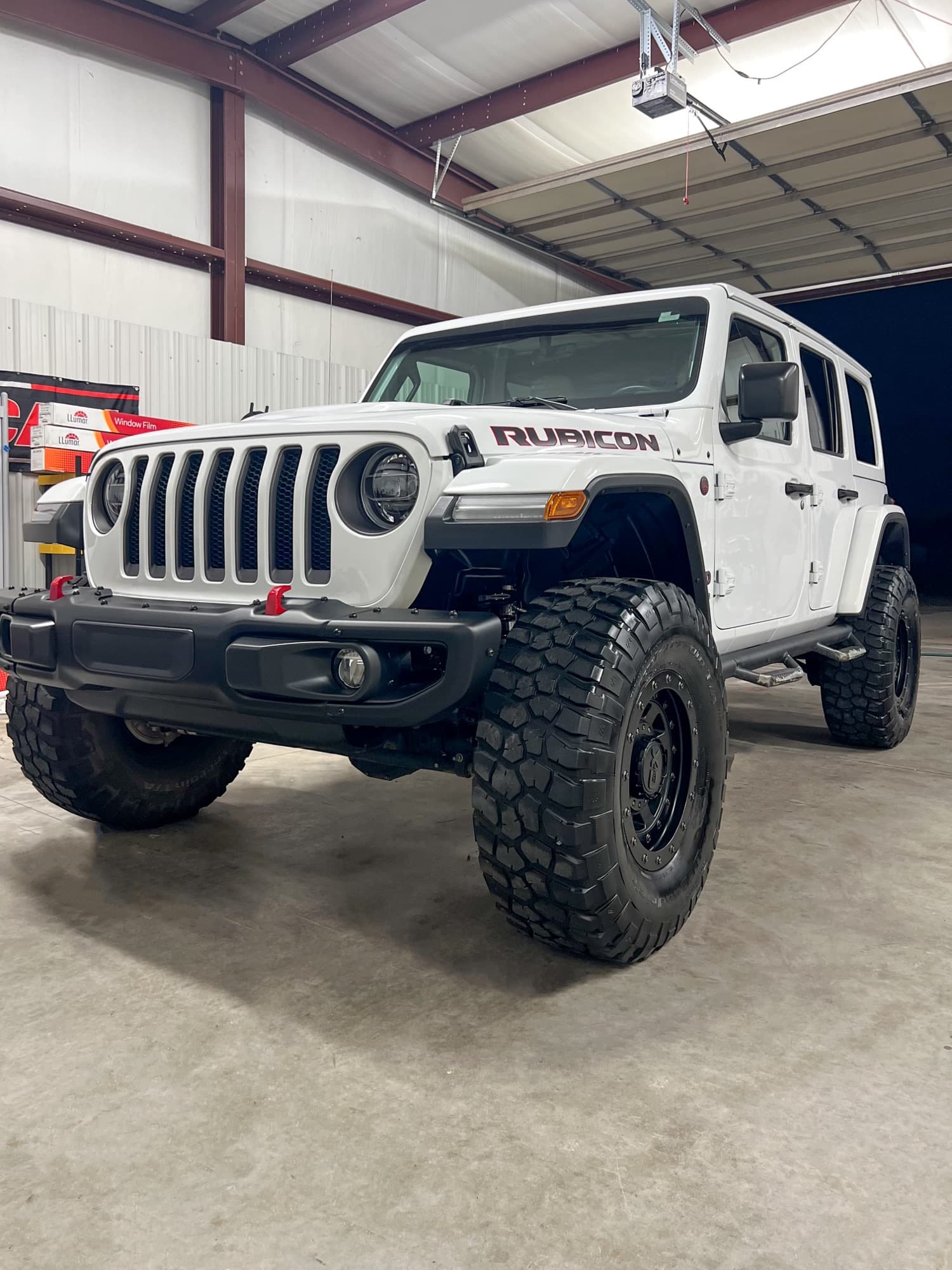
A Wrangler is built to be used, and its paint knows it. Brush along a narrow trail draws fine scratches down the sides, the upright windshield and flat hood face the weather head on, and the exposed fenders sit right over the tires. Then the doors and top come off for summer, and every removable panel gets handled, stacked and stored.
Protecting a Wrangler is less about keeping it perfect and more about putting the right layer in the right place. Here is how film and coatings fit a Jeep, from daily drivers to weekend trail rigs.
The short answer
For a Wrangler, the most useful protection is clear PPF on the hood, front fenders, cowl and the body sides that brush hits on trails, with thicker film on the lower body if you wheel often. Add a ceramic coating on the remaining paint, the hard top and plastic trim to make mud and red clay rinse off. Film resists light trail scratches far better than a coating, but no product stops deep scrapes from rocks or branches.
Key points
- Trail pinstriping from brush is the classic Wrangler paint problem; film resists it, coatings do not.
- The flat hood and exposed front fenders take stone chips, sun and pollen head on.
- On JL Wranglers, the automaker says the doors, hood, fenders and windshield frame are aluminum, which matters for body repair costs.
- Removable doors and tops need film edges planned so panels can come off without catching or lifting.
- A coating on the hard top, trim and wheels makes post-trail cleanup much faster.
The problem
How Wranglers Get Damaged
- Trail pinstripingBrush and branches
- Narrow trails drag twigs and brush along the body sides and fenders, leaving fine scratches that run front to back. Light ones polish out; repeated ones add up. Film over the sides takes these instead of the paint.
- Hood and cowlFlat and exposed
- The Wrangler hood is broad and nearly flat, so it collects pollen, leaves and bird droppings, and it faces the sun all day. The front edge and cowl take highway chips.
- Front fendersRight over the tires
- The exposed front fenders sit above big tires that throw mud and stones upward. Aggressive tread and a lift make this worse. Lower-body protection
- Upright windshieldGlass takes the hits
- A near-vertical windshield takes stones squarely. Film does not usually go on a windshield, but a glass coating helps rain and bugs clear and makes wiper passes smoother. How glass coating works
- Removable doors and topsHandling damage
- Every time the doors or top come off, they are lifted, carried and stored. Corners and edges get bumped and scuffed, often more than on the trail.
Materials
Why Aluminum Panels Raise the Stakes
When the JL generation launched for 2018, the automaker confirmed that the Wrangler's doors and hood are aluminum, and said the windshield frame and fenders are aluminum too, in a body that mixes steel, aluminum and magnesium, including a magnesium tailgate. Collision-industry coverage at the time warned repair shops that fixing and isolating aluminum takes specific equipment and training.
For owners, the practical point is that body repair on these panels can cost more and take longer than on steel, and not every body shop is set up for it. Preventing the paint damage in the first place, rather than repairing and repainting later, is worth more on a vehicle built this way. Check your model year and trim, since materials can vary.
Film plan
Where PPF Pays Off on a Wrangler
Hood, cowl and front fenders
The core of any Wrangler film plan. Full hood coverage avoids a film line across the flat hood, where it would be easy to see.
Body sides and doors
If you drive trails, film on the doors and rear quarters is what stops pinstriping. Ask how the installer handles door edges and hinge areas so doors can come off without catching the film.
Lower body and rocker area
For regular off-roading, a thicker grade on the lowest painted areas takes gravel and flung rocks better than standard film.
Mirrors and headlights
Small areas that chip easily and are cheap to cover while the film is already being cut.
Exact coverage depends on your trim, since fender flares, bumpers and rock rails may be plastic or steel rather than paint.
Coating
What a Coating Does for a Jeep
A Jeep gets dirtier than most vehicles, and it gets dirty in ways that stick: red clay, trail mud, pollen in spring and lake grit in summer. A ceramic coating gives the paint, the film and the hard top a slick, water-repelling surface, so a hose and a soft wash remove most of it without scrubbing.
Wranglers also carry a lot of black plastic: flares, grille surround, bumpers on some trims and step pieces. IGL lists its EZ coating as suitable for plastics, trim, metal and wheels as well as paint, and coating those parts slows sun fading. Do not apply a paint coating to a soft top; fabric tops have their own cleaners and protectants.
A coating will not stop brush scratches, rock rash or door dings. Treat it as the cleanup layer, with film doing the protecting where hits are likely.
Tops off
Caring for Doors and Tops When They Come Off
- Wash and dry removable panels before storing them, so grit is not pressed into the paint while they sit.
- Store doors upright on padded racks or blankets, not stacked directly on each other.
- Carry hard-top sections with two people; corners and edges are where scuffs happen.
- Inspect film edges near hinges and weatherstrips each time you reinstall doors.
- If film needs removing, LLumar recommends professional removal indoors at 55 degrees Fahrenheit or warmer, since film can separate from its adhesive in extreme cold.
After the trail
A Post-Trail Cleanup Routine
Rinse before it dries
Hose off mud and red clay as soon as you can, especially in wheel wells, under the fenders and along the lower body. Dried clay is harder to remove and stains light paint.
Pre-soak, then hand wash
Let a pH-neutral shampoo or foam dwell, then wash with a clean mitt. Never wipe dry mud off the paint; it is effectively sandpaper.
Check the sides in sunlight
Look for new pinstriping. Light marks on film often level out in summer heat; marks on bare paint may need polishing later.
Dry and inspect edges
Blow water out of hinges, mirror bases and film edges, then dry with microfiber. Look for any film edge that has lifted after the trail.
At our shop
Wrangler Protection at The Auto Show
Our Off Roader PPF package matches the Wrangler's damage map closely: full hood, full fenders, headlights, fog lights, mirrors and front and rear rocker panels, in LLumar Platinum film from authorized LLumar installers. Call for a quote, since price depends on the vehicle and whether you want the extra-thick version on the lower body.
For a Jeep that stays mostly on pavement, the Interstate package starts at $1,199.99 and the Long Distance Driver at $2,199.99. IGL coatings start at $699.98 (1-year EZ), $899.98 (3-year Quartz+) and $1,299.98 (5-year Kenzo) on a coupe, with larger vehicles priced higher, and a windshield glass coating is $100. Final prices are confirmed after inspection.
Trail-Proof Your Wrangler's Paint
Tell us how you use your Jeep and we will look at the paint and quote the Off Roader package, a coating, or a mix that fits.
Common questions
Does PPF stop trail scratches on a Jeep?
It resists light brush scratches well, and many light marks on self-healing film level out with heat from the sun. It will not stop a hard scrape from a rock or a thick branch, which can cut through the film. Film is still far better than bare paint or a coating for trail pinstriping.
Can I still remove my Wrangler's doors with PPF on them?
Yes. The film bonds to the door's paint and comes off with the door. Ask the installer to plan edges near hinges and weatherstrips so nothing catches during removal, and check those edges when you reinstall. Handle filmed doors as carefully as unfilmed ones; film resists scuffs but not dents.
Should I ceramic coat my Jeep hard top?
It is one of the best places for a coating on a Wrangler. The top is large, faces the sun and collects pollen and bird droppings, and it is awkward to wash. A coated top rinses clean more easily. Coat it before the season you plan to run topless, so it is ready when it goes back on.
Is a matte or black film a good idea on a Wrangler?
Black film works well on hood accents and as a blacked-out look on painted trim pieces, and it protects like clear film. Matte film can give glossy paint a satin look. Both are options in the LLumar lineup we install; ask how they would look on your color.
Keep reading
Sources
- 2018 Jeep Wrangler 100 pounds lighter, uses steel, aluminum, magnesium, Repairer Driven News (https://www.repairerdrivennews.com/2017/11/29/2018-jeep-wrangler-100-pounds-lighter-uses-steel-aluminum-magnesium/), accessed October 2026
- Platinum Extra Paint Protection Film, LLumar / Eastman Performance Films (https://llumar.com/en/paint-protection-film/platinum-extra/), accessed October 2026
- Paint Protection Film Frequently Asked Questions, LLumar / Eastman Performance Films (https://llumar.com/en/resources/paint-protection-film-frequently-asked-questions/), accessed October 2026
- Ecocoat EZ, IGL Coatings (https://iglcoatings.com/products/ecocoat-ez/), accessed October 2026
- Ecocoat Window, IGL Coatings (https://iglcoatings.com/products/ecocoat-window/), accessed October 2026
Prices on this page are The Auto Show’s published starting prices and are confirmed after we inspect the vehicle. Product ratings and warranty terms come from the manufacturers.