
Ceramic Coating & PPF Guide: Compare
Protecting a Black Car: Correction, Coating and PPF
Nothing looks better than clean, corrected black paint, and nothing shows neglect faster. Every swirl, water spot and fine scratch is visible on a dark finish in the sun. Owners of black cars usually know this already; the question is what to do about it and in what order.
This guide lays out a protection plan built for dark paint: what to fix first, which layers to add, and how to keep the finish from sliding back into a web of swirls. It applies to black and to other very dark colors such as deep blue, dark gray and dark green.
The short answer
The best plan for a black car is to correct the paint first, ideally with a 2-step correction, then lock it in with a ceramic coating and add clear PPF on the front end if you drive highways. After that, the wash routine matters most: hand wash with a pH-neutral shampoo, use clean microfiber or a blower to dry, and avoid automatic brush washes. Protection without correction just seals the swirls in.
Key points
- On black paint, correction is not optional: a coating or film seals in whatever defects are there.
- A 2-step correction removes more defects and is the best prep for a coating on dark paint.
- A coating adds slickness and helps resist water spotting, but it will not stop new wash scratches.
- Self-healing PPF on the front end keeps chips and light swirls off the most visible panels.
- Dark paint runs much hotter in the sun, which speeds up spotting and etching from droppings and bugs.
Why it's different
What Makes Black Paint Harder to Keep
Black paint does not need to be softer to look worse. It simply shows defects more, because there is no light color underneath to hide a scratch's edges. A fine swirl on white paint is nearly invisible; on black it catches the sun as a bright line. Black is also one of the most popular colors in the world, at 23 percent of new vehicles globally in Axalta's 2025 color report, so plenty of owners face this.
Dark paint also gets hot. In a Lawrence Berkeley National Laboratory test of two otherwise similar sedans parked in the sun, the black car's shell reflected about 5 percent of sunlight and the silver car's about 58 percent, and the silver car's roof ran as much as 25°C (45°F) cooler at peak. On a South Carolina summer afternoon, that heat makes water spots dry faster and gives bird droppings and bug residue a head start on etching.
Step one
Correct First, Because Everything Else Seals It In
A ceramic coating is clear and glossy, and it bonds to whatever surface it is put on. If that surface has swirls, the coating locks them in under a slick, shiny layer. The same is true of film. On a black car, that means the finish you protect is the finish you will see for years, so it pays to get it right first.
A 1-step correction uses one machine-polishing stage to reduce car-wash swirls, light scratches, hard-water spots and oxidation. A 2-step correction adds a cutting stage before the refining polish, removing more defects; it is the best prep for a coating. On a black daily driver with years of automatic-wash marks, the 2-step usually makes the bigger visible difference. A scratch you can catch with a fingernail has usually gone through the clear coat and will not polish out.
Step two
Choosing a Coating for Dark Paint
- 5-year IGL Kenzo10H, longest rated
- IGL describes its graphene-reinforced Kenzo as offering up to 5 years of protection and significantly greater resistance to water spots. That spotting resistance is the reason many black-car owners choose the top tier. Kenzo vs Quartz+ vs EZ
- 3-year IGL Quartz+9H, self-cleaning surface
- IGL says its Quartz surface is ultra-slick, so water and contaminants slide off, and that mineral deposits from rain and tap water are far less likely to etch or bond. A good middle option for a garaged black car. Beading, sheeting and self-cleaning
- 1-year IGL EZ8H, entry level
- A single-layer silica coating that adds slickness and protection for about a year with proper care. Useful if you want to try a coating on dark paint before committing to a longer one. 1-year vs 3-year vs 5-year
Coating years are the product's rated durability with proper maintenance, not a promise.
Step three
Where Film Helps on a Black Car
Rock chips are especially visible on black paint, because the lighter primer shows through as a bright dot. Clear PPF on the bumper, hood and fenders keeps those chips off the panels you look at most.
Film also helps with the swirl problem. LLumar describes its Platinum film's top coat as self-healing: heat from the sun or the engine reduces swirl marks and minor scratches. That does not make the film immune to bad washing, but light marring on filmed panels tends to fade in summer heat instead of staying. A coating applied over the film makes it slicker and easier to wash.
Step four
A Wash Routine That Keeps Black Paint Corrected
Wash in the shade, on cool paint
Black panels in sun get hot enough to dry soap and water into spots before you can rinse. Wash early, late or under cover.
Rinse, pre-soak, then two buckets
Remove loose grit with a rinse and a foam or pre-soak, then wash with a pH-neutral shampoo using one bucket for soap and one for rinsing the mitt.
Use plenty of clean mitts and towels
Switch to a fresh mitt for the lower panels. Drop a towel and it is done for the day.
Dry without dragging
A blower removes most water without touching the paint; finish with a plush microfiber towel, patting or gliding rather than rubbing.
Never use automatic brush washes
One trip through brushes can undo a correction on black paint. If you must use an automatic wash, a touchless one is the lesser risk.
Everyday habits
Small Things That Matter More on Dark Paint
- Remove bird droppings and bug splatter the same day, with a soaked microfiber and a dedicated remover, not a dry wipe.
- Do not dust a black car with a dry towel or duster in pollen season; rinse instead.
- Avoid parking under pines and sap-dropping trees when you can.
- Watch sprinklers: hard water on hot black paint leaves spots that can etch if left.
- Keep a quick detailer and clean towels in the car for emergencies, and use them gently.
At our shop
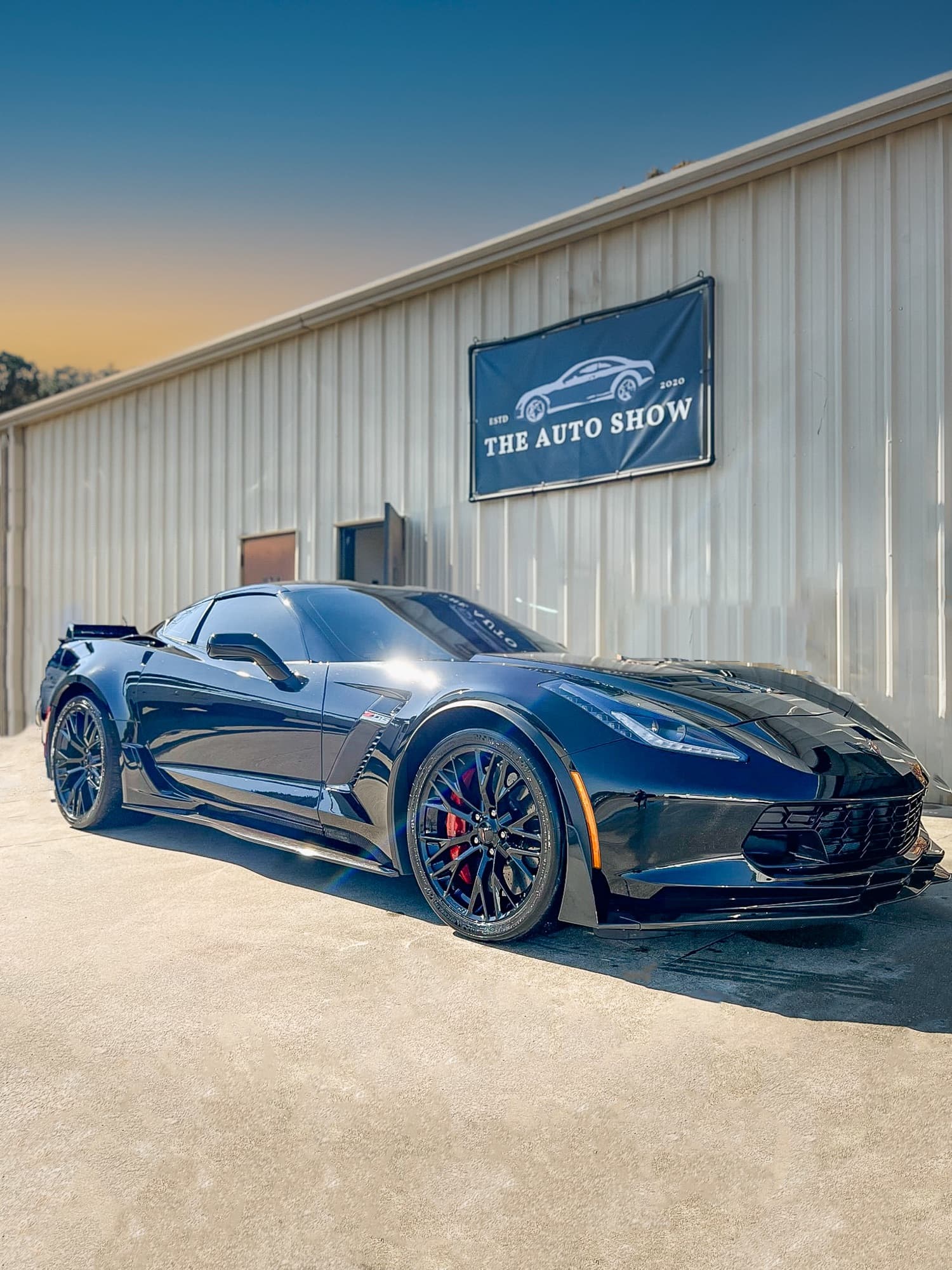
A Black-Car Plan at The Auto Show
Paint correction starts at $799.99 for the 1-Step (about 2 days in the shop) and $1,399.99 for the 2-Step (about 3 days). Every correction includes a 6-month sealant, and we recommend at least a 1-year coating afterward. IGL coatings start at $699.98 (1-year EZ), $899.98 (3-year Quartz+) and $1,299.98 (5-year Kenzo) for a coupe. Polished and coated vehicles are blown dry here.
For the front end, LLumar Platinum PPF packages start at $1,199.99 (Interstate) and $2,199.99 (Long Distance Driver). We will show you at inspection what can and cannot be removed from your paint, and final prices are confirmed then.
| Plan | What it includes | Best for |
|---|---|---|
| Good | 1-Step correction, 1-year coating | Garaged car, light swirls, trying a coating |
| Better | 2-Step correction, 3-year or 5-year coating | Daily driver with years of wash marks |
| Best | 2-Step correction, 5-year coating, front-end PPF | Highway commuter or a car you will keep |
Correction level depends on paint condition, which we confirm at inspection.
Get Your Black Paint Right Once
Bring your car in for an inspection in good light. We will show you what correction can remove, then quote the coating and film plan that keeps it that way.
Common questions
Is a ceramic coating worth it on a black car?
Usually yes, if the paint is corrected first. A coating makes dark paint slicker, easier to wash and more resistant to water spotting, which are the problems black owners fight most. It will not stop new scratches from poor washing, so it works best paired with a careful hand-wash routine.
Will a coating hide swirls on black paint?
No. A coating may add gloss that makes light marring a little less obvious at first, but the swirls are still there under the coating and will show in direct sun. Removing them requires machine polishing before the coating goes on.
Is matte or satin PPF a good idea on a black car?
It can be, if you want a stealth look. Matte film turns gloss black into a satin finish, a popular look on dark sports cars and trucks. It needs matte-safe care products and changes the car's look completely, so view a sample on your paint first.
How often should a black car be washed?
Often enough that dirt never builds up into a gritty layer, which for a daily driver in the Upstate is usually every one to two weeks, more in pollen season. Frequent gentle washes are safer for dark paint than occasional heavy scrubbing of a very dirty car.
Sources
- Cool Colors for Cars Could Improve Fuel Economy, Reduce Emissions, Lawrence Berkeley National Laboratory Heat Island Group (https://heatisland.lbl.gov/news/11089/cool-colors-for-cars-could-improve-fuel-economy-reduce-emissions), accessed October 2026
- Axalta Releases 73rd Global Automotive Colour Popularity Report for 2025, Spies Hecker (Axalta) (https://www.spieshecker.com/au/en_AU/about-us/news/axalta-releases-73rd-global-automotive-colour-popularity-report-.html), accessed October 2026
- Ecocoat Kenzo, IGL Coatings (https://iglcoatings.com/products/ecocoat-kenzo-graphene-reinforced/), accessed October 2026
- Ecocoat Quartz, IGL Coatings (https://iglcoatings.com/products/ecocoat-quartz/), accessed October 2026
- Platinum Gloss Paint Protection Film, LLumar / Eastman Performance Films (https://llumar.com/en/paint-protection-film/platinum-gloss/), accessed October 2026
Prices on this page are The Auto Show’s published starting prices and are confirmed after we inspect the vehicle. Product ratings and warranty terms come from the manufacturers.