
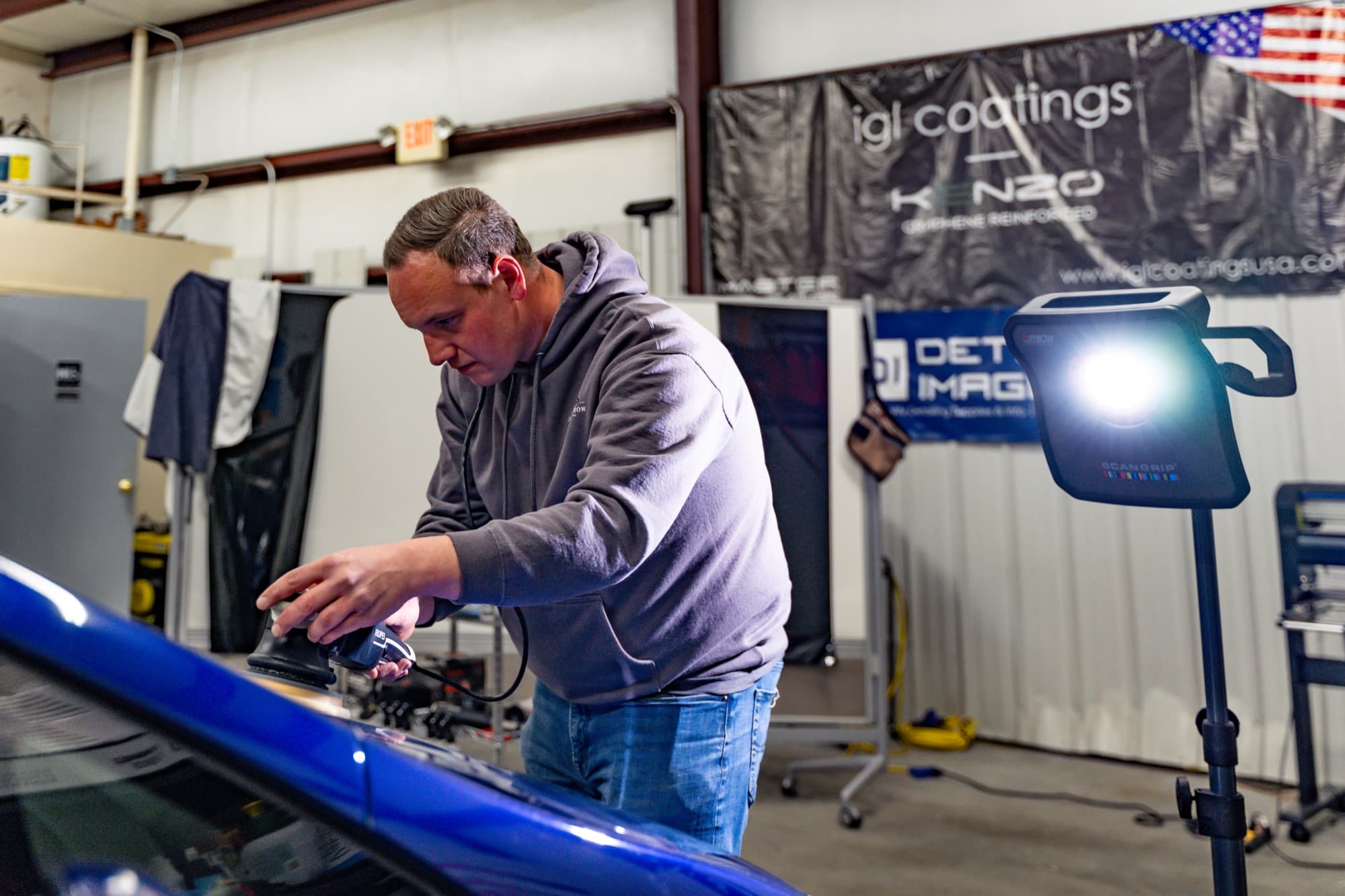
Ceramic Coating & PPF Guide: Compare
1-Step vs 2-Step Paint Correction
Paint correction is sold in stages, and the stage count is the single biggest driver of how long the car stays in the shop and what it costs. A 1-step uses one machine-polishing pass across the car. A 2-step adds a separate cutting pass before the final polish.
The right choice depends less on how much you want to spend and more on what is actually in your paint: how deep the defects run, how hard the clear coat is, and how much clear coat is left to work with.
The short answer
A 1-step correction is one machine-polishing stage that removes light swirls, haze, light oxidation and water spotting while adding gloss. A 2-step starts with a more aggressive cutting stage to level deeper swirls and scratches, then refines the haze that cutting leaves behind. The 2-step removes more defects and takes longer, but it also removes more clear coat, so it only makes sense when the paint needs it.
Key points
- A 1-step uses one polish and pad combination that both corrects and finishes; a 2-step separates the cutting from the finishing.
- Factory clear coat is thin, roughly 1.5 to 2.0 mils, so every extra stage spends some of a budget that does not grow back.
- Moderate swirls on a daily driver usually respond to a 1-step; heavy marring, deeper scratches or a dark car going under a coating usually justify a 2-step.
- Neither stage fixes a scratch that has gone through the clear coat; that needs paint work, not polishing.
The basics
What Each Stage Actually Does
Machine polishing works by abrading a very thin layer of clear coat until the bottoms of the scratches and swirls are level with the surface around them. The more aggressive the pad and abrasive, the faster that leveling happens, but the more microscopic haze the process leaves behind. That trade-off is the whole reason stage counts exist.
A 1-step chooses a middle path: a polish and pad strong enough to take out light and moderate defects, gentle enough to finish with good clarity in the same pass. A 2-step splits the job so that each stage can do one thing well.
- 1-Step correctionOne machine-polishing stage
- A single pass, panel by panel, with a combination chosen on a test spot. It reduces car-wash swirls, light scratches, haze, light oxidation and mineral spotting while bringing up gloss. It removes the least clear coat of any machine correction.
- 2-Step correctionCut, then refine
- A first stage with a cutting compound and firmer pad levels deeper marring and scratches. A second stage with a fine polish and softer pad removes the haze and micro-marring the cut left behind, restoring clarity and depth.
- Paint enhancementNot a correction
- A light machine polish aimed mostly at gloss. It makes paint look better without trying to remove a meaningful share of defects. Enhancement vs correction
The budget
Why Clear Coat Thickness Limits Your Choice
DeFelsko, a maker of paint thickness gauges, puts typical factory clear coat at about 1.5 to 2.0 mils (35 to 50 microns), with total factory paint usually between 4 and 7 mils. The same source notes that most automakers recommend removing no more than about 0.3 mils (8 microns) of clear coat, because the clear carries the UV protection for the color layer underneath.
That number is why a careful detailer does not jump straight to the most aggressive option. A 2-step uses more of that allowance than a 1-step, and a car that has already been polished once or twice, or has a thin factory finish on the roof and hood, may not have much to spare. Measuring before and during correction, rather than guessing, is what keeps the job inside safe limits.
Paint thickness varies by make, model and panel. A gauge reading tells you the total film on the panel, not each layer, so it is a guide rather than a guarantee.
Matching defects
Which Defects Each Option Handles
- Light car-wash swirls visible only in direct sun: a 1-step usually handles them well.
- Haze, dullness and light oxidation on clear-coated paint: a 1-step is often enough.
- Hard-water spots that have started to etch: a 1-step reduces many; deeper etching may need a cut.
- Heavy, dense swirling from years of brush washes or dirty towels: usually a 2-step.
- Random isolated scratches (RIDS) you can see from a few feet away: often a 2-step, sometimes with spot work on top.
- Holograms or buffer trails from earlier polishing: usually a 2-step to remove them and finish cleanly.
- A scratch that catches your fingernail: often through the clear coat, so neither stage will remove it. Polishing can round its edges so it shows less.
Who it suits
When a 1-Step Is the Smart Choice
A 1-step is the sensible default for a lot of cars around Anderson and Greenville: a daily driver a few years old, mostly hand washed or run through a wash now and then, with swirls that show up in the afternoon sun but not in the shade. On that kind of paint a single stage can make a large visible difference, and it leaves most of the clear coat budget for the future.
It also suits lighter colors. White, silver and light gray hide fine marring that would be obvious on black, so the extra refinement a second stage brings is harder to see. If your goal is clean, glossy paint under a 1-year or 3-year coating rather than a concours finish, a 1-step is usually the better value.
Very soft paint can be another case for a single stage. Some clear coats correct quickly and mar easily, so a well-chosen polish can level them without a cutting compound, and an extra stage adds risk without adding much result.
Who it suits
When a 2-Step Earns Its Extra Day
A 2-step makes sense when defects are deep or dense enough that a finishing polish alone cannot level them in a reasonable number of passes. Black, dark blue and deep red paint are the usual candidates, because they show every bit of residual haze that a single aggressive stage would leave behind.
It is also the strongest preparation for a long-term coating. A ceramic coating locks in whatever is under it, so if you are about to spend on a 5-year coating, removing as much marring as safely possible first means the coating preserves a better finish for longer. Very hard clear coats also tend to need a true cutting stage before they show real progress.
The process
How a Good Shop Decides Between Them
Wash and decontaminate
Iron, tar and bonded grit have to come off first. Polishing over contamination drags it across the paint and creates new marks.
Inspect under proper light
Swirl-finder lights and direct sun show marring that overhead fluorescent light hides. The detailer maps where defects are worst, often the hood, roof and doors.
Measure paint thickness
Readings across panels flag thin areas and repaints, which change how aggressive the correction can safely be.
Run a test spot
Start with the least aggressive combination and step up only if the result falls short. If a polish alone gets the spot where it needs to be, a 1-step is the honest recommendation.
Agree on expectations
You should hear which defects will come out, which will only improve and which are too deep to touch, before the work starts.
At The Auto Show
Time, Starting Prices and What Comes After
At our shop a 1-Step correction starts from $799.99 and takes about 2 days. A 2-Step starts from $1,399.99 and takes about 3 days; it is the best preparation for a coating. Final prices are confirmed after we inspect the car, because size and paint condition change the hours involved.
Every correction includes a 6-month sealant, and we recommend at least a 1-year ceramic coating afterward so the work lasts. We show you at inspection what can and cannot be removed, and results always depend on the paint's condition and safe correction limits.
Avoid these
Common Mistakes When Choosing a Stage
- Buying a 2-step for a lightly marred new car when a 1-step or a careful enhancement would do the job.
- Expecting a 1-step to erase deep scratches and feeling let down when they only soften.
- Correcting the paint and then going straight back to an automatic brush wash, which reinstalls swirls within weeks.
- Skipping protection afterward. Corrected paint without a sealant or coating is bare clear coat facing Upstate sun, pollen and bugs.
- Choosing on price alone without seeing a test spot on your own paint.
| 1-Step correction | 2-Step correction | |
|---|---|---|
| Machine stages | One polish stage | Cutting stage plus refining polish |
| Typical defects | Light to moderate swirls, haze, light oxidation, spotting | Heavy swirls, deeper scratches, holograms |
| Clear coat removed | Least of any machine correction | More, so thickness readings matter |
| Best paint colors | White, silver, light and mid tones | Black and dark colors that show haze |
| Time at our shop | About 2 days | About 3 days |
| Starting price at our shop | From $799.99 | From $1,399.99 |
| Best paired with | 1-year or 3-year coating | 3-year or 5-year coating |
Starting prices; final price confirmed after inspection. Pairings are typical, not rules.
Not Sure How Many Stages Your Paint Needs?
Bring the car in for an inspection. We look at it under proper light, show you what can and cannot come out, and recommend the least aggressive correction that gets you the result you want.
Common questions
Can I do a 1-step now and a 2-step later?
Yes, though it usually costs more overall than doing the right stage once. A 1-step now improves the paint and removes a small amount of clear coat; a later 2-step would remove more. If the deeper defects bother you today, it is generally better to address them in one visit and then protect the finish so it does not need correcting again.
Does a 2-step make paint look better than new?
Sometimes it looks better than it did on delivery, because many new cars arrive with dealer wash marring and factory sanding marks. But correction cannot add clear coat or change factory texture like orange peel. The realistic goal is paint as close to flawless as the paint allows, not a different finish.
How often can a car be paint corrected?
There is no fixed number. It depends on how thick the clear coat started, how aggressive each correction was and how much was removed. Careful 1-step work removes very little, so it can be repeated more often than heavy cutting. A thickness gauge reading before each correction is the only reliable way to know.
Is a 3-step correction better than a 2-step?
Not automatically. Extra stages add time and remove more clear coat, and on most paint a well-chosen cut and refine already gets as close to perfect as is sensible. A third stage tends to matter only on very hard or very dark paint where the final finish needs one more step of refinement.
Will my car look different after a 1-step compared with a 2-step?
On light colors the difference is often hard to see from normal viewing distance. On black or dark paint under direct sun or a swirl-finder light, a 2-step usually shows noticeably fewer remaining swirls and a deeper, clearer reflection. Ask to see a test spot of each on your own paint.
Sources
- How to Use Paint Thickness Gauges for Better Automotive Detailing, DeFelsko (https://www.defelsko.com/resources/how-to-use-paint-thickness-gauges-for-better-automotive-detailing), accessed October 2026
- Ecocoat Kenzo, IGL Coatings (https://iglcoatings.com/products/ecocoat-kenzo-graphene-reinforced/), accessed October 2026
- Ecocoat Quartz+ Graphene Reinforced, IGL Coatings (https://iglcoatings.com/products/ecocoat-quartz-plus/), accessed October 2026
- Ecocoat EZ, IGL Coatings (https://iglcoatings.com/products/ecocoat-ez/), accessed October 2026
Prices on this page are The Auto Show’s published starting prices and are confirmed after we inspect the vehicle. Product ratings and warranty terms come from the manufacturers.