
Ceramic Coating & PPF Guide: Compare
Paint Enhancement vs Paint Correction
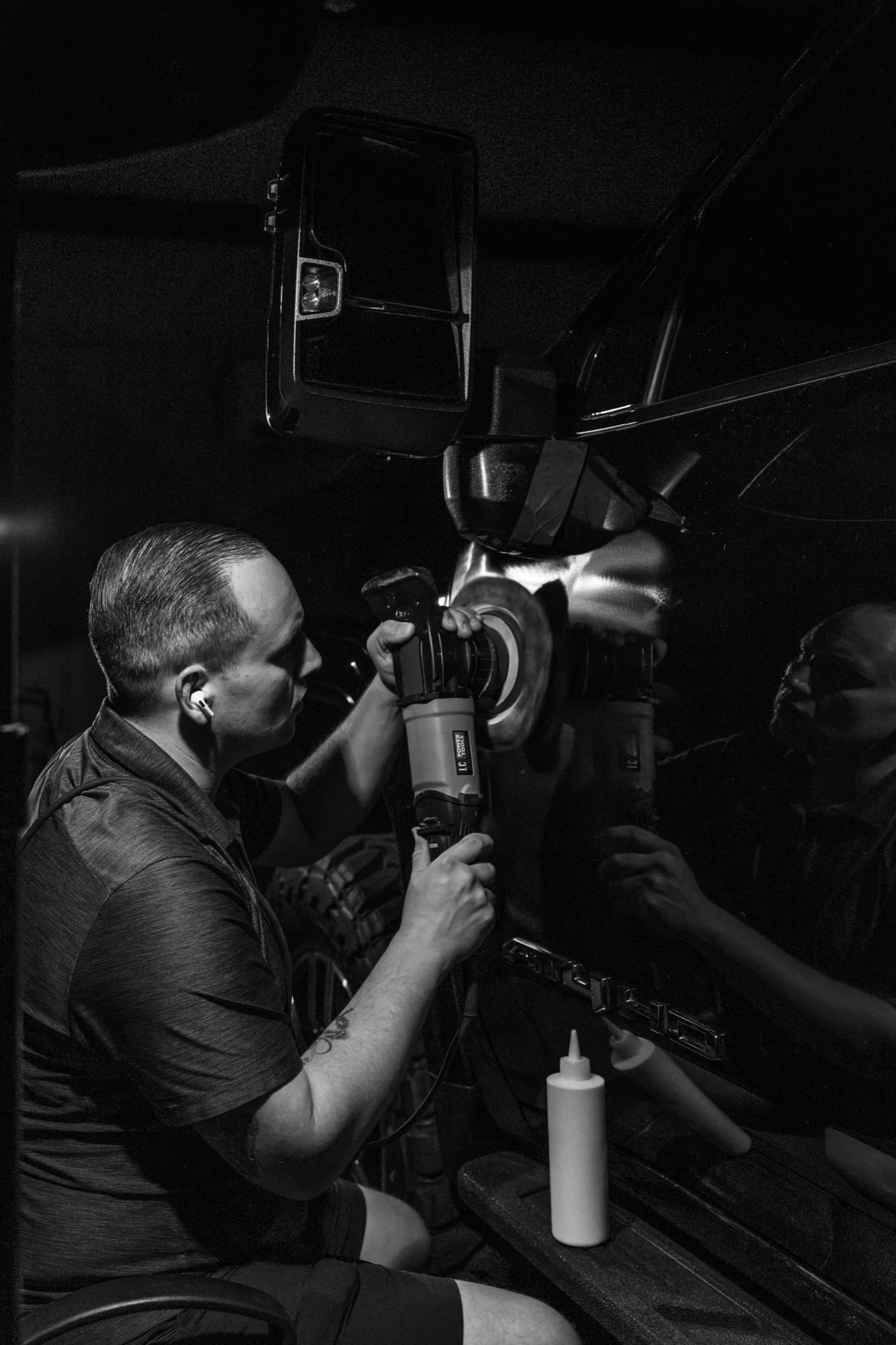
Both services use a machine polisher, both leave the paint shinier, and both get called polishing. That is where the overlap ends. An enhancement is aimed at gloss and clarity. A correction is aimed at removing defects, and the gloss comes along as a side effect.
The difference matters most when you are about to put a ceramic coating or paint protection film on the car, because whatever is in the paint at that moment is what you will be looking at for years.
The short answer
Paint enhancement is a light machine polish, usually one pass with a fine polish, that boosts gloss and softens the lightest swirls in a few hours. Paint correction is a slower, more aggressive process, in one or more stages, meant to level and remove swirls, scratches, etching and oxidation. Enhancement makes paint look better; correction makes it measurably closer to defect free, and uses more clear coat to get there.
Key points
- Enhancement is about gloss and is usually finished in a day; correction is about defect removal and takes days.
- An enhancement might remove a modest share of light swirls; deeper marks stay, just with less contrast.
- Correction removes more clear coat, so it is worth doing only when the defects justify it.
- Glazes and filler polishes can make paint look corrected for a few weeks; they are neither enhancement nor correction.
Definitions
Two Goals, One Machine
Every machine polish removes a very small amount of clear coat. What separates enhancement from correction is intent and how far the process is pushed. An enhancement uses a fine polish and a soft pad, usually one pass per panel, with the aim of leaving the paint clearer and glossier. It is not trying to chase every swirl.
A correction starts from the defects. The detailer inspects the paint under strong light, tests combinations on a small section, and works each panel until the defects that can safely come out are gone. That may be one stage or two, and it takes far longer per panel.
- Paint enhancementGloss first
- One light machine pass with a finishing polish. Adds depth and shine, removes oxidation haze and some of the lightest marring. Most defects remain, just less visible.
- 1-Step correctionDefects first, one stage
- A single, more thorough polishing stage chosen on a test spot to reduce swirls, water spots, oxidation and light scratches across the car. 1-step vs 2-step
- 2-Step correctionCut, then refine
- A cutting stage to level heavier defects, then a refining polish to remove the haze the cut leaves. The most thorough option and the most clear coat used.
- Glaze or filler polishCosmetic only
- Products that fill swirls with oils or polymers so they disappear for a while. Washing removes the fill, and the defects come back. They can also interfere with how coatings and film bond.
The physics
Why Gloss and Defect Removal Are Different Jobs
Gloss comes from how evenly a surface reflects light. Fine haze and oxidation scatter light in all directions, so removing that thin top layer with a gentle polish makes the paint look wetter and deeper almost immediately. That is quick work.
Swirls and scratches are tiny valleys. To make one disappear, the clear coat around it has to be lowered to the depth of its bottom. A light polish cannot do that on anything but the shallowest marks, so it only rounds the edges, which is why swirls look softer after an enhancement rather than gone.
DeFelsko, a paint gauge maker, puts factory clear coat at roughly 1.5 to 2.0 mils thick, and notes most automakers recommend removing no more than about 0.3 mils. Enhancement takes very little of that. Correction takes more, which is why it should be matched to real defects rather than used as a general shine-up.
Self-check
How to Tell Which One Your Paint Needs
Wash and dry the car properly
Dirt and water spots hide the real condition. Look at clean, dry paint.
Look in direct sun or under a bright LED
Hold a phone flashlight close to a dark panel such as the hood or a door. Fine circular scratches around the light point are swirls.
Step back to normal viewing distance
If you only see swirls with your nose near the panel, an enhancement may satisfy you. If you see them from where you would stand to admire the car, you are in correction territory.
Check for straight scratches and etching
Isolated scratches, bird-dropping etch marks and mineral rings usually need correction. Run a fingernail across scratches; one that catches is likely too deep to polish out.
Decide what comes next
If you are coating the car for several years, lean toward correction. If you want a fresh look on a car you may sell soon, enhancement may be enough.
Who it suits
When an Enhancement Is Enough
- Newer cars with light dealer-wash marring that only shows in direct sun.
- Light-colored paint such as white, silver and pale gray, which hides fine swirls.
- Cars going under a 1-year coating, where the goal is fresh gloss rather than a long-term showpiece.
- Paint that has been corrected before and has limited clear coat left.
- Cars being cleaned up for sale, where a better look matters more than a defect count.
Who it suits
When You Really Need a Correction
- Black, dark blue, deep red and other dark colors with visible swirls from a few feet away.
- Cars washed for years at brush or soft-cloth automatic washes.
- Paint with etched water spots from sprinklers or hard water, common around driveways and lake houses.
- Bird-dropping or bug etching on the hood and roof after hot Upstate summers.
- Holograms or buffer trails left by an earlier rushed polish.
- Any car about to receive a 3-year or 5-year coating or paint protection film you plan to keep for years.
Under protection
Why the Choice Matters Before a Coating or PPF
A ceramic coating is a thin, hard, transparent layer. It adds gloss and makes the surface easier to clean, but it does not fill or hide swirls in any lasting way. Whatever marring is in the paint when the coating goes on stays visible through it until the coating is polished off.
Paint protection film works the same way. Film sits on top of the paint and magnifies whatever is underneath, so installers want the surface as clean and smooth as possible first. LLumar, for example, advises against applying wax or other coatings before film goes on, because they can interfere with adhesion. That is one more reason filler glazes are a poor substitute for real prep.
At The Auto Show
Level 3 Detail vs a Paint Correction Here
Our Level 3 Detail is the enhancement option. It is about an 8-hour service: everything in a Level 2 Detail (hand wash, iron remover on wheels and paint, bug and tar remover, clay bar, trim restorer) plus a machine paint enhancement for gloss. It is not a correction, and we will tell you so if your paint needs more. Ask us for Level 3 pricing.
Our corrections are the defect-removal option: a 1-Step from $799.99 in about 2 days, or a 2-Step from $1,399.99 in about 3 days. Both include a 6-month sealant, and final prices are confirmed after inspection.
Every ceramic coating we apply goes onto a paint-corrected or enhanced finish with at least a Level 2 Detail first. Which of those your car gets depends on what we find at inspection and how long you want the result to last.
| Paint enhancement | Paint correction | |
|---|---|---|
| Main goal | Gloss, clarity, depth | Remove swirls, scratches, etching |
| Passes | Usually one light pass | One or two stages, worked until done |
| Typical result on swirls | Softened, still visible up close | Most removable defects gone |
| Clear coat used | Very little | More, varies with stages |
| Time | Hours, often within a full detail | About 2 to 3 days at our shop |
| Best for | Light colors, newer cars, short-term coatings | Dark colors, heavy marring, long-term coatings |
See What Your Paint Really Needs
We inspect the paint under proper light and tell you honestly whether a Level 3 enhancement will satisfy you or a correction is worth it.
Common questions
Is a paint enhancement worth it on a brand-new car?
Often, yes. Many new cars pick up light swirls from lot washes before delivery, and a gentle enhancement removes much of that haze with very little clear coat used. If the car is truly clean, some owners skip machine work entirely and go straight to decontamination and a coating.
How long does a paint enhancement last?
The defects it removes stay removed. The gloss lasts as long as you avoid putting new marring back in. Without protection, brush washes and dry wiping can bring swirls back within weeks. A sealant or ceramic coating on top and careful hand washing are what make it last.
Can I polish my own car instead of paying for an enhancement?
With a dual-action polisher, a fine polish and patience, many owners get good results on light marring. The risks are working on dirty paint, overheating edges and thin spots, and missing high-risk areas such as body lines. Practice on a test panel first, and do not attempt aggressive cutting without a thickness gauge.
Why do some quick polish jobs look perfect and then fade?
Many quick jobs use glazes or filler polishes that hide swirls with oils and polymers. The paint looks corrected until a few washes remove the fill. Ask what products are being used and whether defects are being removed or covered, and look at the paint again after a couple of washes.
Sources
- How to Use Paint Thickness Gauges for Better Automotive Detailing, DeFelsko (https://www.defelsko.com/resources/how-to-use-paint-thickness-gauges-for-better-automotive-detailing), accessed October 2026
- Paint Protection Film Frequently Asked Questions, LLumar / Eastman Performance Films (https://llumar.com/en/resources/paint-protection-film-frequently-asked-questions/), accessed October 2026
- Ecocoat Kenzo, IGL Coatings (https://iglcoatings.com/products/ecocoat-kenzo-graphene-reinforced/), accessed October 2026
- BMW Frozen Paint Guidelines, BMWBLOG (https://www.bmwblog.com/2014/11/15/bmw-frozen-paint-guidelines/), accessed October 2026
Prices on this page are The Auto Show’s published starting prices and are confirmed after we inspect the vehicle. Product ratings and warranty terms come from the manufacturers.