
Ceramic Coating & PPF Guide: Compare
Do You Need Paint Correction Before a Ceramic Coating?
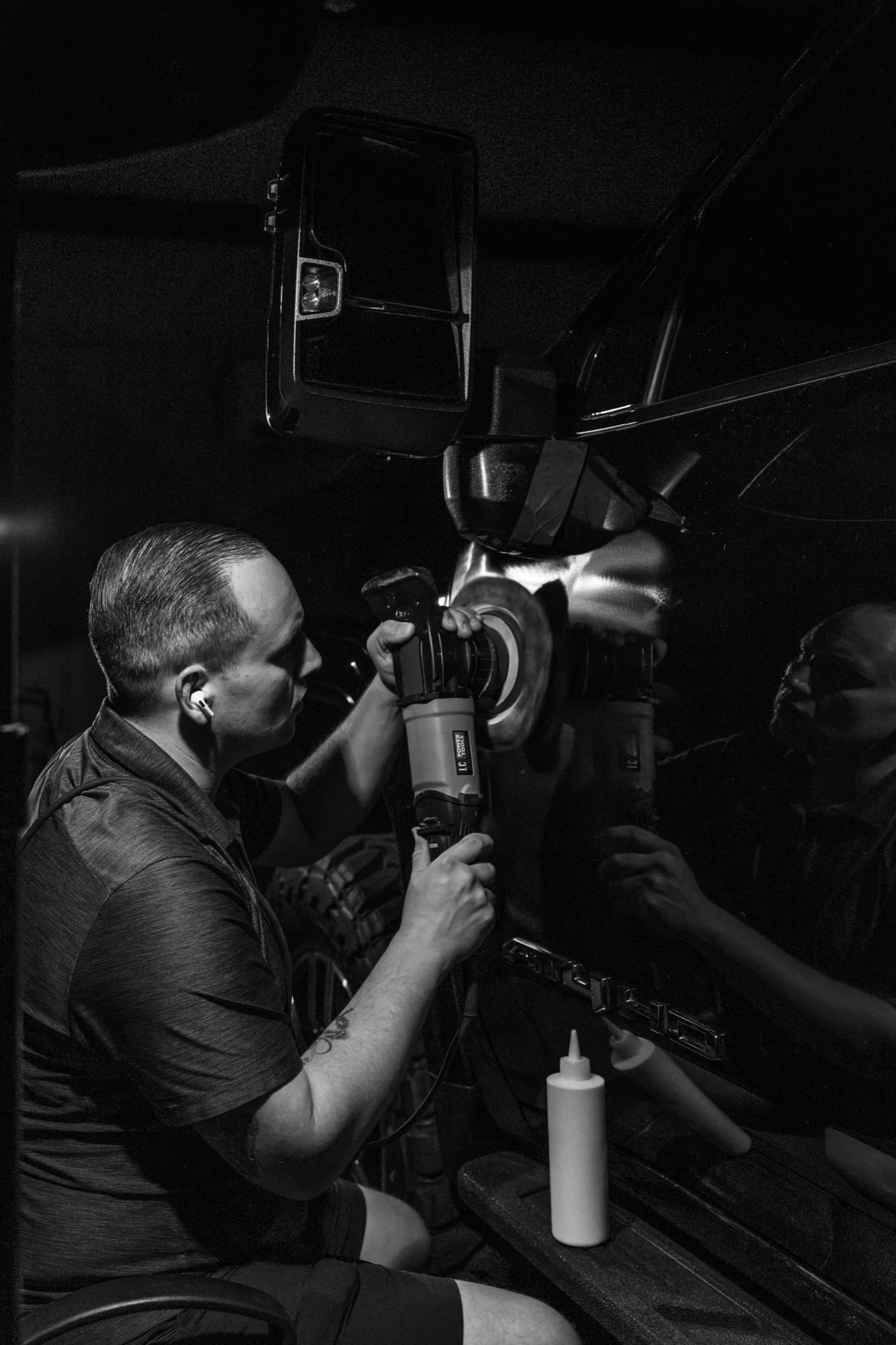
A ceramic coating is clear and thin. It does not hide swirls, water spots or light scratches the way a filling wax can for a few weeks. It seals them in, under a glossy layer designed to last years. That is why almost every coating maker and installer insists on polishing first.
The real question is not whether to polish but how much: a full multi-stage correction, a lighter one-step, or a gloss-focused enhancement. The answer depends on the paint you start with and the finish you expect.
The short answer
Some level of machine polishing is needed before almost every ceramic coating, because the coating bonds to the paint and preserves whatever defects are in it. Heavily swirled or water-spotted paint needs a true correction to remove defects. Paint in good shape, or a new car, may only need an enhancement or light polish. Skipping polishing entirely shortens the coating's life and locks in a dull or swirled look.
Key points
- A coating preserves the paint as it is, so defects left before coating stay visible for the life of the coating.
- Coating makers' instructions call for abrasive polishing so the coating bonds to clean, bare clear coat.
- Correction removes defects by leveling clear coat; an enhancement boosts gloss without chasing every mark.
- At The Auto Show a coating requires at least a Level 2 detail plus an enhanced or corrected finish.
- Scratches you can catch with a fingernail usually go through the clear coat and will not polish out.
The reason
Why a coating locks in what is underneath
A coating cures into a hard, transparent film bonded to the clear coat. IGL's data sheet for Kenzo calls for roughly 1 to 5 ml per square meter, which makes a layer far thinner than the scratches you are trying to hide. It cannot fill them. Instead it adds gloss and clarity on top, which can make swirls look sharper in direct sun.
Once cured, the coating is also hard to remove. Fixing a swirl after coating means polishing through the coating to reach the paint, then recoating. Doing the correction first costs less than doing it twice.
The bond
Polishing helps the coating last, not just look good
Every IGL coating data sheet makes the same point: the durability of the coating depends on how well it chemically bonds with the surface. The sheets recommend polishing with an abrasive system to remove hard-bearing contamination, an iron remover, a wash and a degreasing wipe, then coating immediately.
They also say that if the surface was previously treated with a coating system, it should be removed, preferably with a polishing agent. Old wax, sealant, glaze or a worn coating left on the paint gives the new coating something weak to stick to. Polishing removes those layers along with the defects, leaving bare clear coat for the coating to grab.
The options
Correction, enhancement or a light polish
- 2-Step paint correctionFrom $1,399.99, about 3 days
- A cutting stage to remove deeper swirls and defects, then a refining polish to restore clarity. The best prep for a coating when the paint is visibly swirled or spotted. 1-Step vs 2-Step
- 1-Step paint correctionFrom $799.99, about 2 days
- A single machine-polishing stage that reduces car-wash swirls, hard-water spots, oxidation, light scratches and staining. A big improvement for paint with moderate wear.
- Level 3 Detail (enhancement)Quoted at inspection
- A Level 2 detail plus a machine paint enhancement for gloss. It improves shine and minor haze but is not a correction and does not try to remove every defect. Enhancement vs correction
Every correction at The Auto Show includes a 6-month sealant, and the shop recommends at least a 1-year coating afterward.
Diagnose
How to tell which level your paint needs
Wash and dry the car
Dirt hides defects. Look at clean paint only.
Check it in direct sun or a bright flashlight
Circular swirls around the light source are wash marring. A dull, hazy look is often light oxidation or fine marring.
Look for spots and etching
Rings that stay after washing are mineral water spots. Outlines from bird droppings or bugs are etching, common on Upstate cars in summer.
Run a fingernail across scratches
If your nail catches, the scratch likely goes through the clear coat and will not polish out completely. If it glides, polishing usually helps.
Decide on the finish you want
Want it as close to flawless as the paint allows? Plan on a 2-Step. Want it clearly better and glossy? A 1-Step or enhancement may be enough.
New cars
Does a brand-new car need correction?
New does not mean perfect. Cars can pick up light marring in transport, lot washing and dealer prep before you ever see them. Many new cars need only a light polish or enhancement rather than a full correction, but they still need a wash, decontamination and a degreasing wipe before coating.
The shop's rule is that a coating needs a paint-corrected or enhanced finish and at least a Level 2 detail. For brand-new vehicles, wheels may not need the de-ironing and polishing that older wheels do. The paint is inspected under good light first so you only pay for the level of polishing it actually needs.
Limits
What correction cannot fix
- Scratches through the clear coat into the color or primer: they can be reduced, not erased, and may need touch-up or paint repair.
- Rock chips: missing paint must be touched up. Correction and coating will not fill a chip.
- Failing or peeling clear coat: no amount of polishing restores it, and a coating will not stick well to it. That panel needs repainting.
- Deep etching from droppings left on hot paint: often improved, sometimes not fully removable within safe limits.
- Clear coat is finite. Each correction removes a little, so a good installer stops before the paint is put at risk.
The plan
Putting it together
At inspection, the shop shows what can and cannot be removed, and results depend on paint condition and safe correction limits. From there the order is simple: Level 2 detail with decontamination, the polishing stage your paint needs, a panel wipe, then the coating. If you are also adding paint protection film, the film goes on after polishing and before the coating, because coatings interfere with film adhesion.
| Option | What it does | Time | Starting price |
|---|---|---|---|
| Level 3 Detail | Level 2 plus machine enhancement for gloss; not a correction | About 8 hours | Quoted at inspection |
| 1-Step correction | One polishing stage; reduces swirls, spots, light scratches | About 2 days | $799.99 |
| 2-Step correction | Cut then refine; best prep for a coating | About 3 days | $1,399.99 |
A coating also requires at least a Level 2 detail. Final prices are confirmed after inspection.
Find out what your paint needs before you coat
We will inspect the paint with you, show which defects can come out and which cannot, and recommend the right polishing level before any coating goes on.
Common questions
Can I put a ceramic coating on swirled paint?
You can, but the swirls stay. The coating is clear and bonds over them, and its extra gloss can make them easier to see in direct sun. Removing them later means polishing off the coating and recoating. If the swirls bother you now, correct first; if you can live with them, at least a light polish and full decontamination still help the coating bond.
How long after paint correction can a ceramic coating be applied?
Usually right away, once the paint is wiped down to remove polishing oils. Coating makers' instructions say to coat the cleaned surface immediately so nothing settles on it. That is why correction and coating are normally done in the same visit, with the coating applied as the final step after polishing.
Does paint correction thin my clear coat?
Yes, a little. Correction removes a thin layer of clear coat to level scratches and swirls. Done carefully, one correction leaves plenty for the life of the car, and a coating afterward reduces how often you need to polish again. Repeated aggressive corrections are what put clear coat at risk.
Will a ceramic coating hide light scratches?
No. A coating is far thinner than a scratch, so it cannot fill it. Some glazes and waxes temporarily fill fine marks, but they wash away and must be removed before coating anyway. The only lasting way to reduce scratches under a coating is to polish them out before it goes on.
Can I get paint correction without a ceramic coating?
Yes. Every correction at The Auto Show includes a 6-month sealant, so the freshly polished paint is protected when you drive away. Once that sealant wears, the paint is unprotected and new swirls can start with the next careless wash. That is why the shop recommends at least a 1-year coating after correction, to protect the work you paid for.
Sources
- Technical Data Sheet: Ecocoat Kenzo K1, IGL Coatings (https://iglcoatings.com/wp-content/uploads/2023/09/tds_ecocoat_kenzo_K1_154343.pdf), accessed October 2026
- Technical Data Sheet: Ecocoat Quartz+, IGL Coatings (https://iglcoatings.com/wp-content/uploads/2023/09/tds_ecocoat_quartz_154310.pdf), accessed October 2026
- Technical Data Sheet: Ecocoat EZ, IGL Coatings (https://iglcoatings.com/wp-content/uploads/2023/09/tds_ecocoat_ez_154325.pdf), accessed October 2026
- Paint Protection Film Frequently Asked Questions, LLumar / Eastman Performance Films (https://llumar.com/en/resources/paint-protection-film-frequently-asked-questions/), accessed October 2026
Prices on this page are The Auto Show’s published starting prices and are confirmed after we inspect the vehicle. Product ratings and warranty terms come from the manufacturers.