
Ceramic Coating & PPF Guide: Compare
Extra-Thick PPF: When Thicker Film Makes Sense
Standard paint protection film handles the everyday sandblasting a front end takes on the highway. Some vehicles see worse: gravel driveways, unpaved county roads, trail runs, or a track day where every car ahead throws rubber and stones. For those, film makers offer a thicker grade.
Thicker is not automatically better. It costs more, it is harder to install on tight curves, and on many panels standard film already does the job. Here is how to tell which you need.
The short answer
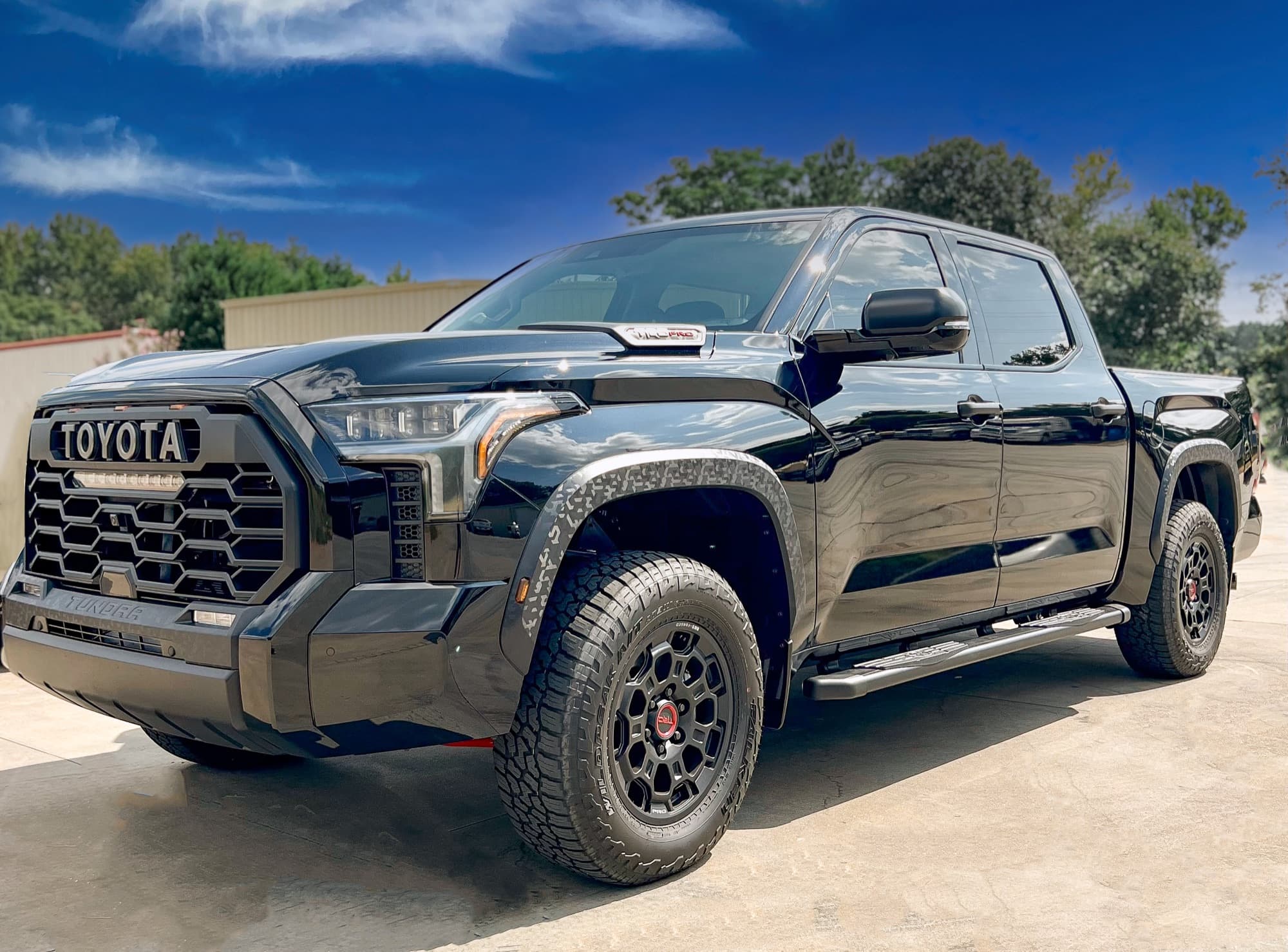
Extra-thick PPF is a heavier grade of paint protection film built for higher-impact use: gravel roads, off-roading, track days and the lower panels behind the tires. It absorbs harder hits than standard film while keeping the same clear, self-healing top coat. It makes the most sense on rocker panels, lower doors, fender flares and front bumpers of trucks and off-road vehicles. For a typical commuter, standard film is usually enough.
Key points
- Extra-thick film trades a little ease of installation for more impact resistance.
- It earns its cost on rockers, lower doors, wheel-arch areas and bumpers that take gravel and tire spray.
- LLumar's thickest film, Platinum Extra, keeps the self-healing and stain-resistant top coat of its standard film.
- Tight compound curves are harder to wrap with thick film, so many installs mix grades by panel.
- No film makes paint chip-proof; thicker film reduces how often a hit reaches the paint.
The idea
Why Thickness Changes Protection
Paint protection film works by absorbing the energy of a stone before it reaches the clear coat. The film's urethane flexes and spreads the impact; the paint underneath never feels the sharp point. More material between the stone and the paint means more energy can be absorbed before anything gets through.
Thickness is not the only factor. A TPU maker that supplies the film industry explains that a film's formulation, especially the ratio of hard to soft segments in the polymer, dictates how well it resists chips, and that hardness has to be balanced with enough softness to stretch around bumpers and mirrors. A well-made standard film can outperform a poorly made thick one. Within the same product family, though, the thicker grade is the one built for the harder job.
Where it pays
Panels That Benefit Most From Thicker Film
- Rocker panels and lower doorsTire spray zone
- Everything your front tires pick up is thrown back along the lower sides of the vehicle. On gravel, red clay and wet roads, rockers and lower doors take a constant peppering, and the damage often starts rust at the chip. Rocker panel PPF
- Behind the wheel archesRear quarters and flares
- On trucks and wide-body cars, the area just behind each wheel takes direct hits from the tire ahead of it. This is a common spot for thicker film even when the rest of the car gets standard film.
- Front bumper and hood leading edgeHighway and track
- The front bumper sees the hardest, fastest hits from vehicles ahead. On a track car or a truck that follows gravel haulers, thicker film here is reasonable. Bumper shapes vary, so ask how the installer handles complex curves.
- Rear bumper top and tailgate edgesCargo and towing
- Loading gear over a bumper scuffs it. Thicker film helps against scrapes as well as stones, though it will not stop a dropped hitch from denting metal.
Who needs it
Driving That Calls for a Thicker Grade
- Daily gravel. A long gravel driveway or unpaved road means hits on every trip, not just on the highway.
- Off-road and trail use. Trail rash, flung rocks and brush contact all favor more material on the lower body.
- Track days and autocross. Rubber pickup and debris at speed are harder on film than street driving.
- Construction and quarry traffic. South Carolina law requires trucks hauling rock, gravel or stone to keep the load six inches below the bed walls or covered, but debris still falls from tires and tailgates near job sites.
- Lifted trucks with aggressive tires. Mud-terrain tread throws more stones, and higher fender openings expose more of the body.
- Lake and boat-ramp trips on gravel lots. Lower panels on a tow vehicle collect grit and stones in unpaved staging areas.
Trade-offs
What You Give Up With Thicker Film
Thicker film is stiffer. It needs more heat and more skill to stretch around compound curves such as mirror housings, fog-light pockets and sculpted bumpers. Installers sometimes use relief cuts or seams in those spots, or switch to standard film for the most complex pieces.
Edges are a little more noticeable because there is more material at the cut line. Clean, wrapped edges matter more with thick film, both for appearance and to keep dirt from building up along a visible ridge.
It also costs more, both in material and labor. If your driving does not involve gravel, trails or track days, that money is usually better spent covering more panels with standard film than putting thicker film on fewer of them.
The product
LLumar Platinum Extra in Plain Words
LLumar calls Platinum Extra its thickest paint protection film and describes it as thicker than traditional PPF, virtually invisible and built for chip-fighting, high-impact resistance on gravel roads, track days and harsh weather. The maker suggests it for full-vehicle coverage or targeted areas such as rocker panels, fenders, hoods, bumpers and doors.
Platinum Extra keeps the features of LLumar's standard Platinum film: a top coat that heals surface scratches with heat from the sun or engine, HydroGard moisture and stain resistance, and a glossy, optically clear finish. LLumar backs it with a 10-year limited warranty; read the warranty document for what it covers and excludes. Like every film, it is not designed to stop every chip.
Mix and match
A Sensible Way to Combine Grades
Map your damage
Look at where the vehicle already has chips. Lower doors and rockers peppered with marks point to thicker film there; a clean hood with a few highway chips points to standard film.
Put thick film where hits are constant
Rockers, lower doors and the areas behind the wheels are the usual candidates. These are mostly flat or gently curved, which suits stiffer film.
Use standard film on complex shapes
Mirrors, intricate bumpers and headlights are easier to wrap cleanly with standard film, and they see fewer constant gravel hits than the lower body.
Coat the whole thing
A ceramic coating over both grades makes the film easier to wash, which matters on lower panels that collect red clay and road film.
At our shop
Thick Film at The Auto Show
We install LLumar Platinum PPF, which comes in gloss, black, matte and extra-thick versions, and we are authorized LLumar installers. Our Off Roader package covers the full hood, full fenders, headlights, fog lights, mirrors and front and rear rocker panels; call for a quote, since the price depends on the vehicle and the film grade.
For mostly paved driving, the Interstate package starts at $1,199.99 and the Long Distance Driver package at $2,199.99, with final prices confirmed before install.
| Standard film | Extra-thick film | |
|---|---|---|
| Best for | Highway commuting, front-end chips | Gravel, trails, track, lower panels |
| Impact resistance | Good for small stones | Higher, for harder and more frequent hits |
| Complex curves | Easier to wrap cleanly | Stiffer; may need seams or relief cuts |
| Edge visibility | Low | Slightly higher |
| Top coat | Self-healing, stain resistant | Same, on LLumar Platinum Extra |
| Cost | Lower | Higher material and labor |
Protect a Truck or Off-Roader Properly
Bring the vehicle by and we will look at where it takes hits, then quote the right mix of standard and extra-thick LLumar film.
Common questions
Is thicker PPF always better?
No. Thicker film absorbs harder hits, but it is stiffer, harder to wrap around tight curves and costs more. On a commuter car that mostly sees highway chips, a quality standard film covering more panels usually protects better than thick film on fewer panels. Match the grade to where the vehicle actually takes damage.
Does extra-thick film still self-heal?
On LLumar Platinum Extra, yes. LLumar says it carries the same self-healing top coat as its standard Platinum film, so light surface scratches level out with heat from the sun or engine. Deep cuts that go through the top coat into the film do not heal.
Can extra-thick PPF go on headlights?
It can on some vehicles, but headlights are curved and often complex, so many installers use standard film there for a cleaner wrap. Headlight lenses are covered in our Long Distance Driver and Off Roader packages; ask which grade suits your lights.
Will thick film stop rocks from denting my truck?
No. Film protects the paint surface from chips and scratches. A large rock with enough force can still dent the metal underneath, and a dent may need paintless dent repair or body work. Thicker film reduces how often a stone breaks through to the paint, not how often the panel deforms.
Sources
- Platinum Extra Paint Protection Film, LLumar / Eastman Performance Films (https://llumar.com/en/paint-protection-film/platinum-extra/), accessed October 2026
- Paint Protection Film, LLumar / Eastman Performance Films (https://llumar.com/en/paint-protection-film/), accessed October 2026
- Beneath the Surface: The Value of Expertise and Support in Paint Protection Film Manufacturing, Lubrizol Engineered Polymers (https://www.lubrizol.com/-/media/Lubrizol/Engineered-Polymers/Documents/Lubrizol-PPF-Beneath-the-Surface-Guide.pdf), accessed October 2026
- South Carolina Code of Laws, Title 56, Chapter 5, Section 56-5-4100, South Carolina Legislature (https://www.scstatehouse.gov/code/t56c005.php), accessed October 2026
Prices on this page are The Auto Show’s published starting prices and are confirmed after we inspect the vehicle. Product ratings and warranty terms come from the manufacturers.