
Ceramic Coating & PPF Guide: Compare
Rocker Panel PPF: Protecting Against Tire Spray and Gravel
Most paint protection film conversations start at the front bumper, because that is where chips from other vehicles land. But there is a second damage zone that has nothing to do with the car in front: the lower sides of your own car, right behind the front wheels, where your tires throw gravel, sand and grit at the paint every time you drive.
That area, the rocker panels and the bottoms of the doors and quarter panels, is where a lot of trucks, SUVs and gravel-road cars look worst after a few years. Film there is cheap insurance for some drivers and unnecessary for others.
The short answer
Rocker panel PPF is clear film applied to the lower body sills below the doors, and often the lower doors and the area behind the rear wheels, to stop gravel, sand and grit thrown by your own tires from chipping and sandblasting the paint. It is most worth it on trucks, SUVs, lifted vehicles, cars with wide tires, and anyone who drives gravel or clay roads. Extra-thick film adds impact resistance in this zone.
Key points
- Front tires fling debris rearward, so the rocker area just behind the front wheel takes the heaviest damage.
- Wide, aggressive or lifted tires throw more material at the lower body.
- Chips that reach bare metal on lower body panels can start rust in a spot you rarely look at.
- Front-end packages usually skip rockers entirely; you have to ask for them.
The damage
What Happens to Rocker Panels
Every rotation of the front tire picks up small stones, sand and road grit from the tread and releases them backward and outward. A lot of that material hits the rocker panel and the lower front of the rear door or the rear quarter panel. On a paved road it is mostly fine grit. On a gravel driveway or a dirt road, it is a steady stream of stones.
The result is rarely one big chip. It is usually a pattern: dozens of tiny pits that dull the paint, a cluster of chips just behind the front wheel opening, and sandblasted edges on the lower door. On dark paint it shows as a frosted band along the bottom of the car.
- Pitting and sandblasting from fine grit, dulling the lower body.
- Chips from gravel, densest just behind the front wheels.
- Red clay staining that sets into chips and pits, common after Upstate dirt roads.
- Scuffs from boots stepping on or brushing the sills of taller vehicles.
- Tar and road film that builds up low on the body and needs solvent to remove.
Who needs it
Drivers Who Benefit Most
- Trucks and full-size SUVsBig tires, long sills
- Long rocker panels and large tires mean a lot of exposed lower body and a lot of material being thrown at it. Truck paint protection
- Lifted vehicles and off-road tiresMore spray, higher up
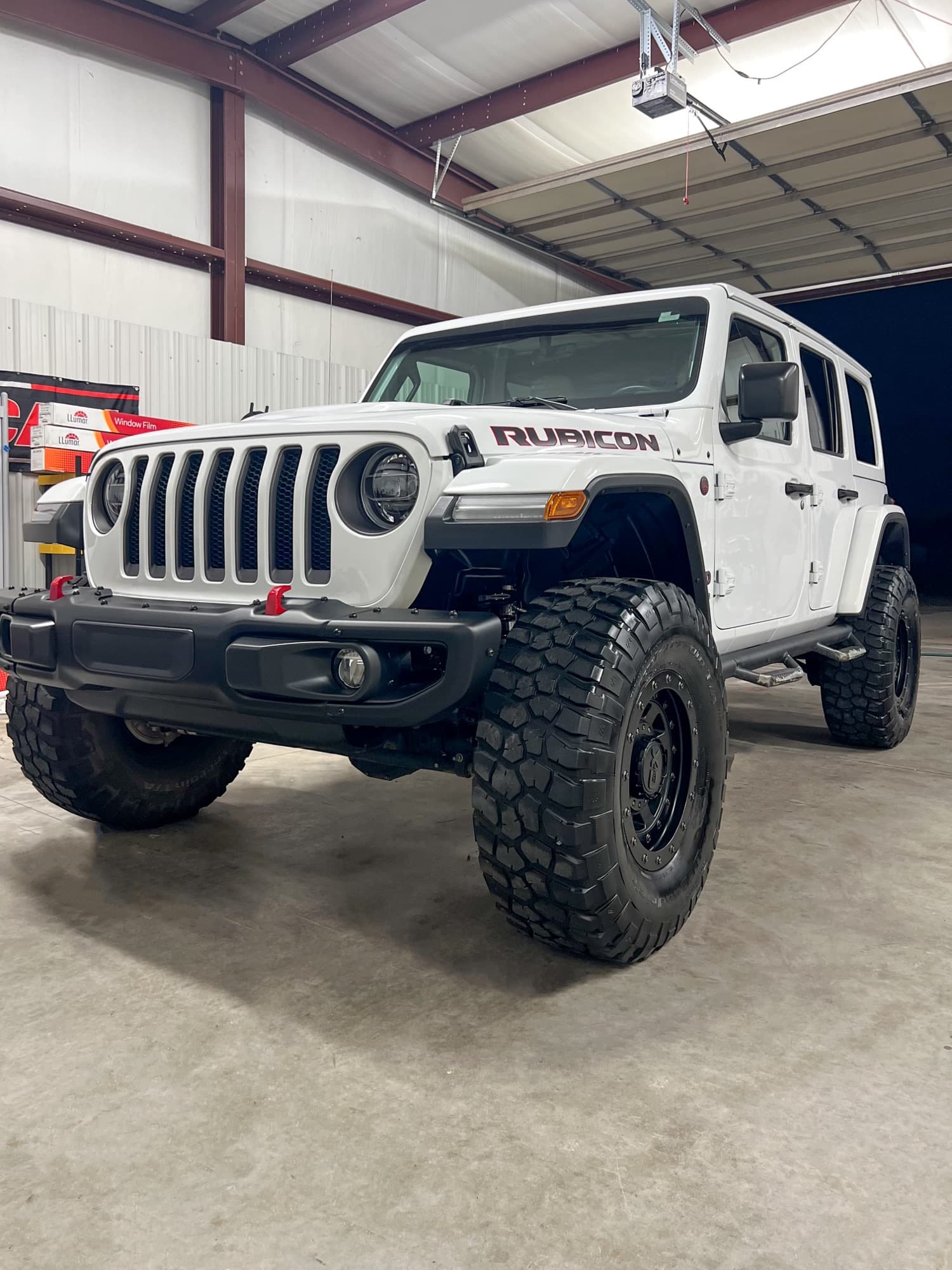
- Aggressive tread holds and releases more stones, and tires that stick out past the body throw debris against the sides. Jeep Wrangler protection
- Gravel and clay road driversDaily exposure
- A long gravel driveway, a farm road or a lake access road outside Anderson can mark the lower body faster than years of paved commuting. Red clay and gravel roads
- Low sports carsWide tires, low sills
- Wide performance tires and low side skirts sit right in the spray path, and track days add rubber pellets.
- Winter and boat ramp driversWet grit
- Wet sand, treated road spray and ramp grit stick to the lower body, so a protective layer there makes rinsing easier and keeps grit off the paint.
Thickness
Standard vs Extra-Thick Film for Rockers
Rocker panels are one place where thicker film can genuinely help. LLumar describes its Platinum Extra film as its thickest paint protection film, thicker than traditional PPF, designed for high-impact resistance against gravel roads and similar abuse, and names rocker panels among the target areas. It keeps the same self-healing and stain-resistant top coat and carries LLumar's 10-year limited warranty, with restrictions explained by the dealer.
The trade-off is that thicker film is stiffer and can be harder to form around tight curves, so it suits relatively flat lower panels better than complex shapes. Standard film is often enough for paved-road driving with occasional gravel. For daily gravel or off-road use, extra-thick film on the rockers and lower doors is worth asking about.
Film absorbs impacts that would chip paint, but a large enough rock can still cut or dent through it. Film reduces damage; it does not make panels immune.
Coverage
What Rocker Coverage Can Include
Rocker sills
The painted panel below the doors, from the front wheel opening to the rear. The core of any rocker package.
Lower doors
The bottom few inches of each door, which takes the same spray. Film that stops at the sill leaves this area exposed on many vehicles.
Behind the rear wheels
The lower rear quarter panel and rear bumper corners, hit by the rear tires.
Front of the rear wheel arches
On trucks and SUVs, the area ahead of the rear wheel takes debris thrown by the front tire.
Door sills and step areas
Painted sills that get stepped on or brushed by shoes on taller vehicles.
Variation
Why Lower Body Paint Varies So Much
Lower panels are not all built the same. DeFelsko, a paint gauge maker, notes that total paint thickness can range from about 3 mils on some roofs to as much as 17 mils on some SUV rocker panels. Some vehicles have painted steel rockers, some have plastic cladding, and some mix the two.
That matters for two reasons. Unpainted plastic cladding does not need film, though it may need a trim coating to resist fading. And if your rockers are painted steel, a chip that reaches bare metal can start to rust in an area you rarely look at closely. Protecting it is easier than treating corrosion later.
Care
Looking After Rocker Film
Rocker film lives in the dirtiest part of the car, so washing technique matters. Rinse heavy grit and clay off before touching the panel with a mitt, and use a separate mitt for the lower body. LLumar discourages pressure washing and automatic car washes on its film because they can lift edges, which is not covered by its limited warranty; if you rinse with pressure, keep the wand back and avoid aiming at edges.
A ceramic coating over the film makes clay and tar release more easily. Tar on the lower body should be softened with a product safe for film rather than scrubbed.
At The Auto Show
How Rockers Fit Our Packages
Our Off Roader package covers the full hood, full fenders, headlights, fog lights, mirrors and front and rear rocker panels; call us for a quote on your vehicle. Our other front-end packages, Interstate from $1,199.99 and Long Distance Driver from $2,199.99, do not list rockers, and Full Car from $5,499.99 covers the whole vehicle with exact panels confirmed at inspection. We install LLumar Platinum PPF, available in an extra-thick version, and we are authorized LLumar installers.
Gravel Road, Big Tires or Both?
Bring the vehicle by and we will look at where the lower body is already taking damage, then quote rocker coverage or the Off Roader package.
Common questions
Do mud flaps make rocker PPF unnecessary?
They help, mainly behind the wheels where they catch spray before it hits the rear quarter and following traffic. They do little for the rocker panel itself, which is hit by debris leaving the front tire before it reaches any flap. On gravel-road vehicles, flaps and film work well together.
Can rocker PPF be added to an existing front-end install?
Yes. Rockers are separate panels, so film can be added at any time without disturbing existing front coverage. If the lower body already has chips, they will be under the film, so it is worth having the paint cleaned, decontaminated and touched up where needed before installation.
Is rocker film noticeable?
Clear gloss film on rockers is rarely noticed, partly because the area sits low and partly because it is usually dirty. Edges are typically placed at body lines or wrapped under the sill. Matte or black film can be used on rockers deliberately to create a contrasting lower body look.
What about plastic rocker cladding?
Unpainted textured plastic does not need film, but it fades in the sun. A trim coating or restorer suits it better. Painted plastic side skirts, common on sports cars and some SUVs, chip like painted metal and can take film the same way.
Should I use extra-thick film on the whole car or just the rockers?
Most owners use it only where impacts are heaviest, such as rockers, lower doors and sometimes the front bumper, because thicker film costs more and is harder to form around complex curves. Standard film handles the rest of the car well. Ask your installer which panels on your model suit extra-thick film and which are better with standard.
Sources
- Platinum Extra Paint Protection Film, LLumar (https://llumar.com/en/paint-protection-film/platinum-extra/), accessed October 2026
- Paint Protection Film Frequently Asked Questions, LLumar / Eastman Performance Films (https://llumar.com/en/resources/paint-protection-film-frequently-asked-questions/), accessed October 2026
- How to Use Paint Thickness Gauges for Better Automotive Detailing, DeFelsko (https://www.defelsko.com/resources/how-to-use-paint-thickness-gauges-for-better-automotive-detailing), accessed October 2026
- Gloss and Matte Paint Protection Film, LLumar (https://llumar.com/en/paint-protection-film/gloss-matte/), accessed October 2026
Prices on this page are The Auto Show’s published starting prices and are confirmed after we inspect the vehicle. Product ratings and warranty terms come from the manufacturers.