
Boat Detailing Guide: Get It Done
A 15-Minute After-Trip Routine to Keep Your Boat Clean
Most of what a detail has to undo builds up in the half hour after a lake day: lake water drying in the sun, sunscreen soaking into the seats, a wet towel left in a locker, a cover pulled over a damp cockpit. Fifteen minutes at the ramp or the dock stops most of it.
This routine is built from what boat builders, vinyl makers and Clean Marina programs tell owners. It keeps the boat cleaner between details, makes each detail less work, and makes the protection on your gelcoat last longer.
The short answer
After every trip: pull weeds and mud off the boat and trailer, drain the bilge, livewells and ballast on land, rinse the boat top down with fresh water, dry the gelcoat, glass and stainless with a chamois or microfiber, wipe the seats with mild soap and water and dry the seams, clear out wet gear and trash, open the lockers to air out, and cover only when dry, with ventilation.
Key points
- Clean, Drain, Dry at the ramp is South Carolina's guidance for every boater, and it doubles as the start of a good cleaning routine.
- Rinse with fresh water and dry by hand so minerals do not spot the gelcoat, glass and stainless.
- Wipe sunscreen and spills off the seats the same day, and dry the seams; moisture in piping and stitching feeds mildew.
- Air the boat out before covering it, and use a cover that lets air move.
- Weekly and monthly jobs, like washing with boat soap and checking protection, keep the routine from falling behind.
Every trip
The 15-minute routine
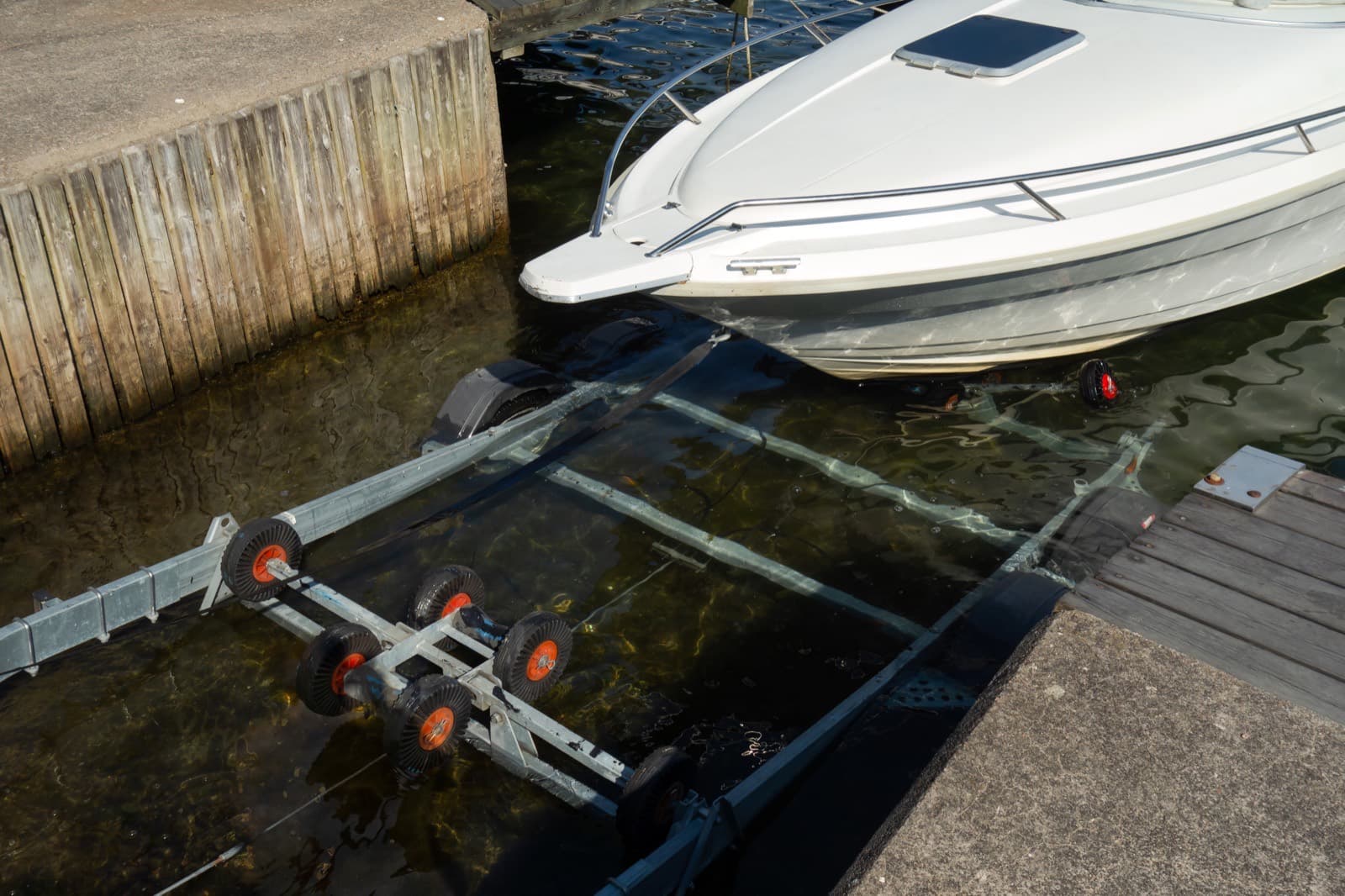
At the ramp: clean and drain (3 minutes)
Pull off weeds, mud and debris from the hull, trailer and prop. Pull the drain plug on land and empty the bilge, livewells and ballast as your manual describes. South Carolina's Department of Environmental Services asks every boater to clean, drain and dry boats, trailers and gear after leaving any body of water.
Clear out the boat (2 minutes)
Take out wet towels, life jackets that need drying, trash, food and drinks. Anything wet left in a locker overnight in summer is a mildew start.
Rinse top down (3 minutes)
Rinse with fresh water, starting with the bimini, windshield and clear vinyl, then the deck and seats, then the hull. A gentle hose is enough; do not use a pressure washer on vinyl or canvas.
Dry the hard surfaces (3 minutes)
Chamois or microfiber on the gelcoat, windshield and stainless. BoatUS suggests removing droplets before they dry, which is what prevents water spots.
Wipe and dry the seats (2 minutes)
Wipe sunscreen, sweat and spills off with a soft cloth and mild soapy water, then dry, paying attention to piping and stitching. Sea Ray warns that moisture trapped near piping or in the thread leads to mildew.
Air out, then cover (2 minutes)
Leave lockers, hatches and the cabin open until the boat is dry, then cover it. Sea Ray calls ventilation during storage critical for keeping mildew down.
Spot problems
Deal with these the same day
- Fish blood and scales
- BoatUS's best method is to wash them down before they dry. Dried stains on non-skid take far more scrubbing.
- Sunscreen on seats
- Wipe it off before it bakes in and stains. Keep it off clear vinyl too: one enclosure maker warns that sunscreen on your hands can cloud the vinyl where you touch it. Sunscreen stains
- Bird droppings and spider specks
- Soften with water and wipe off, rather than scrubbing dry, which grinds grit into the finish. Birds, spiders and bugs
- Spilled drinks and food
- Sugary drinks left in cup holders and on carpet attract insects and grow mildew. Rinse and dry them.
- Red clay from the ramp
- Rinse it off carpet and non-skid before it dries into an orange stain. Red clay stains
Weekly
Once a week in season
- Wash the whole boat with a mild, phosphate-free boat soap used sparingly, as Clean Marina programs recommend, then rinse and dry.
- Wash the seats with mild soap or a marine vinyl cleaner and a soft brush in the seams; rinse and dry.
- Wash clear vinyl whenever you wash the boat: flush first to remove grit, then a gentle soap and a chamois, following your enclosure maker's instructions.
- Scrub non-skid with a deck brush; do not wax it with ordinary wax.
- Vacuum or shake out carpet and mats, and let snap-in carpet dry fully.
Monthly
Once a month in season
- Check the gelcoat: if water no longer beads and a dark cloth picks up chalk, the protection is worn.
- Apply a marine vinyl protectant to the seats, following the product's directions.
- Wipe down stainless and chrome and look for rust spots under fittings and on rails.
- Rinse the bimini and canvas; Sailrite's Sunbrella guide suggests a monthly rinse to reduce the need for deep cleaning.
- Open and check every locker and the anchor well for standing water, smells and mildew.
Do not
Shortcuts that cost you later
The fastest way to undo a detail is to save five minutes with the wrong product. Bleach on mildew spots, a household spray on the seats, dish soap as the boat wash or a pressure washer on vinyl all work in the moment and shorten the life of the surface. BoatUS warns that bleach breaks down vinyl and stitching over time, and Sea Ray says household cleaners strip marine vinyl of its UV inhibitors.
Covering a wet boat is the other big one. On a humid Carolina night, a cover over a damp cockpit traps moisture against the seats and carpet. If you are short on time, it is better to leave the cover off for an hour and come back than to cover the boat wet.
Professional help
When the routine is not enough
A good routine slows things down; it does not stop them. Gelcoat still oxidizes under the sun, waterlines still build in a wet slip, and vinyl still needs a deeper clean. Many owners have a full detail before the first launch and again before storage, and keep up with this routine in between.
When you need more than a rinse, request a quote on our boat detailing page or call (864) 202-6934. Tell us the make, model and length, what you want done, its condition and where it is kept. Email photos after we reply; the form cannot take attachments. Boat work is scheduled around our vehicle appointments, so ask early in spring.
| When | Task | Time |
|---|---|---|
| Every trip | Clean, drain, dry at the ramp | About 3 minutes |
| Every trip | Rinse, dry hard surfaces, wipe seats, air out, cover | About 12 minutes |
| Weekly | Full wash with boat soap, seats, clear vinyl, non-skid, carpet | About an hour |
| Monthly | Protection check, vinyl protectant, brightwork, canvas rinse, lockers | An hour or two |
| Twice a year | Professional detail: before launch and before storage | Ask us |
Times are rough guides for a typical 18 to 22 foot boat; follow your builder's manual first.
Time for a full detail?
Send the boat details and its condition, and we reply with a recommendation and a quote. Ask early in spring.
Common questions
Do I need to rinse my boat after every trip on a freshwater lake?
Yes. Lake water is not salty, but it carries minerals, sediment and organic matter that leave spots and stains when they dry, especially in summer sun. A freshwater rinse and a quick dry after each trip prevents most water spots and waterline buildup, and it fits naturally into Clean, Drain, Dry at the ramp.
What is the quickest way to dry a boat?
A large chamois or a couple of microfiber drying towels on the gelcoat, windshield and stainless, and a separate towel for the seats. Work top down and in the shade if you can. A small squeegee speeds up glass, but keep it off clear vinyl. Then leave lockers open to dry the inside.
What should I keep on the boat for quick cleanups?
A small kit covers most of it: a spray bottle of mild boat soap mix, a few microfiber towels, a chamois, a soft brush for seat seams, a deck brush for non-skid and a marine vinyl cleaner for stains. Keep household sprays, bleach and abrasive pads off the boat so nobody reaches for them by mistake.
How often should I wash the boat with soap, not just water?
Weekly in season is a good rhythm for a boat that is used most weekends, with a freshwater rinse after every trip. Use a mild, phosphate-free boat soap sparingly, as Clean Marina programs recommend. Boats that sit unused under a cover need soap far less often, but check them for mildew regularly.
Is it better to leave a boat uncovered than to cover it damp?
For a few hours, yes. A cover over a wet cockpit traps humidity against the seats and carpet, which is how mildew starts in a South Carolina summer. Leave the lockers open and let the boat dry, then cover it. Over days or weeks, though, an uncovered boat takes full sun, rain, pollen and droppings, so a ventilated cover is the long-term answer.
Sources
- SCDES at SEWE 2025: Protecting South Carolina's Waters, South Carolina Department of Environmental Services (https://des.sc.gov/blog/scdes-sewe-2025-protecting-south-carolinas-waters), accessed October 2026
- Boat Cleaning Tips, BoatUS Magazine (https://www.boatus.com/app/views/201810/boat-cleaning-tips.asp), accessed October 2026
- How to Keep Your Sea Ray Looking Sharp: Vinyl Maintenance Tips, Sea Ray (https://searay.com/us/en/blog/vinyl-maintenance-tips), accessed October 2026
- Clean Boating Tip Sheet 1: Vessel Cleaning and Maintenance, New Jersey Clean Marina Program and New Jersey Sea Grant (https://www.nj.gov/dep/njcleanmarina/docs/tipsvesselcleaning.pdf), accessed October 2026
- Boat Cleaning Best Practices, Great Lakes Clean Marina Network and Michigan Sea Grant (https://www.michiganseagrant.org/michigan-clean-marina-program/wp-content/uploads/sites/4/2019/04/14-704-Cleaning-and-Maintenance.pdf), accessed October 2026
- Strataglass Care and Maintenance, Strataglass (https://www.Trivantage.com/itemfiles/pdfs/cleaning/Strataglass_Cleaning.pdf), accessed October 2026
- How to Clean Sunbrella Fabric: A Simple Guide, Sailrite (https://sailrite.com/how-to-clean-sunbrella-fabric), accessed October 2026
- Keeping Your Boat Shipshape, Grady-White Customer Tips (https://www.gradywhite.com/explore/grady-owners/customer-tips/keep-shipshape), accessed October 2026
Boat detailing is quoted per boat, so this guide does not list boat prices. Product directions and warranty terms come from the manufacturer: follow your boat builder’s care instructions where they differ from general advice here.