
Boat Detailing Guide: Understand
Gelcoat, Aluminum, Vinyl, Stainless: The Materials on Your Boat
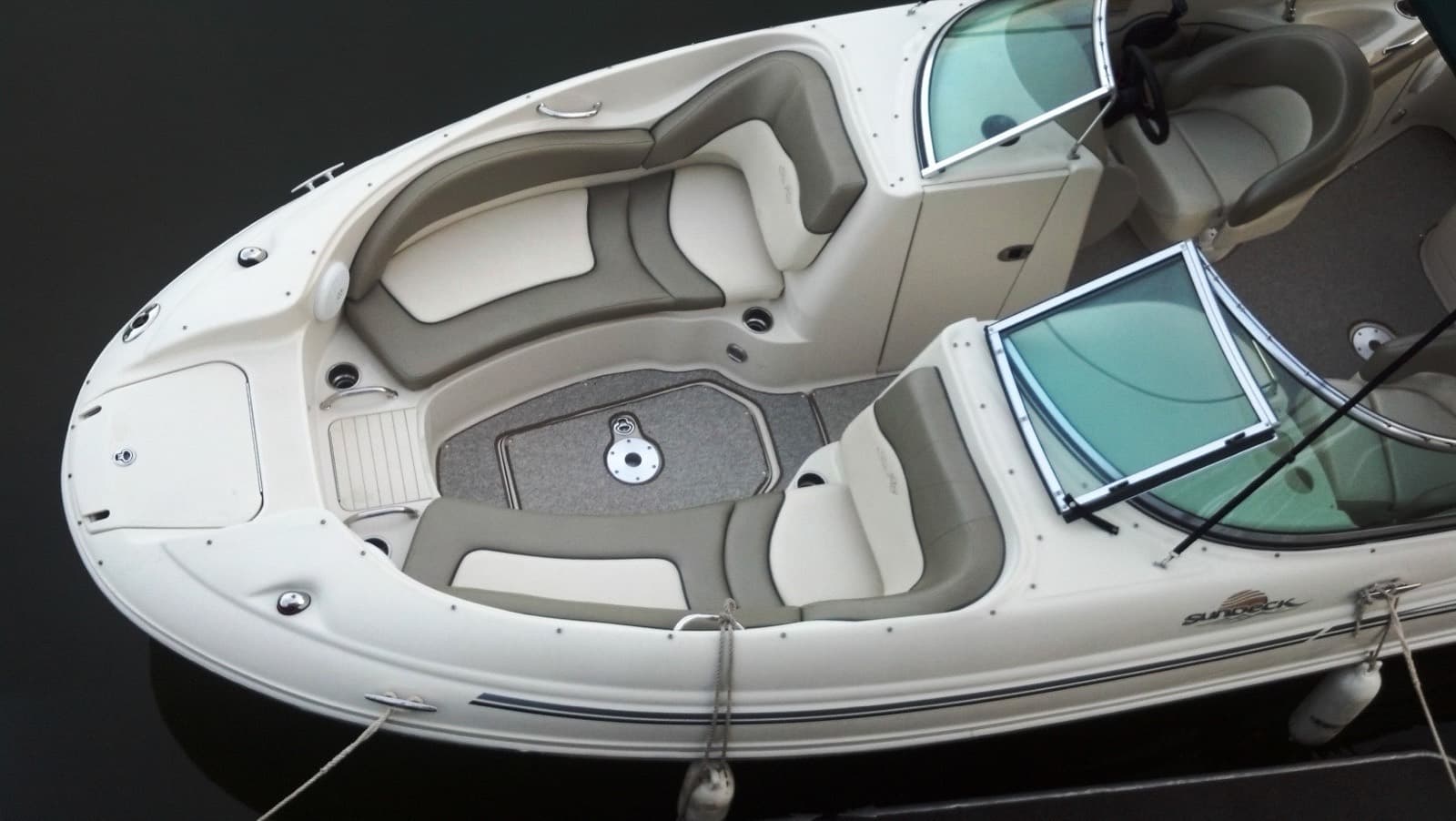
Stand in the cockpit of an ordinary bowrider and you can touch eight or nine different materials without moving your feet: gelcoat, non-skid, marine vinyl, carpet or snap-in mats, stainless steel, chrome, acrylic, rubber and canvas. Each one ages differently, and the cleaner that is perfect for one can ruin another a few inches away.
That is the real reason boat cleaning goes wrong. People reach for one strong product and use it everywhere. This guide walks through each material, how it fails, what cleans it safely and what to keep away from it.
The short answer
A typical lake boat combines gelcoat or painted fiberglass, aluminum, marine vinyl, carpet or vinyl flooring, stainless steel and chrome, acrylic or glass, clear vinyl, canvas and sometimes teak or foam decking. Gelcoat chalks in UV, vinyl dries and mildews, stainless tea-stains, acrylic scratches and canvas loses water repellency. Each needs a material-specific cleaner, and bleach, solvents, ammonia, abrasive pads and pressure washers damage several of them.
Key points
- Match the cleaner to the material, not to the dirt: a product that is safe on gelcoat may etch aluminum or strip marine vinyl.
- Gelcoat and painted surfaces fail from UV; vinyl and canvas fail from UV plus moisture; metals fail from deposits left sitting on them.
- Bleach is the most common mistake: vinyl makers, canvas makers, stainless experts and clean boating programs all warn against or limit it.
- Clear plastics (acrylic windshields, clear vinyl curtains, gauge lenses) scratch and cloud easily and need the gentlest care on the boat.
- When a builder's manual gives care instructions for a material, follow it over any general advice.
Hull and deck
Gelcoat and Painted Fiberglass
Gelcoat is the pigmented resin skin on a fiberglass boat, sprayed into the mold first so it becomes the outside of the laminate. Fibre Glast puts typical cured thickness at about 18 to 24 mils. It fails mainly from sunlight: UV breaks down the resin at the surface, leaving loose pigment that rubs off as chalk. It is also somewhat porous, so waterline stains, rust streaks and sunscreen soak in.
Grady-White's guidance is a good baseline: gentle products made for fiberglass, no harsh chemicals like bleach, sponges and microfiber on smooth surfaces, a deck brush on non-skid, and the least abrasive correction method that works. Some boats, or parts of them, are painted with two-part polyurethane instead; paint is thinner and should be treated more like a car finish, with only light polishing.
Walking surfaces
Non-Skid, Carpet and Foam Decking
- Molded non-skidGelcoat with texture
- Same material as the hull, molded with a grip pattern. Dirt and mildew lodge in the texture. Scrub with a deck brush and a fiberglass-safe cleaner; never polish it or use a wax not made for non-skid, because it gets slippery when wet. Cleaning non-skid
- Marine carpetSnap-in or glued
- Synthetic fibers that hold red clay, sand and moisture. Fails by mildewing, matting and delaminating from its backing. Vacuum, scrub or extract, then dry completely before covering the boat. Boat carpet care
- Vinyl flooringCommon on pontoons
- Woven or sheet vinyl that tolerates water better than carpet but stains and grows mildew in its texture. Mild cleaner and a soft brush; avoid solvents that attack the vinyl or the adhesive below.
- EVA foam traction padsSoft, closed-cell foam
- Comfortable and grippy but stains easily and can be damaged by solvents and aggressive brushes. Gentle cleaner and a soft brush, and keep adhesive edges away from solvents. Foam decking care
Seating
Marine Vinyl Upholstery
Marine vinyl is a coated fabric built with UV inhibitors and a protective top coat. It fails three ways: UV makes it hard and cracked over the years, mildew grows on dirt and moisture left on it, and microorganisms can leave pink stains that develop below the surface. MasterCraft notes most pink stains are dyes produced by micro-organisms.
Sea Ray's care guidance: mild soap and water, a soft brush or toothbrush in stitching, rinse salt off after each outing, dry thoroughly instead of trusting air drying, then cover and ventilate. Its don'ts list is long: household cleaners with ammonia, degreasers, gasoline, bleach, power washers, and automotive vinyl treatments with silicone. MasterCraft adds kerosene, acetone and silicone protectants, and points out that power washers can generate 3,500 PSI.
Metal
Stainless Steel, Chrome and Aluminum
Stainless steel resists corrosion because of a thin chromium oxide film on its surface, but it is not stain proof. The Australian Stainless Steel Development Association describes tea staining, a brown cosmetic discoloration, as the result of salts and other deposits left wet on the surface, made worse by heat and humidity. It recommends washing with soap or mild detergent and warm water, rinsing with clean water and wiping dry, and warns that abrasive cleaners and those containing chlorides or bleach damage the surface. Bleach fumes are listed as a cause of staining in their own right, which matters if you store cleaning products in a closed locker next to stainless hardware.
Chrome is a thin plating, often over brass or steel. It shines like stainless but abrasive polishes and scratching can wear through it, after which the base metal corrodes. Gentle metal polish and drying are the rule.
Aluminum shows up as pontoon tubes, rails, towers, windshield frames and whole hulls on jon boats and many fishing boats. Bare aluminum oxidizes to a dull gray film and can discolor from minerals in the water. Anodized and painted aluminum look similar but react differently to cleaners, and strong acid brighteners meant for bare tubes can etch or stain coated surfaces. Identify which you have, or check the builder's manual, before using anything stronger than soap.
Clear surfaces
Glass, Acrylic, Polycarbonate and Clear Vinyl
- Glass windshields: hard and scratch resistant; ordinary glass cleaners are fine. Mineral spots from lake spray are the usual problem.
- Acrylic windshields and hatches: lighter than glass but much softer. Paper towels and dusty cloths scratch it, and ammonia or solvent cleaners can craze or cloud it. Rinse first, then use a plastic-safe cleaner and clean microfiber.
- Polycarbonate: tougher against impact than acrylic but also scratches easily and is sensitive to many solvents. Treat it like acrylic.
- Clear vinyl curtains (often called isinglass): soft film that scratches when wiped dry and clouds with the wrong cleaners. Rinse dust off with water first, never wipe it dry, and roll rather than fold it for storage.
- Gauge lenses and screens: usually plastic. Use only cleaners the electronics or boat maker approves.
Fabric
Canvas, Biminis and Covers
Most biminis, covers and enclosures are solution-dyed acrylic canvas with a water-repellent finish. Sunbrella's care guide recommends hosing the fabric off monthly with clean water, a thorough cleaning every two to three years in most environments, mild soap and a soft brush, rinsing until no soap remains, and air drying only. Its mildew recipe uses diluted bleach, but Sunbrella itself advises against bleach near a body of water and notes that bleach and age can deteriorate the sewing thread.
Canvas fails from abrasion (flapping against frames), lost water repellency, mildew growing on dirt left in the weave, and thread rotting in the sun long before the fabric does. Covers that are put on wet are the fastest route to mildew on everything under them.
Wood and rubber
Teak, Rub Rails and Rubber Trim
Teak on swim platforms, steps and trim is a dense, oily hardwood that weathers to silver gray if left alone. The New Jersey Clean Marina program recommends cleaning it with mild soap and abrasive pads or bronze wool, noting that solvents in standard teak cleaners tend to eat away at the wood and damage seam compounds. Harsh two-part teak cleaners and pressure washers raise the grain and wear the soft wood between the hard growth rings.
Rub rails and trim are usually vinyl, rubber or PVC with a stainless or aluminum insert. They pick up black marks from docks and fenders. A mild cleaner removes most of it; solvent-heavy products can soften or discolor some plastics, so test first.
The pattern
Rules That Apply to Every Material
Identify before you clean
Know whether the windshield is glass or acrylic, the hardware stainless or chrome, the tubes bare or coated. The builder's manual or dealer can tell you.
Start with water
A rinse and a soft brush remove most dirt from every material. The New Jersey Clean Marina program recommends plain water and a sponge first, adding phosphate-free soap only when needed.
Use the mildest product that works
Step up to stronger chemistry only for a specific stain, only on the material it is made for, and rinse it off completely.
Test on a hidden spot
Especially on vinyl, colored gelcoat, coated aluminum and plastics.
Dry, then ventilate
Moisture left behind drives mildew on vinyl, carpet and canvas and spotting on metal and glass.
| Material | How it fails | Cleans it safely | Never use |
|---|---|---|---|
| Gelcoat | UV chalking, porous staining, cracks | Fiberglass boat soap, sponge, microfiber; compound only as needed | Bleach, abrasive scouring pads, dry wiping |
| Non-skid | Ground-in dirt, mildew | Deck brush and fiberglass-safe cleaner | Polish or slick wax |
| Marine vinyl | UV hardening, mildew, pink stains | Mild soap, soft brush, full drying | Bleach, ammonia, solvents, silicone dressings, pressure washers |
| Stainless steel | Tea staining, rust specks | Mild detergent, warm water, rinse, wipe dry | Chloride or bleach cleaners, abrasives, steel wool |
| Chrome plating | Pitting where plating wears through | Gentle metal polish, drying | Abrasive compounds |
| Aluminum | Gray oxidation, mineral staining | Soap first; material-specific cleaner if needed | Strong acid on anodized or painted aluminum |
| Acrylic and clear vinyl | Scratches, haze, crazing | Rinse, plastic-safe cleaner, clean microfiber | Ammonia, solvents, paper towels, dry wiping |
| Canvas | Mildew, lost repellency, thread rot | Monthly rinse, mild soap, air dry | Heat, pressure washers, routine bleach |
| Teak | Graying, raised grain, worn soft grain | Mild soap with a soft pad, along the grain | Pressure washers, harsh solvent cleaners |
General guidance only. Your boat builder's care instructions come first, and some upholstery warranties depend on following them.
Let Someone Sort Out Every Surface
The Auto Show cleans gelcoat, non-skid, vinyl, metal, glass and clear plastics with products chosen for each. Tell us the boat and its condition and we will quote it individually.
Common questions
What cleaner is safe on every surface of a boat?
Fresh water is the only thing safe everywhere. After that, a mild, phosphate-free boat soap is safe on most hard surfaces and many seats, but always check the vinyl and canvas makers' guidance. There is no single strong product that is safe on gelcoat, vinyl, aluminum, acrylic and stainless at once, which is exactly why one-bottle cleaning goes wrong.
How do I tell if my windshield is glass or acrylic?
Check the builder's manual or spec sheet first. Otherwise, glass feels colder to the touch, is heavier and resists a fingernail; acrylic feels slightly warmer, often shows fine swirl scratches and may have a molded edge rather than a ground one. If in doubt, treat it as acrylic: plastic-safe cleaner, no ammonia and only clean, soft microfiber.
Why did my stainless rails get rust spots?
Usually deposits left sitting on the surface: salt, minerals, iron from other metal, or fumes from bleach or chlorine cleaners. Heat and humidity speed it up. It is generally cosmetic. Wash with mild detergent and water, rinse, dry, and polish with a stainless polish. Keep bleach and chlorine products away from it.
Can I use a magic sponge on boat vinyl?
Melamine foam sponges are abrasive, like very fine sandpaper. They can remove stains but also wear away the protective top coat that marine vinyl relies on, leaving it duller and more prone to staining. Use them only as a last resort, very lightly, on a hidden test area first, and follow up with proper cleaning and protection.
Sources
- Gel Coat Application Guide, Fibre Glast Developments (https://www.fibreglast.com/product/Gel-Coat-Application-Guide), accessed October 2026
- Keep Shipshape: Customer Tips, Grady-White Boats (https://www.gradywhite.com/customer-tips/keep-shipshape), accessed October 2026
- Vinyl Maintenance Tips, Sea Ray (https://searay.com/us/en/blog/vinyl-maintenance-tips), accessed October 2026
- Upholstery Vinyl Care, MasterCraft Knowledge Center (https://www.mastercraft.com/knowledge-center/upholstery-vinyl-care/), accessed October 2026
- Preventing Coastal Corrosion (Tea Staining), Australian Stainless Steel Development Association (https://assda.asn.au/blog/141-preventing-coastal-corrosion-tea-staining), accessed October 2026
- Clean Sunbrella Marine Canvas, Sunbrella (https://global.sunbrella.com/en-us/how-to-clean/clean-sunbrella-marine-canvas), accessed October 2026
- Clean Boating Tip Sheet 1, New Jersey Clean Marina Program and New Jersey Sea Grant (https://www.nj.gov/dep/njcleanmarina/docs/tipsvesselcleaning.pdf), accessed October 2026
- Chalking: Technical Advice, Dulux New Zealand (https://www.dulux.co.nz/applicator/technical-advice/performance/chalking), accessed October 2026
Boat detailing is quoted per boat, so this guide does not list boat prices. Product directions and warranty terms come from the manufacturer: follow your boat builder’s care instructions where they differ from general advice here.