
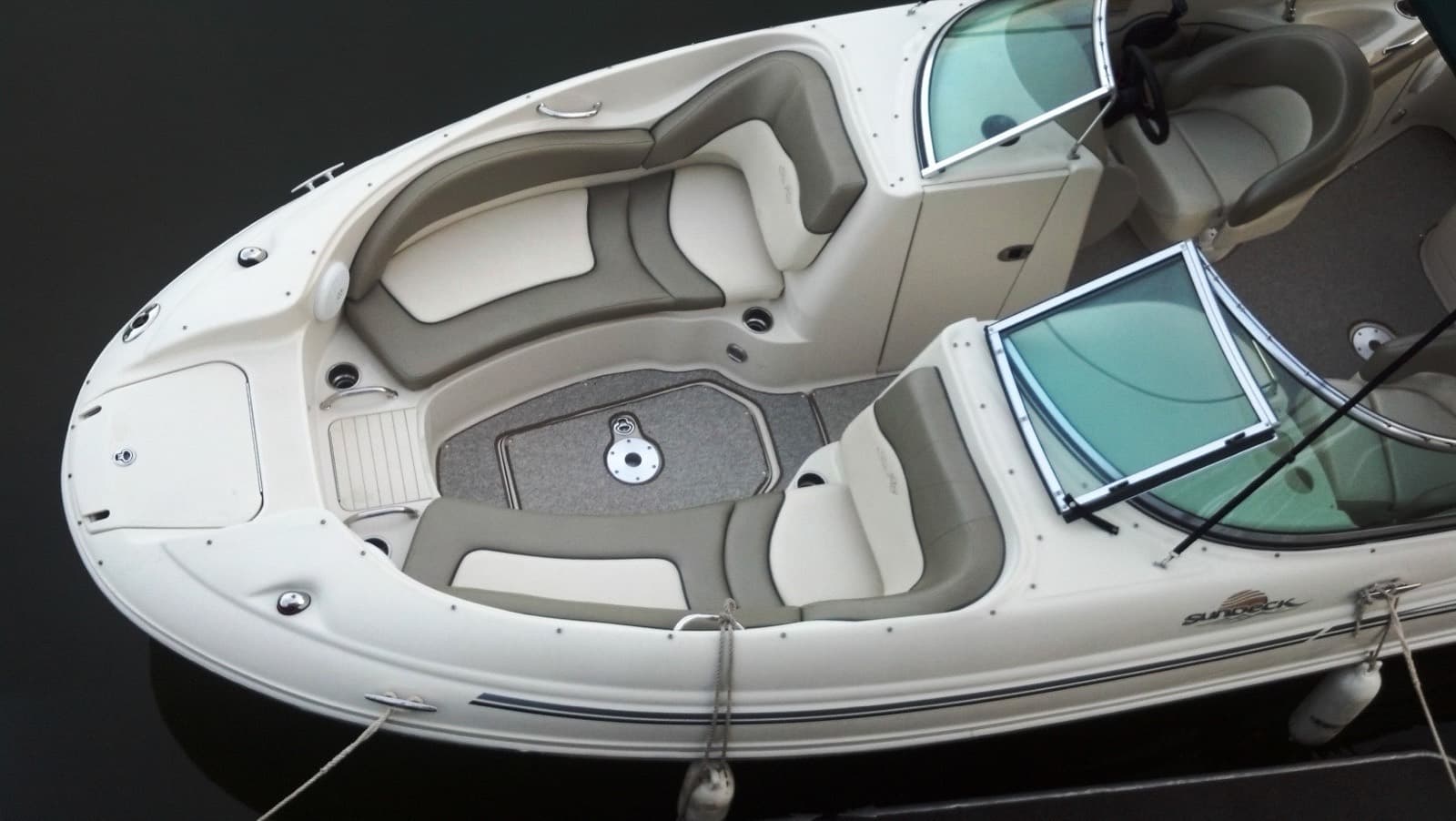
Boat Detailing Guide: Understand
Cleaning Boat Windshields, Acrylic and Gauge Faces
The clear parts of a boat look alike and are not. A runabout's windshield may be tempered glass, a center console's wind screen may be acrylic, a hatch or a gauge lens may be polycarbonate, and the cockpit enclosure is flexible vinyl. The spray that leaves glass spotless can fog acrylic, and the paper towel that does no harm to glass scratches every plastic on the boat.
This guide shows how to work out which material you have, then gives the cleaning methods the sheet makers publish for acrylic and polycarbonate, the chemicals they say attack their plastics, what to do about scratches and hard water spots, and how to treat gauge faces and screens at the helm.
The short answer
Clean a glass boat windshield with an ordinary glass cleaner and a lint-free cloth. Clean acrylic or polycarbonate with lots of fresh water first, then mild soap and lukewarm water or a cleaner made for plastic, applied with a soft damp cloth and light pressure, and blot dry. Never use ammonia glass cleaners, alcohol, solvents, paper towels, razor blades or a dry cloth on plastic, and do not clean it hot in direct sun.
Key points
- Find out what each clear part is made of before cleaning it: the builder's manual or the windshield maker's label is the reliable answer.
- Glass tolerates glass cleaner and careful scraping; acrylic and polycarbonate scratch from dust alone and are attacked by many common chemicals.
- Acrylic makers list ammonia, acetone, gasoline and the common alcohols among chemicals that attack their sheet.
- Both acrylic and polycarbonate makers say not to clean their sheets in direct sun or at high temperatures, and to keep squeegees and razors away.
- Fine scratches in acrylic can often be reduced with a plastic scratch remover; deep gouges cannot be cleaned out.
Know the material
Glass, Acrylic or Polycarbonate?
- Tempered glassCommon in framed runabout windshields
- Heavy, hard and scratch resistant. Many framed boat windshields are tempered safety glass set in an aluminum or stainless frame. Glass handles household glass cleaner and stands up to normal wiping.
- Acrylic (PMMA)Wind screens, some windshields, hatches
- Clear, light and much softer than glass. Sheet makers warn that even dust particles can scratch it. It is also prone to crazing, a network of fine cracks, when the wrong chemical meets a stressed area such as a bend or a screw hole.
- PolycarbonateHatches, some screens and lenses
- Very impact resistant but soft on the surface unless it carries a hard coat. It is sensitive to abrasive cleaners, strong alkalis and many solvents.
- Clear vinylEnclosure and bimini windows
- Flexible sheet sewn into canvas. It has its own care rules. Clear vinyl and isinglass care
If you cannot confirm the material, treat it as plastic. Plastic-safe methods are also safe on glass; glass methods can ruin plastic.
Glass
Cleaning a Glass Windshield
Rinse first to float off pollen, clay dust and dried lake spray, then use an ordinary glass cleaner and a clean, lint-free cloth. Work on both sides, and dry the frame and gasket so water does not sit in the channel.
Hard water spots from well water, sprinklers or evaporated lake spray are mineral deposits. A dilute white vinegar solution often loosens them on glass; rinse thoroughly afterward and keep it off aluminum frames and gelcoat as much as you can. Spots that survive vinegar may be etched into the glass and need a glass polish rather than more scrubbing.
Keep in mind what surrounds the glass. The gasket and any vinyl trim are rubber or plastic, and the frame is often anodized or painted aluminum. Spray cleaner onto the cloth rather than flooding the windshield, so overspray does not run into seals or onto the dash below.
Acrylic
What Acrylic Sheet Makers Tell You to Do
Plaskolite, a major maker of acrylic sheet, publishes simple instructions: for dust, lightly moisten a soft cotton or fine microfiber cloth and wipe evenly and gently, because dust particles can scratch acrylic. For heavier dirt, use a mild soap solution or a cleaner approved for its sheet with lukewarm water and light pressure, rinse with clean water, and dry by blotting with a chamois or soft cloth.
Its reminders are just as useful. Do not use abrasive cleaners. Do not apply cleaners in direct sunlight or at elevated temperatures. Do not use scrapers, squeegees, razors or other sharp tools, which can scratch the sheet beyond repair. Dry or gritty cloths cause scratches. For grease or tar, pre-rinse with warm water to wash away grit before rubbing gently with an approved cleaner.
Plaskolite's chemical resistance chart explains the warnings you see everywhere about glass cleaner. It lists ammonia, acetone, gasoline, toluene, methyl ethyl ketone and the common alcohols, including isopropyl and ethyl alcohol, among chemicals that attack its acrylic. The same document warns about environmental stress cracking: a stressed area exposed to a harsh chemical can craze and crack at stress levels far below what would normally break the sheet. A curved windshield bolted into a frame is stressed by design, which is why crazing often starts at screw holes and bends.
Polycarbonate
What Polycarbonate Makers Tell You to Do
SABIC, the maker of Lexan polycarbonate sheet, recommends gently washing with mild soap and lukewarm water using a soft, grit-free cloth or sponge, then rinsing thoroughly and drying with a soft cloth to prevent water spots.
Its list of things never to do is longer. Never use abrasive or highly alkaline cleaners. Never use aromatic or halogenated solvents such as gasoline, acetone or toluene. Harsh solvents such as methyl ethyl ketone can degrade and craze the surface. Never scrub with brushes, steel wool or other abrasives, and never use squeegees or razor blades on deposits. Do not clean it in direct sun or at high temperatures, which can cause staining, and do not use alcohols on UV-protected surfaces.
Step by step
A Safe Routine for Any Plastic Windshield
Wait for shade and a cool surface
On an Upstate summer afternoon a windshield can be too hot to touch. NOAA's normals put Anderson's average July high above 90 degrees, with roughly 55 days a year at 90 or hotter. Clean early, late or in the shade.
Flood it with fresh water
Rinse with plenty of water from the top down to carry away dust, pollen and dried spray. This is the step that prevents most scratches.
Wash gently
Use mild soap and lukewarm water or a cleaner labeled for acrylic or polycarbonate, on a soft wet cloth with light pressure. Let the cloth glide; do not scrub.
Rinse and blot dry
Rinse away all residue and blot with a clean chamois or soft microfiber. Wiping a dry, dusty cloth across the surface undoes the work.
Polish only with a plastic polish
If you want extra gloss or water shedding, use a polish made for plastics and test it first. Plaskolite suggests a compatible plastic polishing compound in a thin, even coat with a soft cloth.
Scratches
What Can and Cannot Be Fixed
Plaskolite says fine scratches in acrylic may be reduced or hidden with a plastic scratch remover and a soft flannel pad, and that deeper scratches can be wet sanded with very fine paper (400 grit or finer) and machine buffed. Deep gouges from keys, screwdrivers or knives cannot be repaired. SABIC says minor abrasions on polycarbonate can be minimized with a mild automotive polish after a test on a small area.
Sanding and buffing plastic is restoration work with real risk: it is easy to leave a wavy, distorted patch in the driver's line of sight. On hard-coated polycarbonate, abrasives can cut through the coating. Crazing is a network of cracks inside the plastic and cannot be polished out at all. When a windshield is crazed or deeply scratched, replacement is the fix.
At the helm
Gauge Faces, Screens and Small Lenses
- Gauge lenses are often plastic. Treat them like acrylic: damp soft cloth, mild soap if needed, no glass cleaner.
- Spray onto the cloth, never onto the dash, so liquid does not run behind gauges, switches or into connectors.
- Chartplotter and fish finder screens often carry anti-glare or other coatings. Follow the electronics maker's cleaning instructions, which may limit you to water and a soft cloth.
- Keep sunscreen and insect repellent off every clear part. Practical Sailor reports that DEET overspray hazes many plastics.
- Covers help, but a dirty cover rubbing on a plastic windshield in the wind will scratch it. Clean the windshield before covering.
| Material | Use | Never use |
|---|---|---|
| Tempered glass | Glass cleaner, lint-free cloth, dilute vinegar for mineral spots | Abrasive powders on tinted or coated glass |
| Acrylic | Water rinse, mild soap or acrylic cleaner, soft damp cloth, blot dry | Ammonia, alcohol, acetone, gasoline, paper towels, razors |
| Polycarbonate | Water rinse, mild soap and lukewarm water, soft cloth | Abrasive or highly alkaline cleaners, solvents, brushes, squeegees |
| Clear vinyl | Rinse, cleaner and polish approved by the vinyl maker | Glass cleaner, wax, paper towels |
| Gauge lenses and screens | Damp soft cloth; maker's instructions | Sprays aimed at the dash, glass cleaner on plastic |
Summarized from Plaskolite and SABIC cleaning instructions. Check the builder's manual for your boat's materials.
Have Every Clear Surface Cleaned Correctly
The Auto Show cleans glass, windshields, clear vinyl and gauge faces with the right product for each material, as part of a boat detail. Tell us the boat and its condition and we reply with a quote.
Common questions
Can I use Windex on an acrylic boat windshield?
Avoid it. Many household glass cleaners contain ammonia or alcohol, and Plaskolite's chemical chart lists both among substances that attack acrylic. Over time they can haze the surface or start crazing at stressed spots. Use mild soap and lukewarm water or a cleaner labeled for acrylic, on a soft damp cloth.
How do I know if my boat windshield is glass or plastic?
The most reliable answer is the boat builder's manual or a label from the windshield maker. Glass is noticeably heavier, harder and colder to the touch, and it resists light scratching. If you are unsure, clean it as if it were plastic; plastic-safe methods will not hurt glass.
What causes crazing on an acrylic windshield?
Crazing is a web of fine cracks caused by environmental stress cracking: a chemical attacks plastic that is already under stress. Plaskolite's guide notes that bent or fastened sheet can crack at stress far below its normal strength when exposed to harsh chemicals. Solvents, ammonia and alcohol near screw holes are common triggers. It cannot be polished out.
Can I use a razor blade on a boat windshield?
Not on acrylic or polycarbonate: both Plaskolite and SABIC say never to use razors, scrapers or squeegees on their sheet. On tempered glass a razor can lift stuck debris if the glass is wet and clean, but trapped grit can still scratch, so soak and soften deposits first instead.
Keep reading
Sources
- OPTIX Cleaning Recommendations, Plaskolite (https://pdf.lowes.com/productdocuments/1d46afca-7dff-4614-a4a8-4625017ae396/65651402.pdf), accessed October 2026
- OPTIX Acrylic Sheet Fabrication Guide, chemical resistance and cleaning, Plaskolite (https://plaskolite.com/docs/default-source/fab/fab004_opx_extruded.pdf), accessed October 2026
- Lexan Sheet Cleaning Recommendations, SABIC (https://pdf.lowes.com/productdocuments/916b749a-709d-440d-a524-5fadda6acd98/64885544.pdf), accessed October 2026
- Best Practices for Maintaining Clear Vinyl, Practical Sailor (https://www.practical-sailor.com/boat-maintenance/best-practices-for-maintaining-clear-vinyl), accessed October 2026
- U.S. Climate Normals 1991 to 2020, Anderson County Airport (USW00093846), monthly and annual normals, NOAA National Centers for Environmental Information (https://www.ncei.noaa.gov/access/services/data/v1?dataset=normals-annualseasonal-1991-2020&stations=USW00093846&dataTypes=ANN-TMAX-AVGNDS-GRTH090&format=json), accessed October 2026
Boat detailing is quoted per boat, so this guide does not list boat prices. Product directions and warranty terms come from the manufacturer: follow your boat builder’s care instructions where they differ from general advice here.