
Boat Detailing Guide: Compare
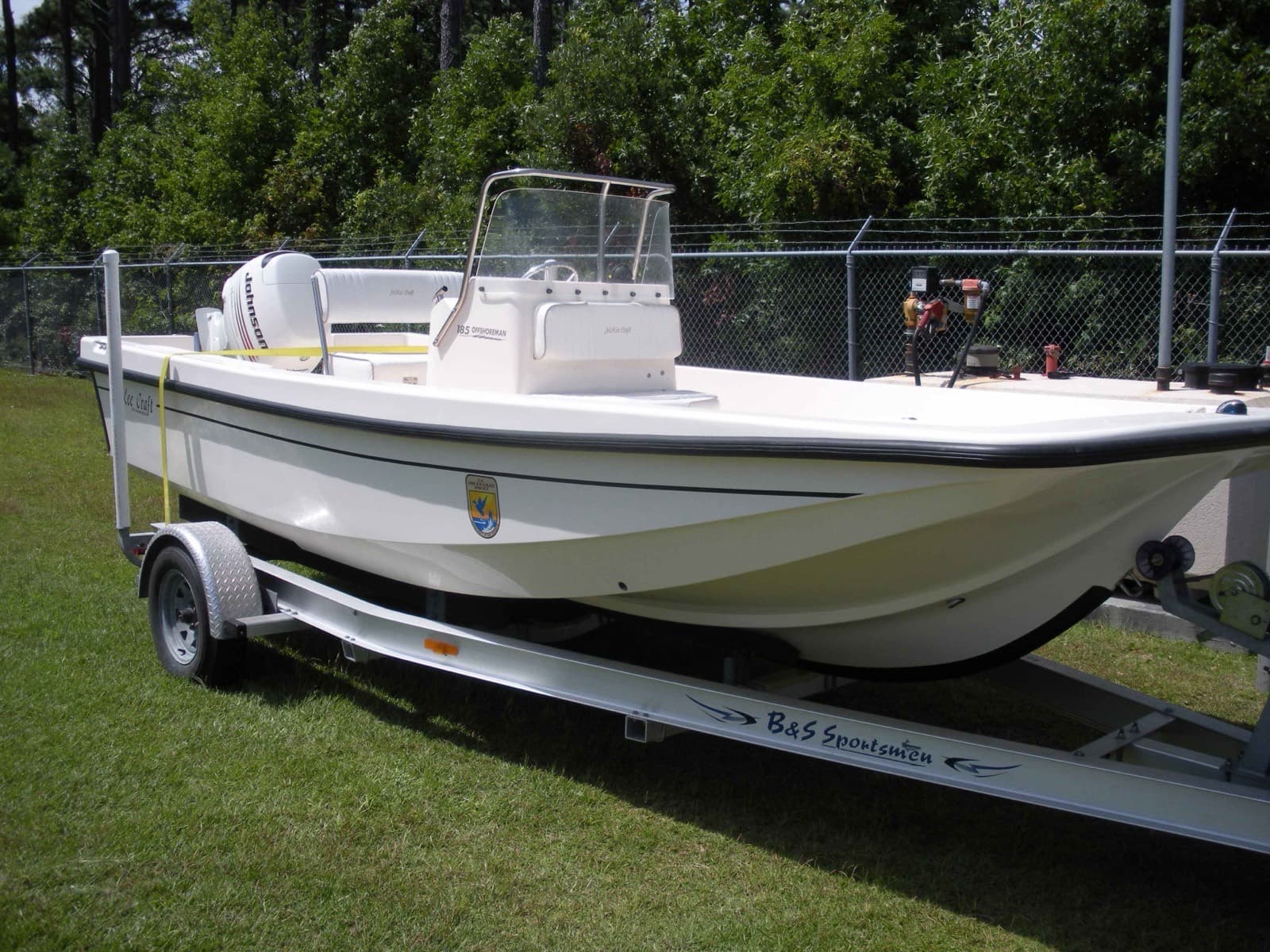
Detailing a Center Console or Fishing Boat
A center console is built to be hosed down. Self-bailing cockpits, molded non-skid, fish boxes in the floor and a T-top overhead all assume the boat will get bloody, scaly and wet. That makes them easier to rinse than most boats and also easy to neglect, because a quick hose-off leaves a lot behind: slime in the fish box drains, salt or lake film on the T-top frame, dried blood in the vinyl grain and grime packed into hatch gutters.
Grady-White's owner's manual has one of the most complete care chapters of any builder, and this guide leans on it, along with vinyl and canvas makers' instructions. It covers every part of a fishing boat, the order to clean it in, and what matters most for Upstate owners who fish the lakes and trailer to the coast.
The short answer
Detail a center console by rinsing off blood and scales with cool fresh water first, then washing gelcoat with a mild detergent, scrubbing non-skid with a brush, and cleaning fish boxes, livewells and coolers until no slime remains before propping them open to dry. Wash the T-top frame and canvas with mild soap, clean stainless and rod holders, clear hatch gutters and scuppers, and wax smooth gelcoat, never walking surfaces.
Key points
- Use cool water on fish blood; hot water and soap can set blood stains in vinyl, according to Morbern.
- Grady-White says to avoid ammonia, highly alkaline cleaners and bleach on gelcoat, and to hose the boat with fresh water after each outing.
- Fish boxes and livewells need draining, scrubbing and drying with lids propped open, or they sour fast.
- T-top frames are aluminum; Grady-White singles out the upper tubes, which rain never rinses.
- After any salt-water trip, rinse every piece of hardware with fresh water; builders link skipped rinses to corrosion.
Order of work
A Center Console Detail, Step by Step
Empty, then rinse cool
Remove rods, tackle, coolers, cushions and gear. Rinse the whole boat with cool fresh water to lift blood, scales and salt before anything dries or heats up.
T-top and canvas
Wash the frame and the top or canvas first so their runoff lands on surfaces not yet cleaned.
Console, helm and electronics
Clean the windshield, gauge faces and screens with products suited to glass, acrylic and plastic, and wipe the console.
Fish boxes, livewells and coolers
Drain, scrub, rinse until clean and leave lids open.
Seats, bolsters and leaning post
Wash vinyl with mild soap and a soft brush, rinse and dry, and remove cushions so the gelcoat under them dries.
Deck, hatches and scuppers
Scrub non-skid with a brush, clean hatch gutters and drains, and check scupper flaps for debris.
Hull, rails and hardware
Wash the hull, treat the waterline, correct oxidation, wax smooth gelcoat, and clean stainless, aluminum and rod holders.
Blood and scales
Fish Blood, Slime and Scales
The first rule is temperature. Morbern's vinyl care guide says to rub blood spots out with a clean cloth soaked in cool water, use household ammonia only on stubborn spots followed by repeated rinsing, and not to use hot water or soapsuds, because that sets the stain. Blood is protein, and heat cooks it into the grain of vinyl and the pores of gelcoat.
Scales dry on like glue. Rinse them before they dry, and use a soft brush on vinyl and a stiffer one on non-skid. On a hot summer day on the lake, a quick cool rinse of the cockpit and seats as soon as the fish is in the box saves a lot of scrubbing at the ramp.
Gelcoat
Hull, Deck and Non-Skid
Grady-White's washing guidance: hose the boat with fresh water after each outing; clean regularly with a mild household detergent and plenty of fresh water; use a sponge on smooth surfaces and a brush on non-skid; and avoid strong detergents, citrus-based cleaners and bleach. It warns that caustic, highly alkaline or ammonia cleaners can darken gelcoat through a chemical reaction, and that bleach causes blushing or fading on solid colors. Read the label of any cleaner to confirm it is safe for fiberglass.
For protection, Grady-White recommends waxing at least twice a year with a quality marine wax, more often for darker hull colors and harsh conditions, and says not to wax surfaces people walk on. To restore weathered gelcoat, it describes buffing with a fiberglass polishing compound at low speed (1,750 to 2,250 RPM) with an 8-inch wool pad, keeping the buffer moving, and warns that compounding too often wears the gelcoat away.
Fish boxes
Fish Boxes, Livewells and Coolers
Grady-White's storage checklist includes cleaning storage areas, fish boxes and livewells and propping fish box lids open, and the same habit pays off after every trip. A fish box that is closed wet with slime in the drain smells within days in summer heat.
Drain the box, rinse out scales and blood with cool water, scrub with mild soap and a soft brush, flush the drain line until it runs clear, rinse thoroughly, and leave the lid propped. Do the same for livewells and coolers, rinsing until no soap remains in anything that will hold bait or fish. Before leaving the ramp, drain livewells and bait wells and dispose of unwanted bait in the trash, as the Stop Aquatic Hitchhikers campaign recommends.
T-top
T-Top Frames, Canvas and Clear Vinyl
T-top and hardtop frames are usually painted or anodized aluminum. Grady-White recommends washing them with a very mild soap after each use, and every two to three weeks if the boat is stored outdoors in a marine environment. It warns that strong cleaners, abrasives and chlorine bleach can remove paint and anodized coatings, and it calls out the upper tubes just below the top, which are shielded from rain and collect the contaminants that cause pitting. A non-abrasive metal protector adds a moisture-displacing film.
For canvas, Grady-White says to brush off loose dirt, hose it down and clean with a mild solution, never use petroleum-based or ammonia cleaners on canvas or clear vinyl because they yellow it, air dry completely, never machine dry, and retreat with a water-based repellent after heavy cleaning. For heavily soiled canvas it describes removing the fabric and soaking it in a solution of half a cup of bleach and a quarter cup of mild soap per gallon of warm water until mildew brushes out, then rinsing in cold water. Snaps and zippers get a lubricant every three months or so.
Clear vinyl enclosure panels are cleaned with denatured alcohol and protected with a clear wax made for it, not paste wax, which yellows vinyl. Grady-White also says to roll vinyl panels rather than fold them, to prevent cracking.
Seating
Seats, Bolsters and Leaning Posts
Grady-White says exterior vinyl can be cleaned with a mild detergent solution or a commercial vinyl cleaner. Its key warning is about moisture: exterior seams are not waterproof, cushions should be stored in the cabin or covered when not in use, and cushions left in place trap moisture against the gelcoat, which can lead to gelcoat blistering. On a center console, pull the seat and bow cushions after rain or a wash and let both the cushion and the gelcoat dry.
Grady-White also calls for a surface protector on vinyl trim at least twice a year. Polyethylene rod racks and toe rails can take a spray-and-wipe cleaner, while acrylic trim needs only mild soap and a soft cloth.
Hardware
Stainless, Rod Holders and Hatches
Grady-White's hardware is 316 stainless, which it describes as needing regular cleaning to keep its less-staining properties; the key is a mild soap and fresh water and removing salt and dirt regularly. Rod holders, grab rails and cleats collect salt crystals and fish slime in their crevices; a soft brush inside each holder before rinsing keeps them from tea staining.
Hatches have gutters and drains that fill with scales, leaves and sand. Clean them out so water drains instead of standing, and look at the gaskets while you are there; Grady-White says deck fittings, hatches and windows should be checked periodically for failed caulking or gaskets. Inspect scupper flaps for debris too, as its manual advises.
Salt
Lake Boats That Visit the Coast
Plenty of Upstate center consoles fish Hartwell in spring and head to the coast in summer. Salt changes the routine. MasterCraft warns that failing to rinse salt water off hardware and apply protective oil after each exposure accelerates corrosion of stainless, chrome and anodized aluminum. Grady-White recommends a metal preservative on metal surfaces to prevent salt-water damage. After a coastal trip, rinse the entire boat, inside and out, along with the trailer, and give hardware a protective wipe.
At the shop
Center Console Detailing at The Auto Show
The shop's boat detailing can cover the hull and gelcoat (light oxidation polished out, heavy oxidation compounded first, then protected), the waterline line, non-skid scrubbed rather than polished so it keeps its grip, vinyl seats cleaned with vinyl products rather than bleach, metal and brightwork including rails, cleats and stainless, glass and gauge faces, and the cockpit and storage. Every boat is quoted individually.
In your quote request, include the make, model and length, whether the boat sees salt water, and the condition of the gelcoat, T-top and fish boxes. Send photos after the shop replies. If the boat is trailered, the truck can be detailed too, which is worth considering after a season of ramp spray.
| Mess | Where | What works | What makes it worse |
|---|---|---|---|
| Fish blood | Vinyl, gelcoat, non-skid | Cool water rinse, then mild soap | Hot water and soapsuds first |
| Scales and slime | Deck, fish boxes, rod holders | Rinse before drying, brush, flush drains | Letting them dry in the sun |
| Salt crust | Stainless, T-top, rod holders | Fresh-water rinse, mild soap, protective wipe | Skipping the rinse after a coastal trip |
| Mildew | Canvas, cushions, closed boxes | Mild soap; diluted bleach soak for canvas per the manual | Covering or closing lids while wet |
| Grime in hatch gutters | Hatches and drains | Brush out and flush | Ignoring it until drains clog |
Get Your Fishing Boat Quoted
Send the make, model and length, where the boat is kept, whether it sees salt, and how the gelcoat, T-top and fish boxes look. We reply with our recommendation and how the work will be scheduled.
Common questions
How do I get dried fish blood off boat seats?
Soften it with cool water and a clean cloth, then work it gently with a soft brush. Morbern's vinyl guide says to avoid hot water and soapsuds at first, because they set blood stains, and allows household ammonia on stubborn spots followed by thorough rinsing. Dry the seat afterward and check the stitching, where blood collects.
Can I use bleach in my fish box?
Check your boat builder's manual first. Grady-White advises against bleach on gelcoat because it can blush or fade solid colors, and most fish boxes are gelcoated fiberglass. Mild soap, a brush, a thorough rinse and drying with the lid open handle most fish box odor without risking the finish or leaving residue.
Why are there rust spots on my center console's stainless?
Usually it is tea staining: surface discoloration on stainless where salt, chlorides or grime sit in crevices and are not rinsed away. Grady-White says its 316 stainless needs regular cleaning with mild soap and fresh water to keep its less-staining properties. A stainless polish removes the marks; regular rinsing keeps them away.
Should I wax the inside of a center console?
Wax smooth gelcoat inside the boat, such as the console sides, gunwale caps and the inside of the hull above the deck, but not the non-skid or any surface people walk on. Grady-White says waxed walking surfaces become slippery, which is a real hazard on a wet, bloody deck when you are fighting a fish.
Sources
- 251 Coastal Explorer Owner's Manual (2025), Maintenance and Service and Winterization chapters, Grady-White Boats (https://grady-white.files.svdcdn.com/production/Documents/Owners-Manuals/2025/251-2025_20250213.pdf), accessed October 2026
- Care and Cleaning of Morbern Vinyl Coated Fabrics, Morbern (https://morbern.com/wp-content/uploads/2017/07/Care-Cleaning-of-Morbern-Vinyl-Coated-Fabrics.pdf), accessed October 2026
- 2027 Boat Owner's Manual (Salt Water; Stainless Steel and Chrome/Anodized Aluminum), MasterCraft Boat Company (https://www.mastercraft.com/media/e4dlqy5k/mcb_my2027_owners_manual_web_05-22-26-1.pdf), accessed October 2026
- Clean Drain Dry: How You Can Help, Stop Aquatic Hitchhikers! (https://stopaquatichitchhikers.org/prevention/), accessed October 2026
Boat detailing is quoted per boat, so this guide does not list boat prices. Product directions and warranty terms come from the manufacturer: follow your boat builder’s care instructions where they differ from general advice here.