
Boat Detailing Guide: Understand
Freshwater vs Saltwater Boat Care: Lake Boats That Visit the Coast
Plenty of Upstate boats live on Lake Hartwell or Keowee most of the year and then head to the coast for a week at the beach, a fishing trip or a family vacation. The boat does not care where you launch it, but salt water does more to it in a week than the lake does in a month if you treat it the same way afterward.
This guide explains what salt actually does to a lake boat's metal, gelcoat, vinyl, engine and trailer, and lays out the routine to follow during and after a saltwater trip so you bring home only good memories.
The short answer
Salt water is far more corrosive than lake water because dissolved salt conducts electricity, speeds metal corrosion and leaves crystals that pull moisture from the air and stay damp. After every saltwater outing, rinse the whole boat and trailer with fresh water, flush the engine as its manual directs, rinse and dry vinyl and stainless, and clean, drain and dry everything before launching back into a lake.
Key points
- Salt residue stays damp far longer than plain water, so it keeps attacking metal and fabric after the boat looks dry.
- Most outboard makers recommend a freshwater flush after every saltwater use; follow your engine manual exactly.
- Stainless hardware tea-stains quickly in salt air unless it is washed and dried; trailers, brakes and hubs take the worst of the dunking.
- Gelcoat and vinyl are not dissolved by salt, but crystals are abrasive and hold moisture, and both need a thorough freshwater rinse and drying.
- Moving between waters means Clean, Drain, Dry: livewells, bilges and the trailer included.
The chemistry
Why Salt Water Is Harder on a Boat
Lake water is not pure, but it carries far fewer dissolved ions than seawater. Salt water is a good electrolyte: it conducts electricity, which is what corrosion needs. Where two different metals touch in salt water, or even where one metal has slightly different areas, current flows and the less noble metal corrodes faster. That is why aluminum, steel trailer parts and the base metal under chrome all suffer more at the coast.
The second problem is what salt leaves behind. The Australian Stainless Steel Development Association points out that sea salt stays wet until a very low relative humidity, so a salty surface remains damp, and corroding, much longer than one wet with plain water. In a humid Southern summer that can mean salt that never really dries until you wash it off. It also explains why a boat can look dry on the drive home and still have a sticky, dull film the next morning.
Salt crystals are also mildly abrasive. Wiping a salty, dry hull or windshield with a towel drags those crystals across the surface like a fine grit.
Metal
Stainless, Aluminum and Chrome at the Coast
Stainless steel stays stainless because of a thin chromium oxide film, and salt is what most often overwhelms it. ASSDA describes tea staining, a brown cosmetic discoloration, as most common near the surf and worse in hot, humid conditions and in sheltered spots rain does not wash. On a boat that means the underside of rails, cleat bases, hinge pins and anything tucked under a gunwale. Its advice is to wash with soap or mild detergent and warm water, rinse with clean water and wipe dry, and to avoid abrasive cleaners and anything containing chlorides or bleach.
Lower-grade stainless that never stains on a lake can freckle with rust in a single beach week. ASSDA recommends grade 316 or better near the coast; many boat fittings are 316, but not all are. Chrome-plated parts can pit wherever the plating is thin or scratched. Aluminum pontoon tubes, towers and hulls are vulnerable where they touch stainless fasteners or steel, and bare aluminum can show white, powdery corrosion after salt exposure.
Engine
Flushing the Engine After Every Salt Trip
Discover Boating, the boating industry's consumer education site, says most outboard manufacturers recommend a freshwater flush after every use in salt water, to clear salt residue and scale from the cooling passages. It also says outboards used in brackish water, or in silty or muddy fresh water, should be flushed too, which is worth remembering after a churned-up day on a red clay lake.
The method depends on the engine. Many newer outboards have a built-in flush connection and are designed to be flushed with the engine off; older designs use flush muffs over the water intakes with the engine idling in neutral. Discover Boating stresses following the owner's manual exactly, because flushing incorrectly can damage the water pump impeller or leave the engine incompletely flushed. Never leave a running engine unattended on muffs, and drain the fresh water afterward, especially before freezing weather.
Inboards, sterndrives and jet drives have their own procedures. Engine flushing, anode inspection and anything mechanical belong to your manual and a marine mechanic, not a detailer.
Some engines and drives use different sacrificial anode materials for fresh and salt water. If you split time between both, ask your marine mechanic which your engine should have.
Finish and seats
Gelcoat, Vinyl and Canvas
- Gelcoat: salt does not dissolve it, but dried salt film dulls it, holds moisture against it and is abrasive when wiped. Rinse with plenty of fresh water before any towel touches it, then wash and dry.
- Vinyl seats: Sea Ray tells owners to rinse salt off vinyl after each outing and dry it thoroughly, because moisture trapped near piping and stitching leads to mildew. Salt left in seams keeps them damp.
- Canvas and biminis: salt crystals in the weave attract moisture and grit. A freshwater hose-down and air drying is the fix; Sunbrella recommends regular rinsing with clean water and air drying only.
- Clear vinyl and acrylic: never wipe salt off dry. Flood with fresh water first, then clean with a plastic-safe product and soft microfiber.
- Carpet: salt water soaked into carpet stays damp and smells. Rinse it with fresh water and dry it fully, out of the boat if it snaps out.
Trailer
The Trailer Takes the Worst of It
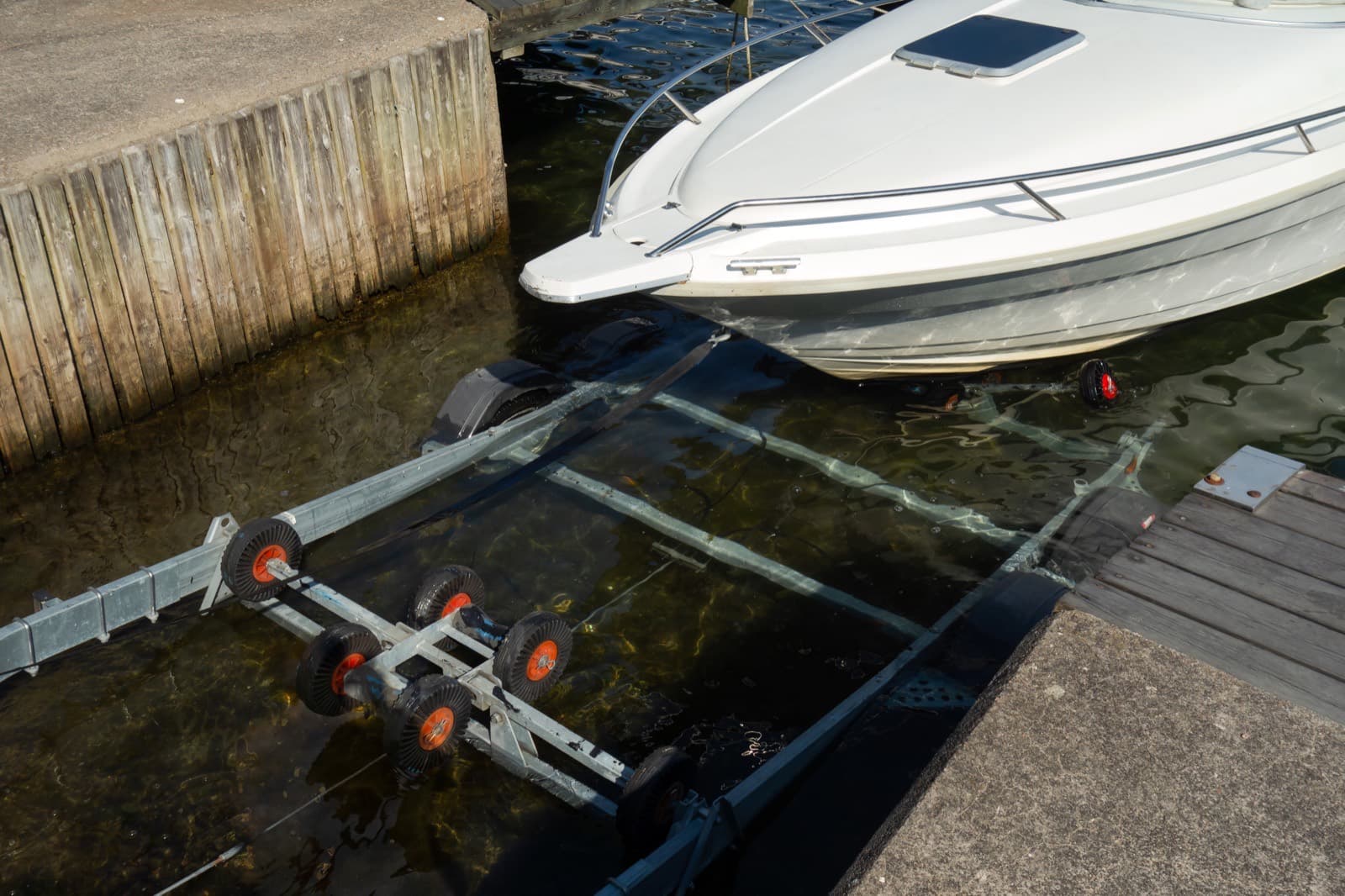
A trailer backed into salt water at the ramp gets its frame, springs, hubs and brakes dunked in seawater, then sits for hours in hot sun. On a lake boat used to fresh water, this is often the most expensive part of a coastal trip. Rinse the trailer thoroughly with fresh water as soon as possible after every launch and retrieval, spraying into the springs, brakes, hubs, rollers or bunks and the underside of the frame.
Check your trailer and axle maker's guidance about bearing and brake service after saltwater use; many owners have hubs inspected and repacked after a season of coastal trips. Trailer service is mechanical work for a trailer or marine shop.
The routine
Saltwater Trip Routine, Start to Finish
Before you go
Apply fresh protection to gelcoat and metal. Wax and sealants help salt rinse off more easily. Pack a hose nozzle and a small bottle of boat soap; many coastal ramps have washdown spigots.
At the ramp after each day
Rinse the trailer right after retrieving. Flush the engine as your manual directs, either at the ramp, the rental house or the marina.
Same day rinse
Flood the boat top down with fresh water: canvas, tower, windshield, hardware, seats, deck and hull. The New Jersey Clean Marina program notes that washing with a sponge and plain water is very effective at removing salt.
Dry the important parts
Towel dry vinyl seams and stainless. Leave hatches open so compartments can dry.
Back home: full wash
Wash the whole boat with boat soap, clean metal and dry it, and wash and dry the trailer again.
Clean, drain, dry
Before the boat goes back into any lake, remove plants and debris, drain the livewell, bilge and any ballast, and let everything dry.
Between waters
Clean, Drain, Dry When Moving Between Waters
Moving a boat between waters can move plants and animals too. South Carolina's Department of Environmental Services asks boaters to clean boats, trailers and gear after leaving any body of water, drain water from all equipment including livewells and bilges, and dry everything before entering another waterway. Saltwater organisms rarely survive in a mountain lake, but coastal trips often include stops at rivers and brackish creeks, and fresh water hitchhikers are the real risk when you come home.
Plant fragments caught on trailer bunks and rollers are easy to miss. Check them every time you pull out.
Upstate habits
Habits Lake Boaters Should Change for the Coast
On Lake Hartwell it is normal to rinse the boat once a week or so and wash it when it looks dirty. At the coast, that habit lets salt sit for days. Rinsing becomes a same-day job, every day you use the boat.
Covering habits change too. Covering a salty, damp boat traps humid air and salt against vinyl, canvas and metal. Rinse and let it dry before the cover goes on, even if that means waiting an hour after dinner. And give the boat a full detail-level clean and fresh protection when you get home rather than waiting until the end of the season, so salt does not quietly work on it for months.
| Area | Lake routine | After salt water |
|---|---|---|
| Hull and deck | Rinse after trips, wash every few outings | Freshwater rinse the same day, every day used; full wash at home |
| Engine | Flush per manual, especially after muddy water | Freshwater flush after every saltwater use, per manual |
| Stainless and chrome | Wash and dry periodically | Rinse and dry daily; polish and protect at home |
| Vinyl seats | Wipe after trips, clean every few weeks | Rinse salt off and dry seams after each outing |
| Canvas | Monthly rinse | Rinse after each salty day, air dry |
| Trailer | Occasional rinse | Rinse immediately after every launch and retrieval |
| Moving between waters | Clean, drain, dry | Clean, drain, dry, including the trailer bunks |
Back From the Coast?
If your boat came home dull, spotty or salty, The Auto Show can quote a full exterior and interior detail. Send the make, model, length and what you are seeing.
Common questions
Is one week in salt water bad for a freshwater boat?
Not if you look after it. Rinse the boat and trailer with fresh water after every day of use, flush the engine as the manual directs, dry vinyl and stainless, and give it a full wash at home. Problems come from salt left sitting for days or weeks: tea-stained hardware, corroded trailer parts and dull, damp seats.
Can I use dish soap to wash salt off my boat?
Plain fresh water removes most salt, and the New Jersey Clean Marina program notes a sponge and water work well for it. For the full wash, use a boat soap that is phosphate-free and biodegradable, used sparingly. Strong dish detergents strip wax and protection from gelcoat, which leaves it more exposed to the next round of salt and sun.
Does salt water damage gelcoat?
Salt does not dissolve gelcoat, but it does harm the finish indirectly. Dried salt holds moisture against the surface, dulls it, and acts as an abrasive if wiped off dry. Salt also speeds corrosion of fittings, which leaves rust streaks on the gelcoat below them. A same-day freshwater rinse and a good coat of protection prevent most of it.
Should I rinse my trailer after launching in salt water?
Yes, every time, as soon as you can. The trailer frame, springs, hubs and brakes go fully underwater at the ramp and then sit in the heat, which is ideal for corrosion. Rinse thoroughly with fresh water, aiming into the springs, brakes and hubs, and follow your trailer maker's guidance on bearing and brake service.
Sources
- How to Flush an Outboard Motor, Discover Boating (https://discoverboating.com/resources/flushing-an-outboard-motor), accessed October 2026
- Preventing Coastal Corrosion (Tea Staining), Australian Stainless Steel Development Association (https://assda.asn.au/blog/141-preventing-coastal-corrosion-tea-staining), accessed October 2026
- Vinyl Maintenance Tips, Sea Ray (https://searay.com/us/en/blog/vinyl-maintenance-tips), accessed October 2026
- Clean Sunbrella Marine Canvas, Sunbrella (https://global.sunbrella.com/en-us/how-to-clean/clean-sunbrella-marine-canvas), accessed October 2026
- Clean Boating Tip Sheet 1, New Jersey Clean Marina Program and New Jersey Sea Grant (https://www.nj.gov/dep/njcleanmarina/docs/tipsvesselcleaning.pdf), accessed October 2026
- Protecting South Carolina's Waters, South Carolina Department of Environmental Services (https://des.sc.gov/blog/scdes-sewe-2025-protecting-south-carolinas-waters), accessed October 2026
Boat detailing is quoted per boat, so this guide does not list boat prices. Product directions and warranty terms come from the manufacturer: follow your boat builder’s care instructions where they differ from general advice here.