
Boat Detailing Guide: Get It Done
How to Prepare Your Boat for a Detail
A boat detail goes faster and turns out better when the boat arrives empty, drained and with its problems written down. Every life jacket, cooler and tackle box left aboard is something to work around, and every unmentioned stain is a surprise on the day.
This checklist covers what to do in the days before your appointment, what to leave alone, and what to ask us when we reply to your quote. Where the work happens and how it is scheduled depends on your boat, so we confirm both in our reply.
The short answer
Before a boat detail, remove loose gear, coolers, life jackets, electronics and valuables; empty storage compartments; drain the bilge, livewells and any ballast after your last trip; and let the boat dry. If the boat is trailered, check the tires, lights and straps. Write down the stains, smells and spots that bother you. Do not wax, dress the seats or try bleach or strong stain removers in the week before.
Key points
- An empty boat is cleaned more thoroughly: lockers, carpet and seat bases all get reached.
- Clean, drain and dry the boat after your last trip, including the bilge, livewells and ballast.
- Write down the problem areas, and photograph them if you have not already emailed photos with your quote.
- Skip wax, dressings, bleach and strong stain removers before the appointment; they hide or worsen the condition.
- We confirm in our reply whether the boat comes to our shop at 112 Metro Drive, Suite B, and how the work is scheduled.
Step one
Empty the boat
The single most useful thing you can do is take everything out that is not bolted down. Storage compartments, seat bases, the console and the anchor locker are where mildew, sand and spilled drinks hide, and they can only be cleaned when they are empty.
It also protects your things. Phones, fish finders that come off their mounts, keys, wallets, sunglasses and paperwork are better at home.
- Life jackets, throwables and towels: take them home to dry and check them for mildew.
- Coolers, drink holders and food: empty and remove them.
- Tackle, rods, nets and bait containers: remove, especially anything with fish residue.
- Water toys, ropes, tow lines and fenders: remove or bag them.
- Removable electronics, chargers and valuables: take them with you.
- Trash and anything stuck under seats or in cup holders.
Step two
Clean, drain and dry after your last trip
South Carolina's Department of Environmental Services asks every boater to Clean, Drain and Dry after leaving any body of water: clean boats, trailers and gear; drain water from all equipment, including livewells and bilges; and dry everything thoroughly. Discover Boating's version adds pulling the drain plug and emptying ballast tanks.
It is good practice for the lake, and it is good prep for a detail. Standing water in a bilge or livewell smells, grows mildew and gets in the way. If your boat has ballast tanks or bags, drain them as your owner's manual describes.
Remove plants and mud
At the ramp, pull off any weeds or debris on the hull, trailer and prop.
Drain everything
Pull the drain plug on land and empty the bilge, livewells and ballast according to your manual.
Open it up to dry
Open hatches, lockers and the cabin, if you have one, so the boat dries before the appointment.
Step three
Write down what bothers you
You know your boat better than anyone. A short list of problem areas makes sure nothing is missed and sets honest expectations before the work starts.
- Oxidation: where the hull looks chalkiest or most faded.
- Waterline: how high the brown line goes and whether it is on both sides.
- Seats: mildew spots, pink stains, sunscreen marks, ink or food stains, and their location.
- Smells: which locker, livewell or cabin area smells, and since when.
- Brightwork: rust spots on rails, cleats or the windshield frame.
- Clear vinyl and windshield: haze, scratches or water spots.
- Anything already damaged: cracks, chips, torn seams, loose trim. A detail does not repair these, so it helps to note them up front.
If you have not emailed photos yet, take them now in open shade with the boat dry. The form cannot take attachments, so photos go by email after we reply.
Leave alone
What not to do the week before
- Do not wax or polish
- Fresh wax hides the true level of oxidation and can leave residue that has to be removed before the gelcoat is polished.
- Do not dress the seats
- Shiny vinyl dressings leave a film that has to be cleaned off first. Sea Ray also warns that automotive vinyl treatments with silicone can break down marine vinyl.
- Do not try bleach on stains
- BoatUS warns that products containing bleach break down vinyl and stitching over time. A stain you attack with bleach the night before may come out lighter but leave weakened vinyl behind. About pink stains
- Do not pressure wash
- Close-range pressure washing can drive water into seams and foam and damage worn gelcoat. A gentle rinse is plenty.
- Do not attack the waterline
- Acid hull cleaners work, but they need care with dwell time, rinsing and surrounding materials. If the waterline is part of the job, leave it for the appointment. Waterline stains
Getting there
If the boat is coming to the shop
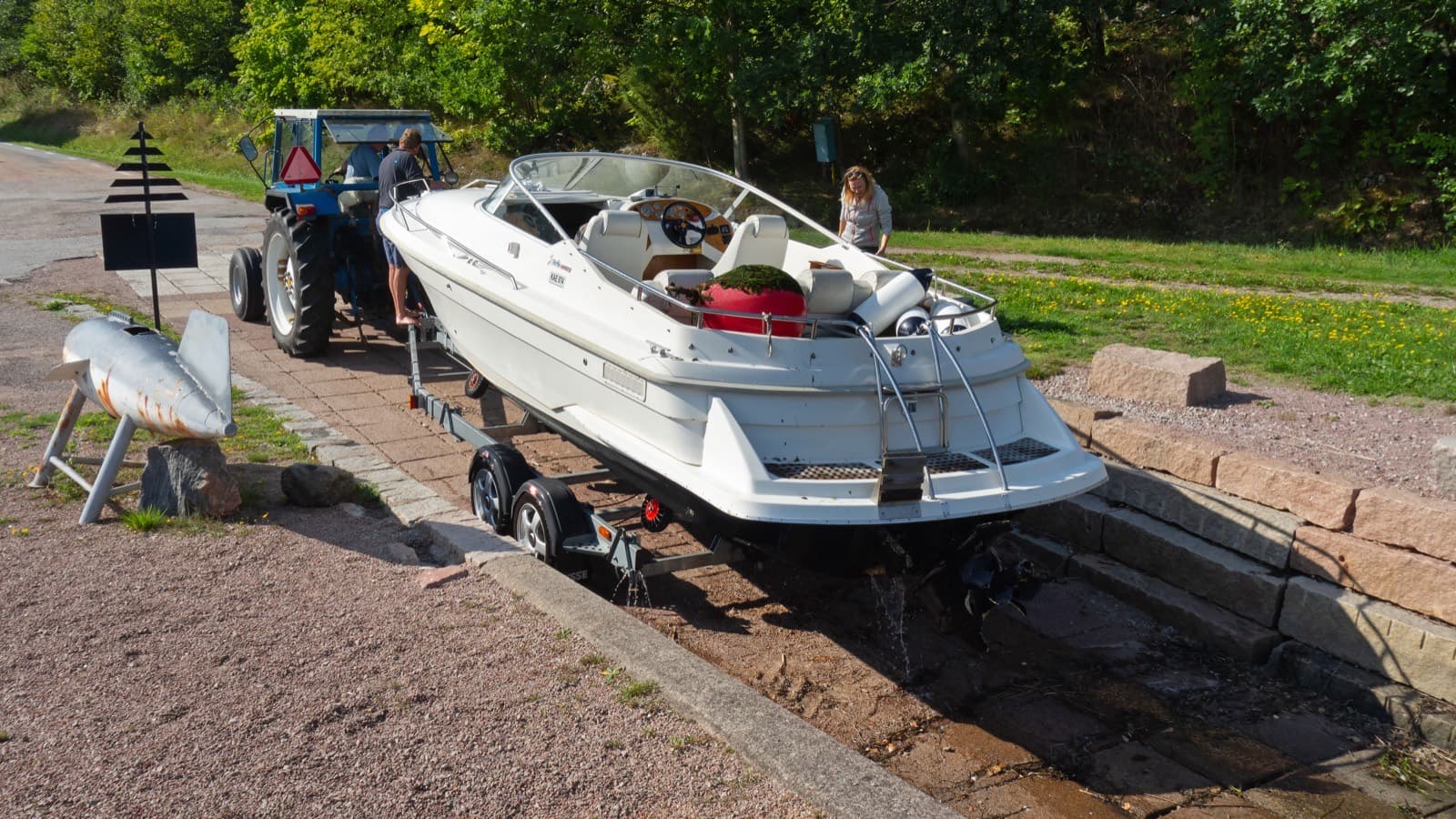
Whether the boat needs to come to 112 Metro Drive, Suite B, depends on the boat and where it is kept; we confirm that in our reply, along with how the work will be scheduled. If it is coming to us on its trailer, a few checks make the trip safer and the handover simpler.
Check the trailer
Tire pressure and condition, lights, the coupler and safety chains, and the winch strap and transom straps.
Secure the cover or remove it
Trailering with a loose cover can damage both the cover and the gelcoat. Fold and store it if it is not a trailerable cover.
Stow the bimini
Fold the bimini top into its boot and strap it down for the drive.
Bring the keys if needed
Ask us in advance whether keys are needed, for example to open a locked console or a cabin.
Plan your ride
We work by appointment only and there is no waiting area.
Ask us
Questions to settle before the day
Our reply confirms the scope and price, where the work happens and how it is scheduled. A few other things are worth settling before the day, so neither of us is guessing.
- Whether you want the canvas, bimini or enclosure cleaned, or left alone.
- Whether a coating was recommended, and what it means for the prep.
- How you would like to be contacted if something is found that changes the job.
- Whether the tow vehicle should be detailed at the same time.
| Task | When | Why |
|---|---|---|
| Remove gear and valuables | Before the appointment | Lockers and floors can be reached |
| Clean, drain and dry | After your last trip | No standing water, odor or mildew |
| List problem areas | When you request a quote | Sets scope and expectations |
| Email photos | After we reply | Shows true condition |
| Skip wax, dressings and bleach | The week before | Avoids residue and damage |
| Check trailer and straps | Before towing | Safe trip, simple handover |
Have your quote yet?
Request a boat quote with the make, model and length, the scope, its condition and where it is kept. We reply and confirm the logistics.
Common questions
Should I wash my boat before a professional detail?
There is no need for a full wash. A quick freshwater rinse to remove leaves, loose dirt and lake debris is fine, and it helps if mud or fish residue is caked on. Do not wax, polish or treat stains, because that hides the real condition and can make some stains harder to remove. Let the boat dry afterward.
Do I need to take the seat cushions out before a detail?
Leave fixed seats where they are. For removable cushions, ask us in your quote request whether to leave them aboard, and empty the storage under them either way. If any cushions have been stored damp at home, mention it, since trapped moisture in the foam is often the source of mildew smells and stains that return after cleaning.
Should I leave the boat cover on?
Ask us when we reply to your quote, because it depends on how and where the work happens. If the boat is trailered to the shop, only tow with a cover that is made for trailering and strapped down properly. A cover that flaps at highway speed can rub the gelcoat and tear itself.
What if I find more damage before the appointment?
Tell us before the day, by email or by calling (864) 202-6934, and send a photo. New stains or areas can change the scope, and damage such as cracks, torn seams or a soft spot in the floor is outside what a detail can fix, so it is better to talk about it in advance.
Sources
- SCDES at SEWE 2025: Protecting South Carolina's Waters, South Carolina Department of Environmental Services (https://des.sc.gov/blog/scdes-sewe-2025-protecting-south-carolinas-waters), accessed October 2026
- Clean, Drain, Dry: Help Stop the Spread of Aquatic Invasive Species (AIS), Discover Boating (https://www.discoverboating.com/ownership/clean-drain-dry-aquatic-invasive-species), accessed October 2026
- Boat Cleaning Tips, BoatUS Magazine (https://www.boatus.com/app/views/201810/boat-cleaning-tips.asp), accessed October 2026
- How to Keep Your Sea Ray Looking Sharp: Vinyl Maintenance Tips, Sea Ray (https://searay.com/us/en/blog/vinyl-maintenance-tips), accessed October 2026
- How to Clean a Pontoon Boat: 7 Tips for Cleaning Pontoons, Discover Boating (https://www.discoverboating.com/en-CA/node/1894442), accessed October 2026
Boat detailing is quoted per boat, so this guide does not list boat prices. Product directions and warranty terms come from the manufacturer: follow your boat builder’s care instructions where they differ from general advice here.