
Boat Detailing Guide: Compare
Paint Protection Film and Vinyl Wraps on Boats
Paint protection film made its name on cars, guarding hoods and bumpers from rock chips. Film makers now sell versions validated for boats, and colored vinyl wraps have become a common way to change a hull's look without paint. Both can work on a boat. Both also get oversold, and a film over the wrong surface or in the wrong place can trap the very problems an owner hoped to hide.
This guide explains what each film is, the spots on a boat where film genuinely earns its place, where it does not belong, what the gelcoat has to look like before anything sticks to it, and how film compares with wax, sealants and coatings.
The short answer
Clear paint protection film is a thick, transparent urethane film that absorbs scuffs and abrasion; vinyl wrap is a thinner colored film used mainly to change appearance. On boats, film makers validate both for use above the waterline only, with sealed edges. Film helps most on high-wear spots such as fender rub zones, the bow and swim platforms. It needs clean, sound, oxidation-free gelcoat underneath, and it does not repair cracks or chalking.
Key points
- Clear protection film guards against abrasion and scuffs; colored wraps are mainly cosmetic, with some scuff protection as a side effect.
- Marine film products are validated for above the waterline, and edges are sealed so water and chemicals cannot creep under.
- Film earns its keep on wear zones: fender rub areas, the bow, swim and bathing platforms and other contact points.
- Film locks in whatever is under it, so oxidation and stains must be corrected first; cracked or crazed gelcoat needs repair, not film.
- Film and coatings do different jobs: film is a physical barrier, while wax, sealant or a coating protects gloss and makes cleaning easier.
The films
What Protection Film and Wraps Actually Are
- Clear protection film (PPF)Physical barrier
- A thick, optically clear thermoplastic urethane film with a pressure-sensitive adhesive and a protective topcoat. It absorbs scuffs and light abrasion that would otherwise mark the finish. Avery Dennison describes its marine protection films as having a heat-assisted self-healing top layer and an engineered topcoat for stain resistance and reduced yellowing. How PPF works on cars
- Vinyl wrapAppearance first
- A thinner colored or printed PVC film used to change a boat's color, add graphics or cover a tired finish. It resists light scuffs but is not designed as an impact or abrasion layer. Avery Dennison markets its marine wrap as faster than painting, with no masking or drying time, and as removable later. PPF vs vinyl wrap
- Edge sealerThe marine-specific step
- Water working under a film edge is what makes boat film fail. Avery Dennison pairs its marine films with a liquid edge sealer that it says prevents lifting due to water and chemical penetration, and validates its protection films for above-the-waterline use only when combined with that sealer.
Where it helps
The Spots on a Boat Where Film Makes Sense
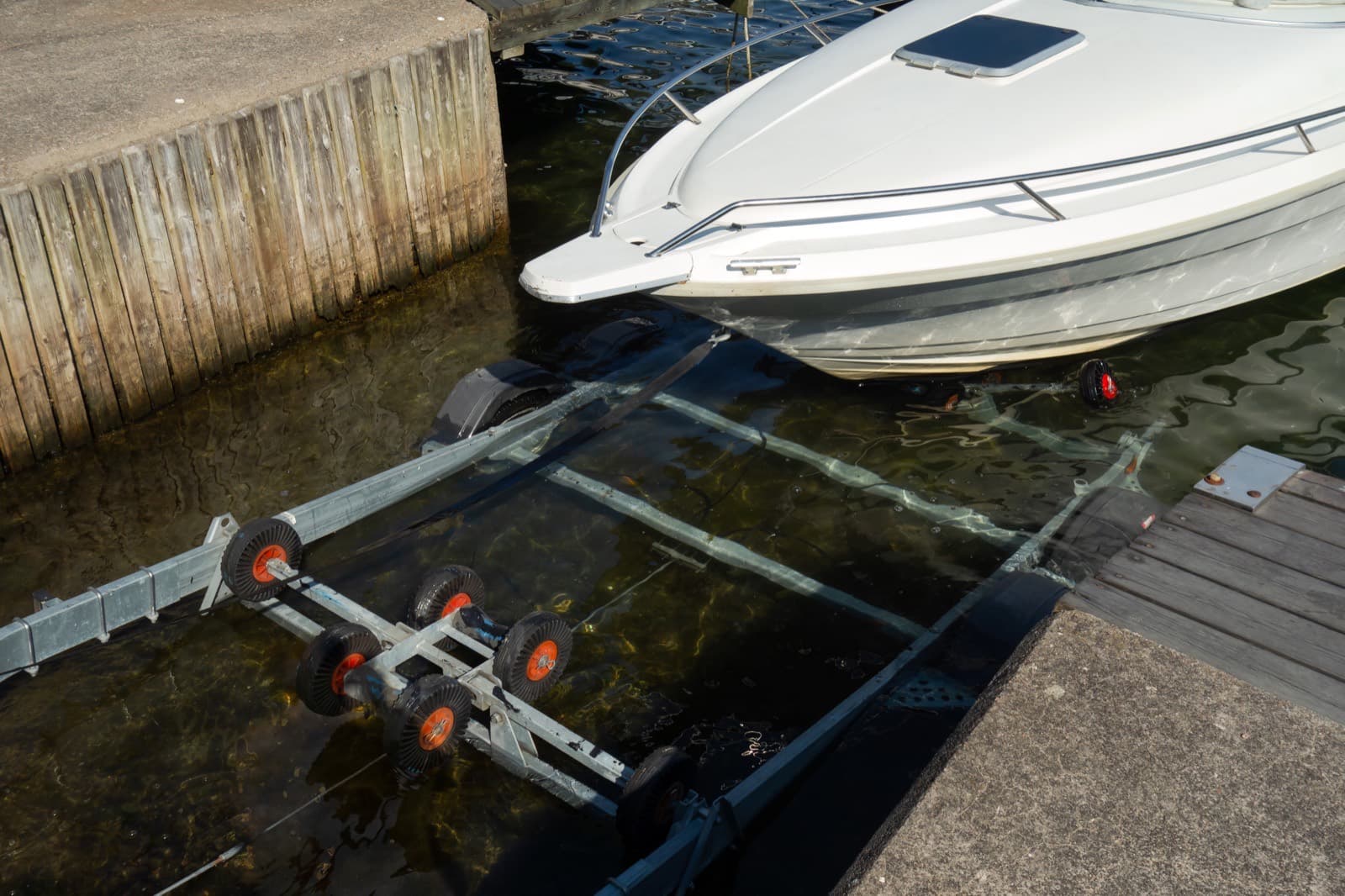
Boats do not get rock chips at highway speed the way cars do. Their wear comes from contact: fenders against a dock, the bow against trailer bunks and winch stands, anchors and rods against gunwales, feet and gear on platforms. Avery Dennison lists fender rub areas, buoy contact areas, bathing platforms and wear areas of the hull as the recommended uses for its marine protection films.
Builders' manuals point to the same zones. MasterCraft warns that without fenders the boat's finished gelcoat and graphics can be damaged at the dock, and that keeping the bow waxed where it meets its trailer bow clamp is part of regular maintenance. Those are the places film is designed for.
- Fender rub zones along the sides where the boat rests against a dock or lift.
- The bow stem and keel entry, which meet bunks, rollers and winch stands at the ramp.
- Swim and bathing platforms and boarding steps that take shoes, gear and board fins.
- Gunwale tops where rods, anchors and coolers get dragged.
- Wrapped or printed graphics on wake and bass boats, where a clear layer guards the print.
Where it does not
Where Film Does Not Belong
- Below the waterline. Marine film products are validated for above the waterline. Below it, boats kept in the water need antifouling bottom paint, as Grady-White's manual explains; that is a separate system and a separate trade.
- Over cracked, crazed or blistered gelcoat. Grady-White notes gelcoat can develop scratches, blistering and web-like crazing over time. Film hides those for a while but does not stop water reaching them or the cracks from growing.
- Over oxidized or stained gelcoat. Film sticks to whatever is on the surface. Over chalk, the bond is to chalk, and the dull look is sealed in under a clear layer.
- On non-skid. Textured deck surfaces need their grip, and film over them would trap dirt and lift.
- Where water stands at an edge. Seams, drains and spots that stay wet invite lifting even with a sealer.
Preparation
Why Gelcoat Condition Decides Everything
Gelcoat is a thin, pigmented resin layer over the fiberglass, and MasterCraft describes it as only a few millimeters thick. It is slightly porous, chalks as the sun breaks down the surface resin, and holds stains. None of that is a problem for a wax, which wears off and gets reapplied. It is a problem for a film meant to stay on for years.
Before any film, the surface has to be washed, decontaminated, and corrected so the gelcoat is glossy and uniform. Light oxidation polishes out; heavy oxidation is compounded first. Grady-White warns that compounding too often or too aggressively can wear away gelcoat, so the goal is to correct once, properly, and then protect. Any repair to chips or cracks happens before correction, not after.
Inspect and repair
Look for cracks, crazing, blisters, chips and soft spots. Structural or gelcoat repair is a separate trade and comes first.
Wash and decontaminate
Remove lake film, waterline staining, old wax and residue so nothing sits between gelcoat and adhesive.
Correct oxidation
Compound or polish until the gelcoat is uniform and glossy. Any chalk left behind becomes the surface the film bonds to.
Strip and install
Wipe off polishing oils before film goes on, then install and seal the edges as the film maker directs.
Wraps
A Wrap vs Restoring or Painting the Gelcoat
A wrap is attractive when a colored hull has faded past easy restoration or an owner wants a new look. It changes the color above the waterline and can come off later. What it does not do is fix the gelcoat underneath. When the wrap comes off, the faded or chalky gelcoat is still there, now a few years older.
Restoring gelcoat by compounding and polishing brings back the original color where enough healthy gelcoat remains, and the result can then be protected with wax, sealant or a coating. Painting the hull is a refinishing job with its own coatings and trade. The right choice depends on how much gelcoat is left, how the boat is used and how long you plan to keep it.
Living with film
Caring for Film on a Boat
- Wash with a mild boat soap and soft mitt, the same way builders recommend for gelcoat, and rinse well.
- Keep pressure washer spray away from film edges, where a jet can lift the edge and drive water under.
- Skip compounds, abrasive pads and solvents on the film; they haze the topcoat.
- Check edges after each season, especially at the bow and platforms, and have lifted edges dealt with early.
- When buying a used boat with film or a wrap, ask what is under it. Film can hide cracks, repairs or heavy oxidation.
Film vs coatings
How Film Compares With Wax, Sealants and Coatings
Wax, polymer sealants and ceramic coatings are thin chemical layers. They add gloss, slow oxidation and staining and make the boat easier to wash, but they do not stop a fender or a bunk from scuffing the surface. Film is a thick physical layer that does stop light abrasion, but only where it is applied. Many boats need nothing more than a well-kept wax or sealant; film is worth considering only for specific wear zones.
For boats, The Auto Show's published work is detailing: correcting gelcoat and protecting it afterward. Its paint protection film service is published for vehicles and covered in the sister guide; ask us before assuming anything about film on a boat. If you are considering film for a boat, the oxidation removal that a detail provides is the step that has to come first either way.
| Option | Main job | Where it fits | Key limit |
|---|---|---|---|
| Clear protection film | Absorbs scuffs and abrasion | Rub zones, bow, platforms | Above the waterline only; needs corrected gelcoat |
| Vinyl wrap | Changes color or adds graphics | Hull sides and topsides | Does not fix the gelcoat underneath |
| Wax or polymer sealant | Gloss and stain resistance | Whole hull and topsides | Wears off; reapplied through the season |
| Ceramic coating | Longer-lasting gloss and easier cleaning | Whole hull and topsides | Needs thorough prep; does not stop scuffs |
Film and coatings can be combined, but every option starts with clean, corrected gelcoat.
Start With the Gelcoat
Whatever protection you choose, it works best on corrected gelcoat. Tell us the make, model and length, the condition of the hull and where it is kept, and we will reply with what a detail can do for it.
Common questions
Can you put paint protection film on gelcoat?
Yes. Film makers now validate clear protection films for use on boat hulls above the waterline, applied with an edge sealer. The gelcoat must be clean, sound and free of oxidation first, because the adhesive bonds to whatever is on the surface. Film is not a substitute for repairing cracks, crazing or blisters.
Can a boat wrap go below the waterline?
Marine wrap and protection films from major makers are validated for above the waterline. Below the waterline, boats kept in the water usually need antifouling bottom paint to control growth, which is a different coating system applied by a bottom paint or boatyard service.
Will a wrap hide oxidation on my boat?
It will cover it, but it will not fix it. Oxidized gelcoat is a weak surface for adhesive, so the wrap may not bond well, and the chalky gelcoat is still there when the wrap comes off. Correcting the oxidation first gives the wrap a sound surface and leaves better gelcoat underneath.
Is clear film worth it on a pontoon or bass boat?
Only for specific wear spots. Most of a boat is better served by keeping the finish clean and protected with wax, a sealant or a coating. Film makes sense where something touches the boat over and over, such as a fender rub line, the bow where it meets trailer bunks, or a busy boarding platform.
Sources
- Supreme Protection Films for Marine Applications, Avery Dennison (https://graphics.averydennison.com/content/dam/averydennison/graphics/eu/en/product-overview/SPF%20for%20Marine%20Applications%20Online_EN.pdf), accessed October 2026
- Supreme Wrapping Film for Marine Applications, Avery Dennison (https://graphics.averydennison.com/eu-en/home/graphics-products/vehicle-wrapping-films/supreme-wrapping-film-for-marine-applications.html), accessed October 2026
- 2027 Boat Owner's Manual (Docking; Boat Cleaning; Trailer), MasterCraft Boat Company (https://www.mastercraft.com/media/e4dlqy5k/mcb_my2027_owners_manual_web_05-22-26-1.pdf), accessed October 2026
- 251 Coastal Explorer Owner's Manual (2025), Maintenance and Service chapter, Grady-White Boats (https://grady-white.files.svdcdn.com/production/Documents/Owners-Manuals/2025/251-2025_20250213.pdf), accessed October 2026
Boat detailing is quoted per boat, so this guide does not list boat prices. Product directions and warranty terms come from the manufacturer: follow your boat builder’s care instructions where they differ from general advice here.