
Boat Detailing Guide: Compare
Protecting Boat Seats From Sun and Cracking
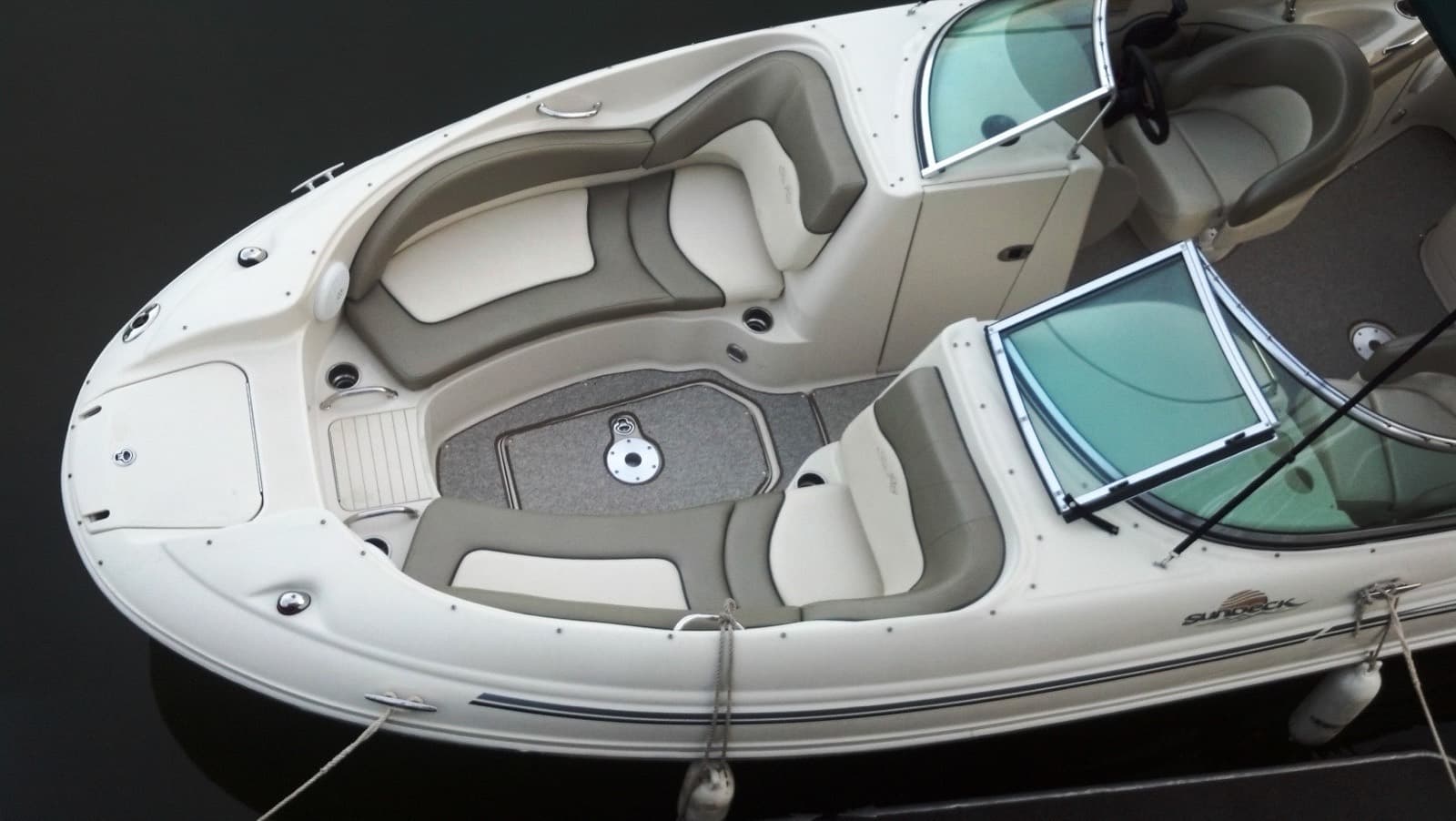
Boat seats live a harder life than any car seat. They sit uncovered in full sun, get splashed with lake water, soaked in sunscreen and sat on in wet swimsuits, then get zipped under a cover while still damp. On an open bowrider on Lake Hartwell, the bow cushions may see more direct summer sun in one season than a car interior sees in years.
The good news is that most cracking is preventable, and the most effective protection is also the simplest. This guide explains what sunlight does to marine vinyl, compares the ways to protect it, and sorts the protectant advice that boat builders and vinyl makers actually publish from the myths that shorten a seat's life.
The short answer
Protect boat seats from sun by keeping them covered or shaded whenever the boat is not in use, washing off sunscreen and dirt after each trip, and applying only a UV protectant that your boat builder or vinyl maker approves. Avoid silicone dressings, wax, bleach and solvent cleaners, which strip the vinyl's plasticizer or protective topcoat. Once vinyl has cracked through, no product reverses it; the cover needs repair or replacement.
Key points
- Marine vinyl is PVC softened with plasticizer; UV, heat and oxygen break the polymer down and the plasticizer escapes, leaving it hard and brittle.
- A fitted cover or furniture covers block far more sun than any protectant can, and builders list covering first.
- Builders and vinyl makers publish approved and do-not-use cleaner lists, and they do not always agree, so follow the list for your boat's vinyl.
- Silicone-based automotive dressings, wax, solvents and bleach top the do-not-use lists because they pull out plasticizer or strip the topcoat.
- Protectants slow aging on sound vinyl; they cannot soften or close vinyl that has already cracked.
The chemistry
What Sun and Heat Do to Marine Vinyl
Most boat upholstery is a vinyl-coated fabric: a layer of polyvinyl chloride (PVC) bonded to a knit or woven backing, with a clear protective topcoat on the face. Plain PVC is rigid. It becomes soft enough to sit on because the maker blends in plasticizer, an oily additive that lets the polymer chains slide past each other.
Sunlight attacks that system in two ways. Ultraviolet light, oxygen and heat break chlorine off the PVC chain (a reaction chemists call dehydrochlorination) and oxidize what is left. A 2019 outdoor weathering study in the journal Polymers found that oxygen and light together drive the main degradation reactions, that higher temperature speeds them, and that the resulting chemical changes show up as color shifts. That is the fading and yellowing you see on older white seats.
The second attack is on the plasticizer. As it migrates out or is pulled out by the wrong products, the vinyl loses its flexibility. MasterCraft's owner's manual warns that silicone-based protectants extract the plasticizer and leave vinyl hard and brittle until it cracks, and Morbern, a large marine vinyl maker, notes that some household cleaners and solvents do the same. Hot, dark seats and the folds at seams and piping fail first, because they flex the most.
Your options
Ways to Protect Boat Seats, Ranked by How Much They Help
Every option below helps, but they are not equal. The order reflects how much sun each one actually keeps off the vinyl and what boat builders list first in their own manuals.
- Cover the boat or the seatsMost effective
- A mooring cover, cockpit cover or snap-on furniture covers block sunlight entirely while the boat sits, which is most of its life. Crest's pontoon manual says quality covers protect furniture against UV degradation, leaf stains and pollen stains, and MasterCraft says vinyl upholstery should be covered when not in use. The catch is moisture: cover only dry seats, and use a cover that breathes. Boat covers compared
- Store out of direct sunCovered slip, boathouse or garage
- Ranger's owner's manual says the suppleness and color of its vinyl are best kept by storing the boat out of direct sunlight. A covered slip or lift canopy on the lake, or a garage at home, removes most of the daily UV load before you add anything else. How storage affects the finish
- Shade while you use the boatBimini or T-top
- A bimini top or T-top shades the helm and part of the seating during the hottest hours. The EPA's UV Index guidance points to late morning through mid-afternoon as the time to seek shade, and the same hours do the most damage to upholstery. Shade also lowers surface temperature, which slows the heat-driven part of the breakdown. Bimini top care
- Keep the vinyl cleanRemoves what speeds aging
- Sunscreen, insect repellent, body oil and grime all sit on the surface and react with it in the heat. Crest warns that suntan lotion and insect repellents can stain vinyl quickly and deteriorate the surface. A rinse and wipe after each trip removes them before the sun bakes them in. How to clean boat seats
- Apply an approved UV protectantHelps, but last line of defense
- A water-based vinyl protectant adds a sacrificial layer of UV absorbers on top of the factory topcoat. Sea Ray recommends sealing clean vinyl with a protectant on a regular schedule, and Grady-White calls for a surface protector on vinyl trim at least twice a year. It slows aging on exposed seats; it does not replace a cover.
Protectants
Choosing a Protectant: Follow Your Vinyl's List, Not the Shelf
The most useful thing to know about vinyl products is that the people who make and install the vinyl publish lists. Morbern publishes an approved-cleaner list, tested under ASTM D1308 and CFFA 141 lab methods, and still tells owners to test any product in a hidden spot first. MasterCraft and Ranger print recommended and not-recommended product tables in their owner's manuals.
Those lists do not always agree. One popular household all-purpose spray cleaner appears on Morbern's list of mild cleaners for stubborn stains, yet MasterCraft, Ranger and Crest all list it as a product not to use on their upholstery, and Ranger notes that the bottle itself says not to use it on vinyl. The safest rule is to follow your boat builder's manual first, then the vinyl maker named on the tag under the cushion, and to ignore generic advice that does not know which vinyl you have.
What the lists do agree on is short and worth memorizing. Every builder and vinyl maker cited here rules out bleach for routine cleaning, solvents such as acetone, gasoline and lacquer thinner, abrasive powders and pads, and silicone-based automotive dressings. Morbern goes further and says wax should never be used on vinyl upholstery because it causes premature embrittlement.
- Look for a product labeled for marine vinyl, water based, with UV inhibitors, and with no silicone oil listed.
- Apply to clean, dry vinyl in the shade, wipe it in thin, and buff off the excess so the seat is not slick or greasy.
- Test every new bottle in a hidden spot, since cleaner makers change formulas without notice, as Morbern points out.
- Reapply on a schedule rather than when the seat looks dull; Sea Ray stresses regular reapplication.
- Keep the receipt or label. Some vinyl warranties, including Morbern's, exclude damage from cleaners the maker did not recommend.
Myths
Vinyl Care Myths That Shorten a Seat's Life
- "Vinyl needs conditioning like leather." Vinyl is plastic, not hide. It has no natural oils to replace. Sea Ray does say sealants and conditioners help prevent drying in very dry climates, but greasy conditioners that leave a film attract dirt and can soften the topcoat.
- "A shiny dressing means it is protected." High gloss usually means silicone. MasterCraft lists a well-known silicone dressing by name on its do-not-use list for exactly this reason.
- "Bleach is fine because it kills mildew." Bleach and power washers are on Sea Ray's avoid list for vinyl. Morbern allows diluted bleach only on surface mildew and on products specified as bleach cleanable, followed by repeated rinsing.
- "Wiping on protectant fixes cracks." Once the topcoat and PVC layer have split, nothing reseals them. A protectant may darken the crack so it shows less for a week.
- "Marine vinyl is UV proof." It is UV resistant. Builders still tell you to cover it, because resistant only means it fails more slowly.
Routine
A Simple Sun-Protection Routine for the Season
After every trip
Rinse salt or lake film off the seats, wipe sunscreen and repellent spots with mild soap and water, and towel dry, paying attention to seams and piping where Sea Ray says moisture lingers. Let cushions dry fully before the cover goes on.
Every week of heavy use
Wash the seats with warm water, a mild soap and a soft-bristle brush, working the brush into the grain and stitching. Rinse with clear water; Morbern recommends repeated clear-water rinses after any cleaning.
Monthly in summer
Apply an approved UV protectant to the most exposed cushions: the bow, the sun pad and the helm seat. Seats that live under a bimini or cover can go longer.
At the end of the season
Deep clean, dry thoroughly, apply protectant, and store cushions dry and ventilated. MasterCraft's storage advice is to clean, protect, cover and keep vinyl in a dry, well-ventilated area.
Honest limits
When Seats Are Past Saving
A detail can remove grime, sunscreen buildup and surface mildew, and an approved protectant can slow further aging. Neither can undo plasticizer loss. Vinyl that feels stiff and papery, shows a web of fine cracks when you fold it, or has split along the piping will keep failing no matter what goes on it.
Stitching often goes before the vinyl, because thread ages in the sun too, and bleach speeds that up. If seams are opening, an upholstery shop can restitch or replace panels; that is a separate trade from detailing. Pink stains that come from inside the foam are another limit, covered in the pink stain guide.
At the shop
What The Auto Show Does With Boat Seats
The Auto Show cleans vinyl boat seats and upholstery with products made for vinyl, not bleach, as part of a boat detail when you choose interior work. Every boat is quoted individually. When you request a quote, mention the seat condition (fading, stiffness, cracks, mildew or pink spots) and send photos after the shop replies, so the reply can be honest about what cleaning will and will not change.
| Option | How much sun it blocks | Main drawback | Best for |
|---|---|---|---|
| Mooring or cockpit cover | All of it while the boat sits | Traps moisture if put on wet or unvented | Boats kept outside on a lift, slip or trailer |
| Snap-on furniture covers | All of it on the seats | Seats only; deck and helm still exposed | Pontoons and open bows used often |
| Covered slip or garage | Most of it | Not available everywhere | Owners who can choose storage |
| Bimini or T-top | Part of it, during use | Shades only part of the seating | Long days on the water |
| UV protectant | Some UV, as a thin sacrificial layer | Wears off; needs regular reapplication | Exposed cushions between covers |
Combine them: cover when parked, shade when in use, protectant on whatever stays exposed.
Have Your Boat Seats Cleaned Properly
Tell us the boat's make, model and length, how the seats look now, and where the boat is kept. We clean marine vinyl with vinyl-safe products, never bleach, and our reply says what a detail can realistically improve.
Common questions
Can I use car interior dressing on boat seats?
Usually not. Many automotive vinyl dressings are silicone based, and MasterCraft and Sea Ray both warn that silicone protectants pull plasticizer out of marine vinyl and lead to cracking. Use a water-based product labeled for marine vinyl, ideally one your boat builder or vinyl maker lists, and test it in a hidden spot first.
Why are my white boat seats turning yellow?
Yellowing can come from UV and heat breaking down the PVC, from sunscreen and body oils baked into the surface, or from stains migrating up from the foam. Surface grime and sunscreen often clean off with a vinyl cleaner and soft brush. Yellowing from the vinyl itself aging does not wash out, so prevention with covers and shade matters most.
Do boat seat covers cause mildew?
They can if they go on wet seats or do not breathe. Crest warns that plastic tarps without ventilation may promote mold, mildew and pink staining. Let cushions dry fully after rain or a swim, use breathable covers, and prop removable cushions so air can circulate when the boat is stored.
Can cracked boat vinyl be repaired?
Small tears can be patched with a vinyl repair kit color matched to the seat, as Sea Ray describes, but a patch does not restore vinyl that is brittle all over. Widespread cracking or split seams usually means recovering the cushion, which is upholstery work rather than detailing.
Is it worth protecting the seats on an older boat?
Yes, if the vinyl is still flexible. Cleaning, an approved protectant and a good cover can add seasons to seats that have faded but not cracked. If the vinyl is already stiff and cracking, spend on new covers or upholstery instead, then protect those from day one.
Keep reading
Sources
- 2027 Boat Owner's Manual (Upholstery, Canvas Covers), MasterCraft Boat Company (https://www.mastercraft.com/media/e4dlqy5k/mcb_my2027_owners_manual_web_05-22-26-1.pdf), accessed October 2026
- Vinyl Maintenance Tips, Sea Ray (https://www.searay.com/us/en/blog/vinyl-maintenance-tips), accessed October 2026
- Care and Cleaning of Morbern Vinyl Coated Fabrics, Morbern (https://morbern.com/wp-content/uploads/2017/07/Care-Cleaning-of-Morbern-Vinyl-Coated-Fabrics.pdf), accessed October 2026
- Approved Marine Cleaners (rev. March 2025), Morbern (https://morbern.com/wp-content/uploads/2025/03/Mobern-Approved-Marine-Cleaners-REV-March-30-V2.pdf), accessed October 2026
- 1 Year Marine Vinyl Limited Warranty, Morbern (https://morbern.com/wp-content/uploads/2017/07/Marine-Limited-Warranty.pdf), accessed October 2026
- González-Falcón E. et al. A Quantitative Spectroscopic Study of the Bleaching Phenomena in Plasticized Formulations Containing PVC Exposed to Outdoor Conditions, Polymers 2019;11(9):1481 (https://pmc.ncbi.nlm.nih.gov/articles/PMC6780741/), accessed October 2026
- Crest Pontoon Boats Owner's Manual (Seat Coverings and Vinyl; Mooring and Furniture Coverings), Crest Marine (https://crestpontoonboats.com/media/4ohfekn2/cpb-ownersmanual.pdf), accessed October 2026
- 2009 Owner's Manual (Key Locks, Carpet and Upholstery), Ranger Boats (https://www.rangerboats.com/content/dam/wrmg-general-assets/web/ranger/owners%27-manuals/2009%20Owners%20Manual.pdf), accessed October 2026
- 251 Coastal Explorer Owner's Manual (2025), Grady-White Boats (https://grady-white.files.svdcdn.com/production/Documents/Owners-Manuals/2025/251-2025_20250213.pdf), accessed October 2026
- UV Index Scale, US Environmental Protection Agency (https://www.epa.gov/sunsafety/uv-index-scale-0), accessed October 2026
Boat detailing is quoted per boat, so this guide does not list boat prices. Product directions and warranty terms come from the manufacturer: follow your boat builder’s care instructions where they differ from general advice here.