
Boat Detailing Guide: Understand
What Is Boat Detailing? A Complete Guide for Lake Boat Owners
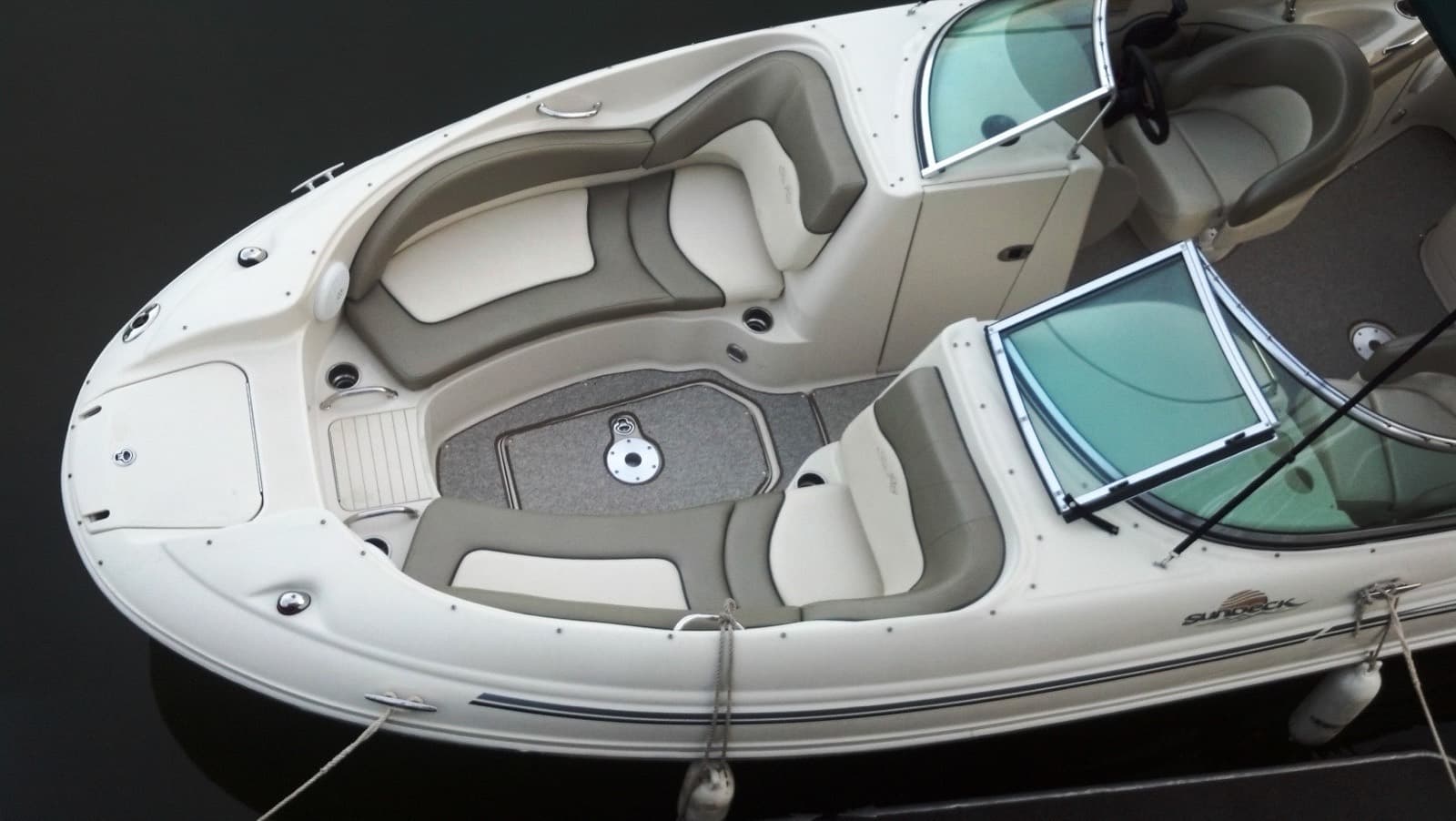
A boat looks simple from the dock: white hull, some seats, a windshield. Up close it is a collection of very different materials, each aging in its own way. Gelcoat chalks in the sun, vinyl dries out and grows mildew, non-skid traps dirt in its texture, stainless picks up rust specks and clear plastics scratch if you look at them wrong.
Boat detailing is the work of cleaning, restoring and protecting all of those surfaces with the right method for each one. This guide explains what that includes, how it differs from a wash or a full restoration, the order a careful detailer works in, and what no amount of polishing can fix.
The short answer
Boat detailing is a thorough clean, restoration and protection of a boat's cosmetic surfaces: the gelcoat hull and deck, non-skid, vinyl seating, carpet or mats, metal brightwork, glass and clear plastics, and storage areas. A detail goes beyond a wash by removing oxidation and stains, polishing the gelcoat back to gloss and applying protection. It does not repair cracks, soft floors, torn upholstery or mechanical problems; those are separate trades.
Key points
- A detail treats each material on the boat differently: gelcoat, non-skid, marine vinyl, metal, glass and clear plastic all need their own products and methods.
- The core gelcoat sequence is clean, decontaminate, correct (compound or polish only as much as needed), then protect.
- Non-skid is scrubbed, never polished or coated with a slick wax, so it keeps its grip.
- Marine vinyl makers and boat builders warn against bleach, household degreasers, silicone dressings and pressure washers on seats.
- Detailing is cosmetic. Cracked gelcoat, soft decks, torn seats and engine work belong to repair shops and marine mechanics.
Definition
Wash, Detail or Restoration: Three Different Jobs
People use "boat detailing" to mean anything from a quick rinse to a weeklong rebuild of a neglected hull, so it helps to separate three levels of work. The difference is not how long the job takes but how far below the surface it reaches.
A wash removes loose dirt, pollen, spider specks and lake film from the surface. A detail removes what a wash cannot: chalky oxidation, waterline staining, embedded grime in non-skid and seat grain, mildew, water spots and dull metal, and then protects the clean surface. A restoration rebuilds material that is damaged or gone: wet sanding deep oxidation, filling chips, re-gelcoating, replacing vinyl or carpet. Restoration overlaps with fiberglass repair and upholstery, which are skilled trades of their own.
- WashSurface dirt only
- Rinse, soap with a boat-safe cleaner, scrub and dry. Done after outings or every few weeks. Removes what has not yet bonded to the surface. How to wash a boat
- DetailClean, restore, protect
- Deep cleaning of every surface plus polishing or compounding the gelcoat as needed and applying protection. Usually done once or twice a season, often before the first launch and before storage. The full checklist
- RestorationRebuilding damaged material
- Wet sanding, gelcoat and fiberglass repair, new upholstery, new carpet. Needed when the surface itself is worn through, cracked or rotted. A detail can make these problems more visible, never hide them. Detailing or repair?
The hull
Gelcoat: Clean, Correct, Protect
Most lake boats wear gelcoat, a pigmented polyester resin layer that is sprayed into the mold first and becomes part of the fiberglass laminate. Fibre Glast describes a typical cured gelcoat as roughly 18 to 24 mils thick, about ten times the 1.5 to 2.0 mil clear coat on a car. That thickness is why gelcoat can be compounded more aggressively than car paint, but it is also porous and less hard, so it soaks up stains and chalks faster.
Chalking is the visible sign of sun damage. Coatings chemists describe it the same way across paints and resins: ultraviolet light breaks down the resin binder at the surface, which leaves pigment particles loosely held, and they rub off as a fine powder. A chalky hull that leaves white on your hand has a layer of dead resin on top that wax alone cannot fix.
Grady-White's owner guidance sums up the correction rule well: start with the least abrasive method that gets the job done. A polishing compound handles light dullness; a rubbing compound cuts deeper for heavier oxidation; wet sanding is reserved for troublesome areas and removes the most material. After correction, a wax, polymer sealant or coating goes on, because freshly polished gelcoat is bare and will chalk again quickly in an Upstate summer.
Decks
Non-Skid and the Floor
Non-skid is the molded texture on decks, steps and swim platforms. Its peaks and valleys trap red clay, sunscreen, fish slime and mildew, and polishing would flatten the very texture that keeps feet from slipping. A detailer scrubs non-skid with a deck brush and a fiberglass-safe cleaner, rinses thoroughly and, if anything goes on afterward, uses a product made for non-skid that will not make it slick. Grady-White's guidance says the same: deck brush on non-skid, non-skid specific products only.
Carpeted and vinyl-floored boats are their own job: vacuuming, extraction or scrubbing, and full drying so the backing and the wood or composite underneath do not stay wet. Snap-in carpet can come out of the boat; glued carpet has to be cleaned in place.
Seating
Marine Vinyl: Clean Gently and Dry Completely
Boat seats are marine vinyl, a coated fabric with UV inhibitors and a protective top coat. Sea Ray's care guidance is to wash with mild soap and water, use a soft brush or old toothbrush in the stitching, and dry thoroughly rather than relying on air drying, because moisture trapped near piping and thread feeds mildew. It warns against household cleaners with ammonia, degreasers, gasoline, bleach and power washers, and against automotive vinyl dressings containing silicone.
MasterCraft goes further: no kerosene, gasoline or acetone, which strip the marine top coat, no silicone protectants and no power washers, which it notes can generate 3,500 PSI. It also explains that most pink stains on seats are dyes produced by microorganisms, which is why some never fully come out once they have developed below the surface.
Hardware
Metal, Glass and Clear Plastic
- Stainless rails, cleats and hinges: washed, then polished to remove rust specks (often called tea staining). Bleach and chloride cleaners cause the problem rather than fix it.
- Chrome and aluminum trim: cleaned and polished with products safe for that metal. Acid brighteners meant for bare aluminum pontoons can etch anodized or painted trim.
- Glass windshields: cleaned like glass, with attention to mineral spots from lake spray and sprinklers.
- Acrylic and polycarbonate windshields, clear vinyl curtains and gauge lenses: these scratch easily and some cloud with ammonia or solvent cleaners, so they get plastic-safe cleaners and soft microfiber, never paper towels.
- Canvas, biminis and covers: rinsed and cleaned with mild soap per the fabric maker's guidance. Sunbrella, for example, recommends a monthly freshwater hose-down and air drying only.
Sequence
How a Careful Detailer Orders the Work
Order matters because compounding throws dust and splatter, interior cleaning drips onto the deck, and protection products should go on last over surfaces that will not be touched again. A typical professional sequence looks like this.
Inspect and photograph
Walk the boat, note cracks, chips, loose hardware, torn vinyl and anything the owner should know about before work starts. A detail reveals defects as often as it hides them.
Empty and open
Remove gear, cushions that come out, and anything in the lockers. Open hatches so compartments can be cleaned and dried.
Top down wash
Rinse and wash from the bimini and tower down, so dirt flows toward surfaces not yet cleaned. Interior and non-skid scrubbing happen here too.
Stain treatment
Waterline brown line, rust streaks and black marks are treated with the right chemistry for each, with acids used carefully and rinsed fully.
Gelcoat correction
A small test spot decides how aggressive to go. Compound only where needed, then polish to refine gloss.
Protect
Wax, sealant or coating on smooth gelcoat; vinyl protectant on seats if the maker allows it; metal polished and protected.
Final details
Glass and clear plastics, gauge faces, cup holders and the helm last, so nothing gets re-splattered.
Upstate factors
Why Lake Boats Here Need More Than a Rinse
Lake Hartwell is a large Corps of Engineers reservoir on the South Carolina and Georgia line, about 56,000 acres with 962 miles of shoreline, according to SCDNR. Boats here spend long seasons in strong sun, and South Carolina summers are dominated by a warm, humid maritime tropical air mass. That pairing is hard on a boat: UV breaks down gelcoat and vinyl, and humidity keeps covered seats and closed lockers damp enough for mildew.
Boats kept in the water pick up a brown line at the waterline, red clay rides in on shoes and ramp spray, and spring pine pollen settles into every damp crease. None of this is unique to the Upstate, but the combination is why many owners here have the boat detailed before the first launch and again before storage.
Honest limits
What a Detail Cannot Do
- It cannot repair stress cracks, spider cracks, chips or blisters in gelcoat. Polishing can actually make cracks easier to see.
- It cannot restore gelcoat that has been polished or weathered thin enough to show the fiberglass underneath.
- It cannot bring back vinyl that is cracked, hard or split from years of sun. Cleaning helps; replacement is the fix.
- It cannot guarantee that deep pink stains or old mildew stains will come out of vinyl.
- It cannot fix a soft floor, a leaking hatch or anything mechanical. Engine, trailer and winterizing work go to a marine mechanic.
If you are unsure whether a problem is cosmetic, ask a marine surveyor or the boat's builder or dealer before paying for any cosmetic work.
| Surface | Common problems | Detailing approach | Avoid |
|---|---|---|---|
| Smooth gelcoat | Chalking, waterline stain, water spots | Wash, stain removal, compound or polish, protect | Skipping the test spot; leaving it bare |
| Non-skid | Ground-in dirt, mildew, clay | Scrub with a deck brush and rinse | Polish or slick wax |
| Marine vinyl | Mildew, pink stains, sunscreen, grime | Mild soap, soft brush, full drying | Bleach, solvents, silicone, pressure washers |
| Stainless and chrome | Rust specks, water spots, dullness | Wash, metal polish, wipe dry | Bleach and chloride cleaners |
| Acrylic and clear vinyl | Haze, scratches, spots | Plastic-safe cleaner, soft microfiber | Ammonia glass cleaners, paper towels |
| Carpet | Mildew, clay, odor | Vacuum, extract or scrub, dry fully | Leaving it wet under a cover |
Always check your boat builder's manual first. Builder care instructions override general advice, and improper care can affect upholstery warranties.
Want Your Boat Detailed in Anderson?
The Auto Show quotes every boat individually. Send the make, model and length, what you want done and its condition through the form, and we reply with a quote and how the work will be scheduled.
Common questions
Does boat detailing include the bottom of the hull?
It depends on the boat and where it is kept. A trailered boat's hull sides and bottom can be cleaned and polished out of the water. Cleaning a boat bottom in the water, or anything involving bottom paint, is specialized work done by divers or boatyards. Say exactly which areas you want included when you ask for any quote.
Is boat detailing the same as waxing?
No. Waxing is one step at the end of a detail. If the gelcoat is chalky, wax applied over it just seals in the dull layer and wears off quickly. A detail cleans and corrects the gelcoat first, then protects it. A boat in good condition may only need a cleaning and a fresh coat of protection.
Can I use car detailing products on my boat?
Some are fine on hard surfaces, but many are not right for a boat. Car vinyl dressings often contain silicone, which Sea Ray and MasterCraft both warn against on marine vinyl, and car glass cleaners with ammonia can damage acrylic windshields. Car paint polishes may be too fine to cut oxidized gelcoat. Check your builder's manual before using them.
Will a detail remove pink stains from my boat seats?
Sometimes partly, often not completely. Most pink staining comes from dyes produced by microorganisms living in or under the vinyl surface, so surface cleaners only reach part of it. Early, light pinking responds best. Prevention matters more: keep seats clean and dry and never cover a wet boat.
Keep reading
Sources
- Gel Coat Application Guide, Fibre Glast Developments (https://www.fibreglast.com/product/Gel-Coat-Application-Guide), accessed October 2026
- How to Use Paint Thickness Gauges for Better Automotive Detailing, DeFelsko (https://www.defelsko.com/resources/automotive-paint-detailing), accessed October 2026
- Chalking: Technical Advice, Dulux New Zealand (https://www.dulux.co.nz/applicator/technical-advice/performance/chalking), accessed October 2026
- Keep Shipshape: Customer Tips, Grady-White Boats (https://www.gradywhite.com/customer-tips/keep-shipshape), accessed October 2026
- Vinyl Maintenance Tips, Sea Ray (https://searay.com/us/en/blog/vinyl-maintenance-tips), accessed October 2026
- Upholstery Vinyl Care, MasterCraft Knowledge Center (https://www.mastercraft.com/knowledge-center/upholstery-vinyl-care/), accessed October 2026
- Clean Sunbrella Marine Canvas, Sunbrella (https://global.sunbrella.com/en-us/how-to-clean/clean-sunbrella-marine-canvas), accessed October 2026
- Preventing Coastal Corrosion (Tea Staining), Australian Stainless Steel Development Association (https://assda.asn.au/blog/141-preventing-coastal-corrosion-tea-staining), accessed October 2026
- Lake Hartwell: General Information, South Carolina Department of Natural Resources (https://dnr.sc.gov/lakes/hartwell/description.html), accessed October 2026
- Climate of South Carolina, South Carolina State Climatology Office (https://www.dnr.sc.gov/climate/sco/ClimateData/cli_sc_climate.php), accessed October 2026
Boat detailing is quoted per boat, so this guide does not list boat prices. Product directions and warranty terms come from the manufacturer: follow your boat builder’s care instructions where they differ from general advice here.