
Ceramic Coating & PPF Guide: Understand
How to Wash a Ceramic Coated Car
A ceramic coating makes washing easier, not optional. The coating's slick surface lets dirt release with less effort, which is exactly why the way you wash matters: a gentle routine keeps it beading and glossy for years, and a harsh one wears it down and fills it with swirls.
This is the full routine, from the first wait after the coating goes on to a regular wash you can do in about an hour. None of it requires special skills, just the right tools and the right order.
The short answer
Wash a coated car by hand, in the shade, every one to two weeks or whenever it is dirty. Clean the wheels first with separate tools, pre-rinse the whole car, then wash top to bottom with a pH-neutral car shampoo using two buckets and a clean microfiber mitt. Rinse thoroughly and dry right away with a plush microfiber towel or a blower. Avoid brush car washes, dish soap, waxes with cleaners and abrasive pads.
Key points
- Wait out the cure: IGL advises keeping a new coating dry for at least 24 hours and avoiding chemical washes for at least 7 days.
- A pH-neutral car shampoo without added wax is the safe default for coated paint.
- Wheels first, then a pre-rinse, then a two-bucket contact wash from the top down.
- Drying is part of the wash: water left to evaporate leaves mineral spots, even on a coating.
- A regular gentle wash keeps the coating performing; harsh chemicals and brushes wear it out early.
Before you start
The first week after the coating goes on
A coating feels dry to the touch within hours, but it keeps hardening for days. IGL Coatings' aftercare guidance says to keep the car dry for at least 24 hours, notes that some coatings need two to four days for a full cure, and recommends no washing with chemicals for at least 7 days after installation. Your installer's care sheet may set its own timing for the specific product; follow that.
If a bird dropping lands on the car during that first week, do not leave it. Rinse it gently with plain water and a soft, wet microfiber, without soap and without pressure. That is the one exception to the hands-off rule.
Gear
What you need for a safe wash
- Two buckets, ideally with grit guards in the bottom: one for soapy water, one for rinsing the mitt.
- A separate bucket, brushes and mitt for wheels and tires, never used on paint.
- A pH-neutral car shampoo without added wax or gloss enhancers (IGL also lists slightly alkaline car soaps made for coatings as safe).
- Two or three plush microfiber wash mitts: one for the upper body, one for the lower panels.
- A hose with a spray nozzle, or a pressure washer with a wide fan tip held well back from the surface.
- Optional: a foam cannon or foam gun with a coating-safe snow foam for pre-soaking.
- Large, clean microfiber drying towels or a car blower.
- A soft detailing brush for badges, grilles and door gaps.
The routine
Step-by-step: washing a coated car
Pick the right time and place
Wash in the shade or early or late in the day, on panels that are cool to the touch. IGL notes that washing in hot sun causes water spots, because water and soap dry on the paint before you can rinse them.
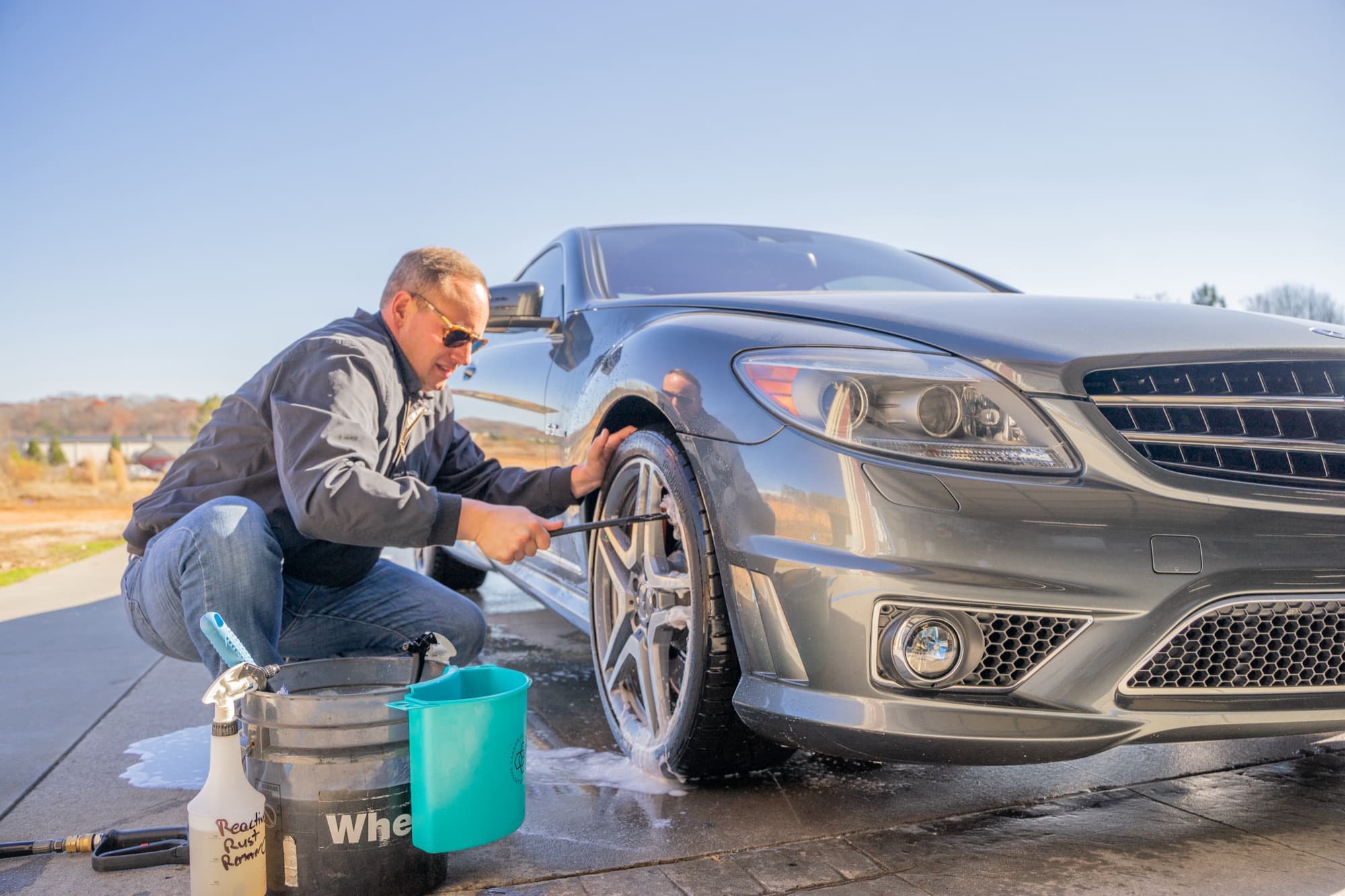
Do the wheels and tires first
Wheels carry the heaviest grime and brake dust. Clean them with their own bucket and brushes, then rinse them well. IGL recommends starting at the wheels so you do not splash that dirt onto a freshly washed body.
Pre-rinse the whole car
Rinse from the top down to knock off loose dust, pollen and grit. On a coated car, much of the light dirt sheets off here. The more you remove before touching the paint, the fewer swirls you put in.
Pre-soak if the car is dirty (optional)
A layer of coating-safe snow foam left to dwell for a few minutes, in the shade and never allowed to dry, loosens bugs and road film. Rinse it off before the contact wash.
Contact wash with two buckets, top to bottom
Load the mitt with soapy water and wash one panel at a time, starting with the roof and glass. Use light pressure and straight lines. Rinse the mitt in the clean-water bucket and wring it out before reloading it with soap. Switch to a second mitt for the lower doors, rockers and bumpers.
Rinse thoroughly
Rinse each section before soap dries, then give the whole car a final rinse from the top down. Letting water flow gently from an open hose (no nozzle) helps the coating sheet most of the water off, leaving less to dry.
Dry right away
Use a blower to push water out of mirrors, badges and gaps, then blot or drag a plush drying towel across each panel. IGL advises against chamois, magic erasers and rough sponges, which can cause marring.
Check and finish
Look over the car in good light for missed spots, bug residue or tar. Treat those individually rather than scrubbing the whole panel again.
Products
Soaps and products: what to use, what to skip
- pH-neutral car shampooUse
- The standard for coated cars. Cleans without chemically attacking the coating. Choose one without added wax, which can cover up the coating's own water behavior. Why pH-neutral matters
- Coating-safe snow foamUse when dirty
- Helpful for loosening heavy dirt before the contact wash. Check the label for coating compatibility and do not let it dry on the paint.
- Dish soap and household detergentsSkip
- IGL warns that dish and laundry detergents are harsher than car soaps and contain degreasers that can dull a finish over time.
- Wash and wax products, cleaner waxesSkip
- They leave a layer on top of the coating that changes how it beads and attracts dirt. Cleaner waxes and polishes contain abrasives that wear the coating. IGL advises against claying, waxing or polishing a coated car as routine care.
- Coating boosters and toppersOccasionally
- Spray products made to top up a coating. IGL suggests using one every few months. Use the type your installer recommends so it is compatible with your coating. Toppers and boosters
How often
How often to wash a coated car
IGL suggests a light wash or a waterless wash about every two weeks, or whenever the car is dirty, and specifically calls out washing after a light rain that follows a dry spell, since that rain lands on dust and leaves it behind as spotty residue. For most Upstate drivers, every one to two weeks is about right, with extra attention in spring pollen season and summer bug season.
Some things should not wait for wash day. Bird droppings, bug splatter and tree sap should come off as soon as you see them, using a quick detailer or plain water and a soft microfiber. A coating slows down etching; it does not stop it if the contamination sits for days in July heat.
Waterless washes have a place on a car that is only lightly dusty: plenty of product, plenty of clean towels, and light wiping. They are not for a car covered in grit, mud or road salt. That needs real water.
Car washes
Automatic and touchless washes
Brush and soft-cloth automatic washes are the fastest way to put swirls in a coated car. IGL says they can be too harsh and may damage the coating, especially the brushes. The cloths carry grit from every car before yours.
Touchless washes avoid the brushes but often rely on strong detergents to clean without contact. An occasional touchless wash on a road trip or in winter is better than leaving salt or heavy grime on the car; as a routine, hand washing is gentler.
Long term
Keeping the coating performing for years
Washing is most of the maintenance. On top of that, IGL recommends having a coating inspected by a professional about every six months, which is a good time to deal with any water spots or bonded contamination with products that will not harm the coating, and to apply a topper if needed.
If the coating stops beading after a wash, it is not always worn out. A film of road grime or old spray product can mask it. A careful decontamination wash often brings the behavior back. The Auto Show gives care instructions at pickup and offers a monthly maintenance program for coated vehicles; ask about it if you would rather have someone else handle the routine.
| Do | Don't |
|---|---|
| Wash in shade on cool panels | Wash in direct sun on hot panels |
| Clean wheels first with separate tools | Use the same mitt on wheels and paint |
| Use a pH-neutral car shampoo | Use dish soap or household cleaners |
| Use two buckets and clean microfiber mitts | Use sponges, brushes or old rags on paint |
| Dry right away with microfiber or a blower | Let the car air-dry |
| Remove droppings and bugs the same day | Wait for the weekend in summer heat |
| Hand wash or use touchless sparingly | Use brush or soft-cloth automatic washes |
Thinking about a coating?
A coating turns this routine into a faster, easier wash. We offer IGL coatings rated for 1, 3 and 5 years, applied after a proper detail and paint prep.
Common questions
Can I use a pressure washer on a ceramic coated car?
Yes, with sense. Use a wide fan tip, keep the nozzle well back from the paint, and avoid blasting directly at panel edges, trim, badges or any paint chips. A pressure washer is great for rinsing wheels, wheel wells and the pre-rinse. If the car also has paint protection film, be extra careful around film edges.
Do I need special soap for a ceramic coating?
You need a proper car shampoo, ideally pH-neutral and without added wax or gloss enhancers. Many coating makers sell their own, but any quality pH-neutral car soap works. Skip dish soap, laundry detergent and all-purpose cleaners, which are harsher than car products and can dull the finish over time.
Is it OK to use a waterless wash on a coated car?
For light dust and fingerprints, yes. Use a generous amount of a quality waterless wash product, fold a clean microfiber into quarters, wipe gently in one direction and flip to a fresh side often. Do not use it on a car covered in mud, salt or heavy grit; that needs a full wash with water.
Why are there water spots on my coated car?
Coatings shed water, but droplets left to evaporate still leave their minerals behind, especially in sun or heat. Spots usually come from sprinklers, rain on a dusty car, or air-drying after a wash. Fresh spots typically wipe off with a quick detailer. Spots that have bonded may need a coating-safe water spot remover or a professional decontamination.
Sources
- Just got a Ceramic Coating Done and you're not sure how to maintain it?, IGL Coatings (https://blog.iglcoatings.com/how-to-maintain-ceramic-coatings/), accessed October 2026
- Ceramic Coating Wash Techniques, IGL Coatings (https://blog.iglcoatings.com/ceramic-coating-wash-techniques/), accessed October 2026
- Hardness of Water, U.S. Geological Survey Water Science School (https://www.usgs.gov/special-topics/water-science-school/science/hardness-water), accessed October 2026
Prices on this page are The Auto Show’s published starting prices and are confirmed after we inspect the vehicle. Product ratings and warranty terms come from the manufacturers.