
Window Tint Guide: Get Tinted
How to Choose a Window Tint Shop in the Upstate
Window tint looks like a commodity: a dark film on glass, priced by the window. In practice, two jobs with the same shade can differ in heat rejection, how long the color lasts, how clean the edges are, whether the car is legal and whether anyone stands behind the work in three years.
This guide lays out what to look for when you compare tint shops around Anderson, Greenville, Clemson and the rest of the Upstate. It applies to any shop, including ours. Where we describe how The Auto Show does something, we say so.
The short answer
Choose a tint shop that names the film brand and product it installs and can show the manufacturer's published specs, checks the legal shade for your vehicle before installing, applies South Carolina's certificate of compliance to every tinted window, cuts film precisely for your car, and explains in writing what the manufacturer's warranty covers. Be wary of shops that promise any shade is fine or cannot tell you what film you are getting.
Key points
- The film matters: a shop should name the brand and product and point you to the manufacturer's published data.
- A good shop checks the legal shade on your vehicle, including factory tint, instead of selling whatever shade you ask for.
- South Carolina requires a certificate of compliance on every tinted window, with the installer's name, address and phone number.
- Ask how film is cut and how back glass is shaped; precise cutting and careful heat-forming show in the edges.
- Warranty coverage comes from the film manufacturer through the installer; get the details in writing.
The film
A shop should name what it installs
Film is the part of the job you live with longest. A dyed film can fade or turn purple over years of sun; a carbon film keeps its color because the color is built into the film rather than dyed on the surface; a ceramic film adds infrared heat rejection without needing a darker shade. Those differences only matter if you know which one you are buying.
A trustworthy shop names the brand and product line and can show you the manufacturer's own description and specifications. Major manufacturers publish performance data. LLumar, for example, publishes a sheet listing visible light transmission, total solar energy rejected and UV protection for each of its automotive films. If a shop describes its film only as "ceramic" or "premium" with no brand, you cannot compare it with anything.
We install two films and say so plainly: LLumar Carbon from $125.99 and LLumar Ceramic from $199.99, both priced for the two front side windows.
The law
Look for a shop that checks the legal shade
South Carolina requires at least 27% combined light transmission on the front side windows, the windows behind the driver and the rear-most window, with an exception for windows behind the driver on multipurpose passenger vehicles such as most SUVs and minivans. Pickups are not exempt. Film must be nonreflective and may not be red, yellow or amber, and on the windshield it may not extend below the AS-1 line.
Combined is the key word. A shop that hands you a sample book and installs whatever you point at is not doing the math on your glass. A good shop accounts for factory tint and vehicle type before installing, and tells you when a shade would land under the limit.
The law puts real weight on installers. A professional window tinter who installs film without the certificate of compliance faces a misdemeanor with a fine of not less than $1,000, up to 30 days in jail, or both, for each offense. Shops that take the law seriously tend to be careful about everything else too.
- How we do it
- We check the legal shade for your vehicle before installing, accounting for factory privacy glass. How a legal tint check works
The sticker
Every tinted window should get one
Under South Carolina law, each window with after-factory film must carry a certificate of compliance on the inside, lower right corner. It must show the percentage of light transmission allowed by the film, the installer's name, address and phone number, and the date of installation.
A missing sticker is a red flag, and so is a sticker without the installer's details. It is also a quiet sign of accountability: the shop is putting its name and number on your car. We apply the certificate of compliance to each window we tint.
The craft
How the film is cut and shaped
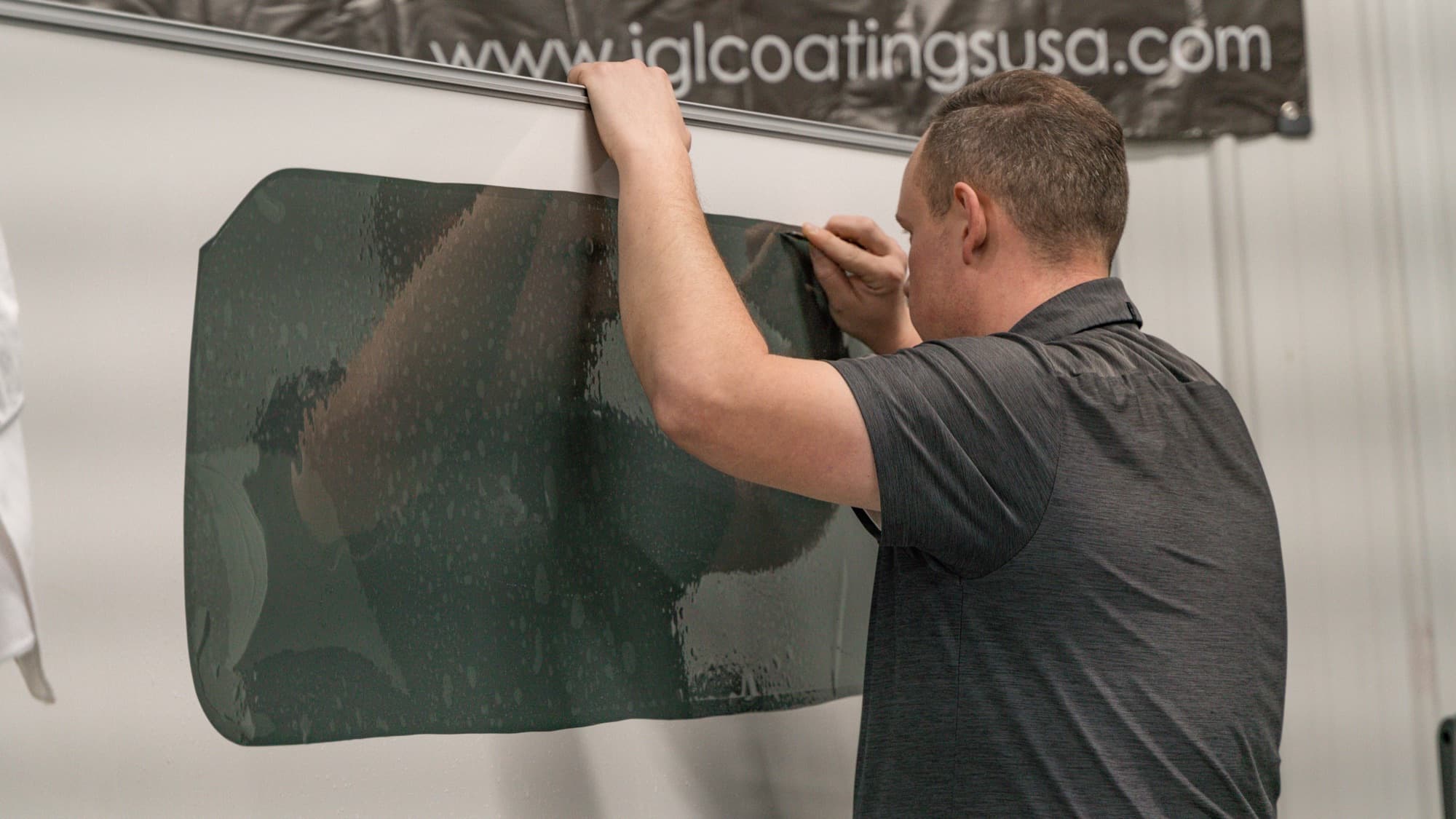
There are two common ways to cut tint. Some installers lay film on the outside of the glass and trim it by hand with a blade. Others cut patterns on a plotter from vehicle-specific templates. Skilled hand cutters can do clean work, but plotter cutting gives consistent edges and reduces blade work near your glass and seals. At The Auto Show, film is computer cut for your vehicle.
The back glass is the hardest window on most cars, because it curves in two directions. Installers shape the film with heat before applying it. Ask to see finished cars, or look closely at your own at pickup: the film should follow the curve without creases or fingers, and the edges should run neatly along the glass.
Warranty
Get the warranty terms in writing
Most tint warranties come from the film manufacturer and are honored through the installing dealer. LLumar, for example, says all its tint products carry a manufacturer's lifetime limited warranty, that certain restrictions apply, and that the dealer has the warranty details. The word "lifetime" on its own tells you little; the restrictions and the process for a claim are what matter.
Ask what the warranty covers (bubbling, peeling, discoloration), who you contact, what paperwork you need and whether it transfers if you sell the car. Keep the receipt and any warranty card with your records.
Red flags
Signs to keep looking
- "Any shade is legal if you have the sticker" or "nobody gets pulled over for 5%".
- No brand named, or a brand that cannot be found on any manufacturer site.
- No certificate of compliance, or stickers with no installer details.
- Prices that only work because the film, prep or edges are being skipped.
- No written explanation of warranty coverage.
- Pressure to decide on the spot, or reluctance to let you see finished work.
Fit
Practical things that also matter
Policies differ, and knowing them up front saves surprises. We work by appointment only, there is no waiting area, and drop-off after 6 pm can be arranged by phone. We do not tint vehicles more than 8 years old, because aging seals and trim are likely to break, and we would rather say so before you book. If you need darker film under a medical exemption, bring the paperwork and ask before booking.
Wherever you go, ask how they handle a problem found after the film dries. A shop's answer to that question tells you a lot. It is also fair to ask whether they have tinted your make and model before, since sharply curved back glass, frameless doors and large quarter windows each call for a little extra care.
See how we handle window tint
Two named LLumar films, a legal shade check before install and the SC compliance sticker on every tinted window.
Common questions
Is a cheaper tint shop always worse?
Not always, but price differences usually come from somewhere: the film itself, how carefully the glass is prepped, how the film is cut and shaped, and whether anyone stands behind the work. Compare the named film, the coverage and the warranty terms, not just the total. A low price on an unnamed film is hard to judge.
How can I tell if a tint shop is legitimate?
Look for a fixed location, a named film brand you can look up, certificate of compliance stickers with the shop's name, address and phone number, and clear answers about South Carolina's 27% combined limit. Film manufacturers and the International Window Film Association also run dealer locators you can check.
Does it matter if the shop is a dealer for the film brand?
It can. Manufacturers typically route warranty claims through their dealers, and LLumar says its dealers hold the warranty details for its tint. Ask the shop how a warranty claim would be handled and what documents you would need, and keep your receipt.
Should I choose a shop near home or near work?
Choose the shop you trust first, then plan the logistics. Tint usually means leaving the car for the appointment, and new film needs a few days before the windows go down. If you drive in from Greenville or Clemson to Anderson, arrange a ride; some shops, including ours, can arrange evening drop-off by phone.
Sources
- S.C. Code Ann. § 56-5-5015, South Carolina Legislature (https://www.scstatehouse.gov/code/t56c005.php), accessed October 2026
- Automotive Window Tint Frequently Asked Questions, LLumar (https://llumar.com/en/resources/automotive-window-tint-frequently-asked-questions/), accessed October 2026
- LLumar Window Film Performance Data (LL0116NAEN, 03/26), Eastman Performance Films (https://llumar.com/content/dam/eastman/performance-films/llumar/documents/LL0116NAEN_AutoSpecs_screen.pdf), accessed October 2026
- Automotive Installation Process, International Window Film Association (https://iwfa.com/automotive-installation-process/), accessed October 2026
- Dealer Locator, International Window Film Association (https://iwfa.com/dealer-locator/), accessed October 2026
- Find a Dealer, LLumar (https://llumar.com/en/find-a-dealer/), accessed October 2026
Prices on this page are The Auto Show’s published starting prices. Film ratings and warranty terms come from the manufacturer. This guide explains South Carolina law in plain words; it is not legal advice.