
Window Tint Guide: Compare
Window Tint for Pickup Trucks in South Carolina
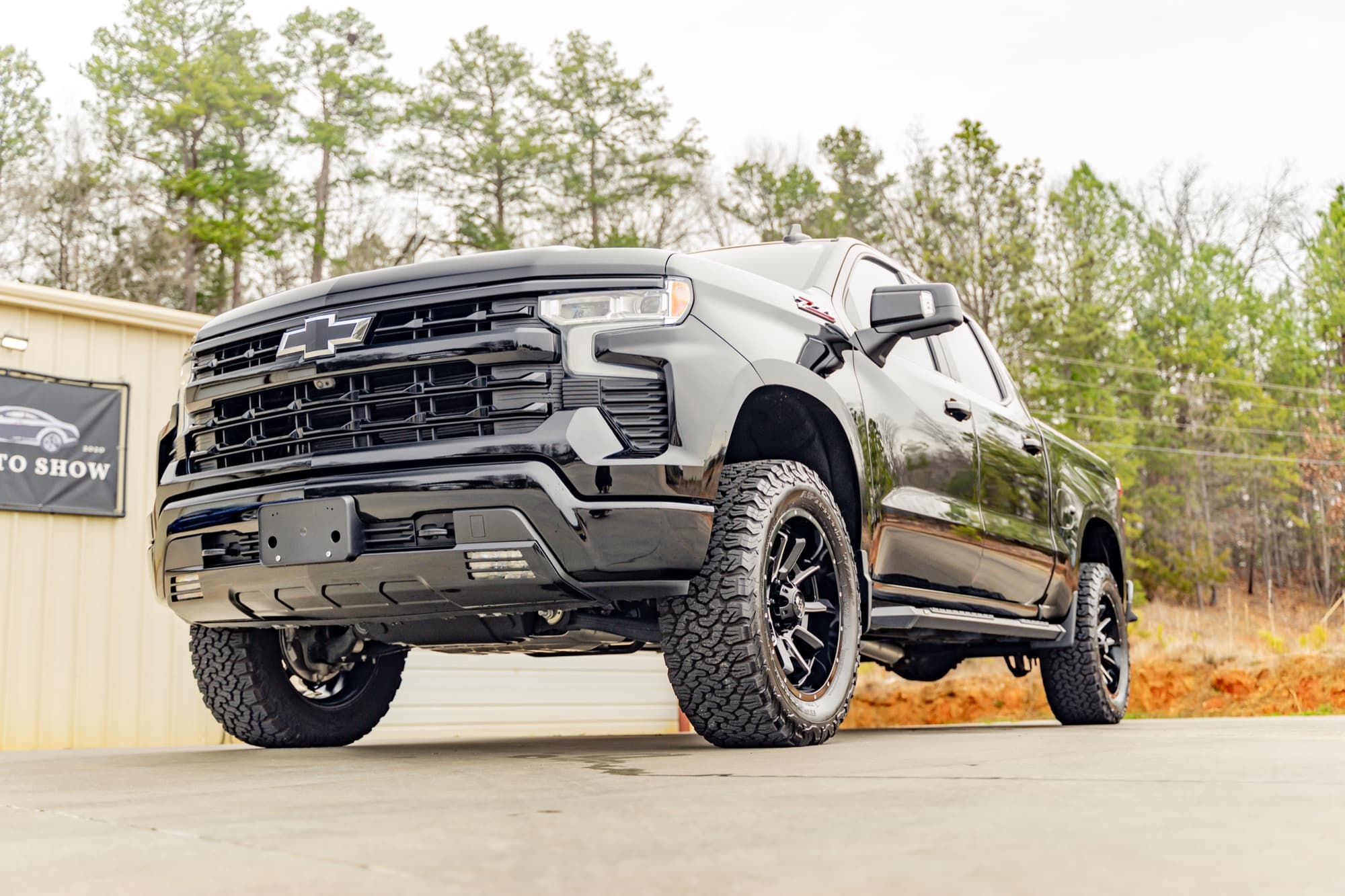
Pickup owners often assume their truck follows the same tint rules as an SUV. After all, both are tall, both often come with dark glass in the back, and federal rules treat both as something other than a passenger car. In South Carolina, that assumption is wrong in one important way.
The state's tint statute names pickup trucks specifically and keeps the 27% rule on every window behind the driver. This guide explains what that means for regular, extended and crew cabs, for the sliding back window, and for trucks that already have factory privacy glass, plus how to choose a film for a vehicle that spends a lot of time in the sun.
The short answer
In South Carolina, pickup trucks must keep at least 27% combined light transmission (film plus factory glass) on the front side windows, the rear side windows of extended and crew cabs, and the back glass. Unlike SUVs and minivans classified as MPVs, pickups do not get the rear-window exception: the statute applies the light-transmission rule to windows behind the driver on pickup trucks. Windshield film may only go above the AS1 line.
Key points
- South Carolina's statute says the light-transmission rule applies to windows behind the driver on pickup trucks, even though other trucks and MPVs are exempt.
- Every window with film on a pickup, including crew-cab rear doors and the sliding back glass, needs 27% combined or lighter.
- Factory privacy glass is legal as delivered, but adding film over it means the combined reading must still be at least 27%.
- If the back glass has film, the truck must have both a left and a right outside mirror, which pickups normally do.
- Ceramic film rejects more infrared heat at a legal shade, which suits big truck glass and long days parked in the sun.
The rule
Why Pickups Are Treated Differently From SUVs
Subsection (I) of S.C. Code § 56-5-5015 reads: the light transmittance requirement of this section applies to windows behind the driver on pickup trucks, but does not apply to windows behind the driver on other trucks, buses, trailers, mobile homes, multipurpose passenger vehicles, and recreational vehicles. The first clause is the one that matters to truck owners.
Under federal definitions, a pickup is a truck: a vehicle designed primarily for transporting property. Without that first clause, pickups might have fallen into the "other trucks" exemption. South Carolina chose to keep them in. Your truck's door-jamb certification label, which federal rules require to state the vehicle's type classification, will typically say TRUCK rather than MPV, but the South Carolina rule for pickups applies either way.
By cab
What the Rule Covers on Each Cab Style
The same 27% combined floor applies to every regulated window. What changes from cab to cab is how many windows that is.
- Regular cabtwo doors, one back glass
- Front side windows and the back glass. Both must read at least 27% combined with any film. This is the simplest truck to tint, but the back glass is often a sliding unit.
- Extended or double cabsmall rear doors or windows
- Front side windows, the smaller rear door or quarter windows, and the back glass. The rear windows are behind the driver, so they follow the pickup rule, not the MPV exception.
- Crew cabfour full doors
- Four full side windows plus the back glass. The rear doors are often factory privacy glass, which matters if you want to add film there.
- Windshield, any cabtop strip only
- Film only along the top, not below the AS1 line, and none if the line is not visible. Must be nonreflective and not red, yellow or amber. Windshield sun strips
Privacy glass
The Factory Privacy Glass Trap
Federal glazing rules only require the windshield and the windows immediately left and right of the driver on trucks to pass at least 70% of light. Behind the driver, automakers are free to use darker glass, and many pickups come with privacy glass in the rear doors and back window.
South Carolina's light-transmission limits do not apply until after-factory film is added, so that factory glass is fine on its own. The trap comes when you want those windows darker or cooler. Once film goes on a pickup's rear window, the film and glass together must measure at least 27%. If the factory glass already meters near or below 27%, there may be no film that keeps that window legal, not even a light one. That is very different from an SUV classified as an MPV, where film behind the driver has no darkness limit.
Factory glass varies by make, model and year, so the only reliable answer comes from measuring your truck's glass.
Back glass
Sliding Rear Windows and the Back Glass
Many pickups have a sliding center pane in the back glass, sometimes power operated, often with defroster lines running through the fixed and sliding sections. Tinting it means working film around the seams and frame of the slider so each piece is covered without lifting at the edges when the window opens. It is detailed work, and computer-cut patterns for the specific truck help it fit cleanly.
Two legal points apply. The rear-most window must be nonreflective and read at least 27% combined on a pickup, and if it carries any film, the truck must have both a left and a right outside rearview mirror. Trucks normally have both, but keep it in mind if you ever swap mirrors for towing setups.
Heat
Choosing a Film for a Truck
Pickups tend to have big, upright glass and spend long hours parked at job sites, in lots and at the lake. Because South Carolina holds every pickup window to 27% combined, you cannot simply go darker to fight heat. That makes the type of film matter more than the shade.
- LLumar Carbonfrom $125.99, front pair
- Color is built into the film rather than dyed on the surface, so the charcoal shade stays true instead of fading or turning purple. The affordable choice for look and privacy. Carbon vs ceramic
- LLumar Ceramicfrom $199.99, front pair
- Nano-ceramic particles reject more of the sun's infrared heat, so the cab stays cooler without needing the darkest shade. A strong fit for trucks that sit in the sun all day. Is ceramic worth it?
LLumar rates its films to block up to 99% of UV rays. Full-truck coverage is by quote.
Extras
Caps, Work Trucks and Older Trucks
- Truck caps and camper shells: the statute does not specifically address windows in a removable cap. Ask before tinting them, and treat them conservatively if the cap blocks the view through the back glass.
- Work trucks: a single-color charcoal at a legal shade keeps a fleet looking uniform. Each tinted window still needs its own compliance sticker.
- Older trucks: we do not tint vehicles more than 8 years old, because door seals and trim become brittle and likely to break when panels are worked on.
- Towing: dark back glass makes over-the-shoulder checks harder at night. Rely on mirrors and cameras, and keep the front windows light enough to use your mirrors in the dark.
The process
How We Tint a Pickup
Confirm the vehicle type and glass
We check the legal shade for your truck before installing, including any factory privacy glass, since that already reduces light.
Choose film and coverage
Front pair only, or the full cab and back glass. LLumar Carbon or LLumar Ceramic, chosen to keep each window at 27% combined or lighter.
Computer cut and install
Film is computer cut for your truck so it fits each window, including the panels of a sliding back glass.
Sticker every window
Each tinted window gets the South Carolina certificate of compliance sticker in its lower right corner, as the law requires.
| Window | Pickup truck | MPV (SUV, minivan per label) |
|---|---|---|
| Windshield | Top strip above AS1 only | Top strip above AS1 only |
| Front side windows | 27% combined minimum | 27% combined minimum |
| Rear side windows | 27% combined minimum | No light-transmission minimum |
| Back glass | 27% combined minimum | No light-transmission minimum |
| Film over factory privacy glass | Combined must stay at 27% or more | No darkness limit behind the driver |
From S.C. Code § 56-5-5015, subsections (B), (C), (D) and (I). Nonreflective, color and sticker rules apply to both.
Get your truck tinted to South Carolina's rules
Send us the year, make, model and cab style. We check the legal shade for your truck, factory glass included, before any film goes on. LLumar Carbon or Ceramic, computer cut, with a compliance sticker on every tinted window.
Common questions
Is my pickup an MPV under South Carolina tint law?
For tint purposes it does not matter. Subsection (I) applies the light-transmission rule to windows behind the driver on pickup trucks by name, separate from the exemption for MPVs and other trucks. Pickups are typically certified as trucks on the door-jamb label anyway. Treat every window behind the driver as needing 27% combined.
Can I tint over the factory tint on my truck's back windows?
Only if the result still measures at least 27% combined light transmission. Factory privacy glass on its own is fine, but once after-factory film is added, the film and glass are measured together. If the factory glass is already close to 27%, any film may push it under. Have the glass metered before you buy film.
Can I tint the sliding rear window on my pickup?
Yes, as long as the combined reading stays at 27% or above and the film is nonreflective. The truck must also have both outside rearview mirrors when the back glass carries film. The slider's seams, frame and defroster lines make it detailed work, so a careful installer and a pattern cut for your truck help.
Why are SUVs allowed darker rear tint than trucks?
South Carolina's statute exempts windows behind the driver on multipurpose passenger vehicles, buses, other trucks and RVs from the light-transmission rule, but names pickup trucks as covered. The statute does not explain the reason. In practice, it means a crew-cab pickup and an SUV of similar size have different rear-window limits.
Keep reading
Sources
- S.C. Code Ann. § 56-5-5015, South Carolina Legislature (https://www.scstatehouse.gov/code/t56c005.php), accessed October 2026
- 49 CFR 571.3, Definitions (truck, multipurpose passenger vehicle), Legal Information Institute, Cornell Law School (https://www.law.cornell.edu/cfr/text/49/571.3), accessed October 2026
- 49 CFR 567.4, Requirements for manufacturers of motor vehicles (certification label type classification), Legal Information Institute, Cornell Law School (https://www.law.cornell.edu/cfr/text/49/567.4), accessed October 2026
- Fleetwood Enterprises, Inc.; Action on Application for Decision of Inconsequential Noncompliance, 63 FR 10964, NHTSA via Federal Register (https://www.govinfo.gov/content/pkg/FR-1998-03-05/html/98-5743.htm), accessed October 2026
- Ceramic Window Tint, LLumar / Eastman Performance Films (https://llumar.com/en/tint/ceramic/), accessed October 2026
- Automotive Window Tint Frequently Asked Questions, LLumar / Eastman Performance Films (https://llumar.com/en/resources/automotive-window-tint-frequently-asked-questions/), accessed October 2026
Prices on this page are The Auto Show’s published starting prices. Film ratings and warranty terms come from the manufacturer. This guide explains South Carolina law in plain words; it is not legal advice.