
Window Tint Guide: Compare
Tesla Window Tint: Glass Roof, Windows and the Rules
Teslas are popular candidates for tint, and for understandable reasons: a lot of glass, a minimalist cabin that heats up fast, and owners who care about efficiency. But a Tesla is not a typical tint job. The roof is glass, the door windows have no frames, and the factory glass already does more for UV than many owners realize.
This guide covers what Tesla's own manual says about its glass, what tint can still add, how glass roofs and frameless windows change the work, which films make sense for an EV, and how South Carolina's law applies depending on which Tesla you drive.
The short answer
Tesla says the roof, windshield and windows of the Model 3 score less than 2 on the UV Index, so on that car tint is mainly about heat, glare and privacy rather than UV. Side windows can take film like any car, but in South Carolina a sedan like the Model 3 must keep at least 27% combined on every side window and the back glass. Check an SUV's door-jamb label for MPV status, and ask before filming roof glass.
Key points
- Tesla's Model 3 manual says its roof, windshields and windows score less than 2 on the UV Index, so UV is already well handled on that car.
- The best reasons to tint a Tesla are heat from the glass roof and windows, glare, and privacy.
- Frameless door glass drops slightly every time a door opens or closes, so the top edge of the film is on show and needs a clean finish.
- A Model 3 is a car under the law: 27% combined on every side window and the back glass; an SUV's rear windows are exempt only if its label says MPV.
- South Carolina's statute does not name roof glass, so ask before assuming a glass roof can take any shade.
Factory glass
What Tesla's Glass Already Does
Tesla's owner's manual for the Model 3 says the roof, windshields and windows are excellent at protecting occupants from UV rays and that the glass components score less than 2 on the UV Index scale. It adds that occupants are still responsible for their own sun protection. That is a stronger claim than many cars can make for their side windows: a 2016 JAMA Ophthalmology study of 29 cars found driver's side windows blocked anywhere from 44% to 96% of UVA.
So on a Model 3, adding film for UV alone does not buy much. What film still adds is heat control, glare reduction and privacy. A cabin full of glass soaks up the sun's infrared energy, and that is where a heat-rejecting film earns its place. If you drive a different Tesla, check its own manual rather than assuming the same figures.
Glass roof
The Glass Roof: Heat Overhead
A large glass roof is the feature Tesla owners most often want to treat. Sunlight through it falls straight onto heads and shoulders, and in an Upstate summer that can be the hottest part of the cabin. The roof's factory glass handles UV well, per Tesla's manual, but darkness and UV protection are not the same as heat rejection.
Roof glass is big, curved and expensive to replace, so it is a job to discuss before booking rather than an automatic add-on. Ask whether the installer works on that roof, which film they would use, and whether the film maker approves it for that glass. On the legal side, South Carolina's statute lists the windshield, front side windows, side windows behind the driver and the rear-most window; it does not name roof glass. If you plan a very dark film overhead, that gap is worth a question to SCDPS rather than an assumption.
Frameless doors
Frameless Windows Change the Edge Work
Tesla's manual explains that, to avoid damage, the windows automatically lower slightly when you open or close a door. It also warns that if you manually raise a window while the door is open, you should make sure it is slightly lowered before closing the door. That is how frameless door glass seals against the body.
For tint, that means the top edge of each door window is fully exposed every time you open the door. There is no frame or rubber channel hiding where the film stops. A clean, even top edge, finished close to the glass edge, is what separates a good Tesla tint job from an obvious one. Ask how the installer finishes that edge, and follow their curing advice about window use in the first days after install.
Window behavior varies by model and software version. Your own owner's manual is the authority for your car.
Film choice
Choosing Film for an EV
- Ceramic filmheat without darkness
- Nano-ceramic particles reject more of the sun's infrared heat, so the cabin stays cooler without needing the darkest shade. On a car with this much glass, and with South Carolina's 27% limit on a Model 3's side windows, that is usually the most useful upgrade. Carbon vs ceramic
- Carbon filmlook and privacy
- Color is built into the film rather than dyed on the surface, so the charcoal shade stays true instead of fading or turning purple. A good fit if the look matters most and heat is a lesser concern.
- Metallized filmthink twice
- LLumar describes its metallized tint as containing a layer of tiny metallic particles and having a slightly reflective sheen. On a car that relies on a phone key and constant connectivity, many owners prefer to avoid metal layers, and South Carolina requires film to be nonreflective. Tint and electronics
The law
How South Carolina's Rules Apply by Model
The legal answer depends on how your Tesla is classified, not on its brand. Federal rules require the certification label on the driver's door edge or pillar to state the vehicle type. A sedan like the Model 3 is a passenger car: the front side windows, rear side windows and back glass all need at least 27% combined light transmission through film and glass together.
For a Tesla SUV, read the label. If it says MPV, South Carolina's light-transmission rule does not apply to windows behind the driver; the front side windows still need 27% combined. And if the vehicle is a pickup truck, South Carolina keeps the 27% rule on windows behind the driver. On every model, windshield film may only run along the top above the AS1 line, must be nonreflective, and may not be red, yellow or amber.
Windshield
Cameras and the Windshield
Teslas rely on driver-assist cameras, and on many models some of them look out through the top of the windshield. South Carolina already limits windshield film to the strip above the AS1 line, and none at all if the line is not visible. Any sun strip has to be cut so it stays clear of the camera's view, and some owners skip the strip entirely to avoid the question. Follow your owner's manual on keeping camera areas clean and unobstructed.
Range
Will Tint Help Range?
Cooling a hot cabin takes energy, and in an EV that energy comes from the battery. Film that keeps heat out reduces how hard the climate system has to work, especially after the car has been parked in the sun. The effect on range is real but modest, and it depends heavily on weather, parking and how you use the climate controls, so be skeptical of any precise range number in a tint pitch.
At the shop
Tinting a Tesla With Us
Confirm model and classification
We check the legal shade for your vehicle before installing, starting with the door-jamb label and the factory glass.
Choose film and coverage
LLumar Carbon from $125.99 or LLumar Ceramic from $199.99 for the two front side windows; full coverage is by quote. Ask us about roof glass for your model.
Computer cut and install
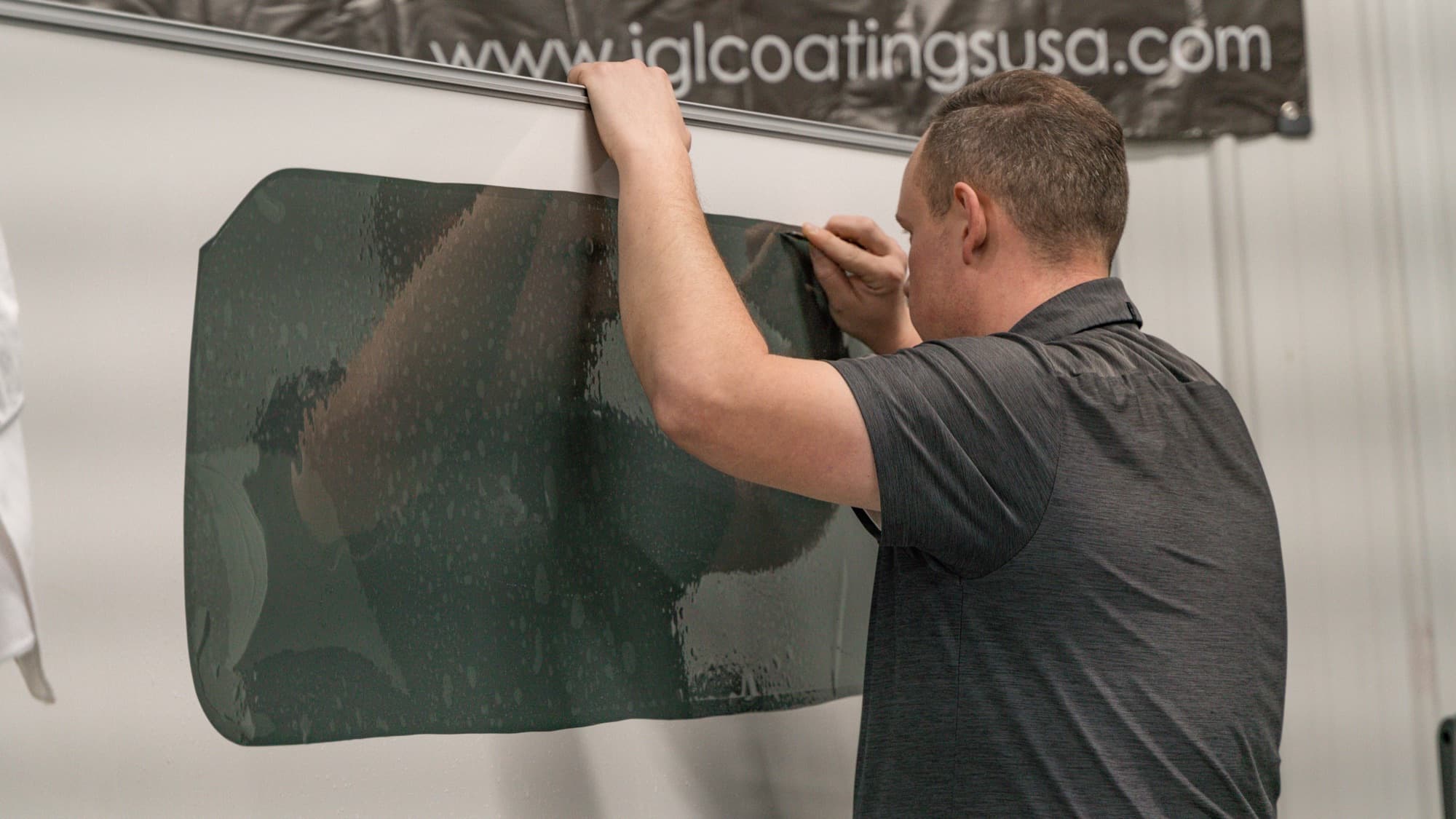
Film is computer cut for the vehicle, with attention to the exposed top edge of the frameless door glass.
Sticker and aftercare
Each tinted window gets the South Carolina certificate of compliance sticker, and you get curing instructions for the first days.
Tint your Tesla for heat, glare and privacy
Tell us which Tesla you drive and what you want from tint. We confirm the legal shade for your model before installing and quote LLumar Carbon or Ceramic for the windows you want covered.
Common questions
Do Teslas need tint for UV protection?
On the Model 3, Tesla's manual says the roof, windshields and windows score less than 2 on the UV Index, so UV protection is already strong. Tint still helps with heat, glare and privacy. For other models, check your own owner's manual, since glass specifications differ from model to model and year to year.
Can you tint a Tesla glass roof?
Roof glass can take film, but it is large, curved and costly to replace, so it deserves a conversation first. Ask whether the installer and film maker approve film on your model's roof glass. South Carolina's statute does not name roof glass, so ask SCDPS before choosing a very dark film overhead.
Why do Tesla windows drop when I open the door, and does it affect tint?
Tesla's manual says the windows lower slightly when a door opens or closes to avoid damage, which is how frameless glass seals. It means the film's top edge is on show whenever the door is open, so a clean edge matters. Follow your installer's curing advice about using the windows in the first few days.
Does the SUV rear-window exception apply to a Model 3?
No. The exception covers multipurpose passenger vehicles, and a Model 3 is a sedan. Its front side windows, rear side windows and back glass each need at least 27% combined light transmission with film and factory glass measured together, which usually means a film somewhat lighter than 27% on its own.
Sources
- Windows (UV Index Rating and window behavior), Model 3 Owner's Manual, Tesla, archived copy (https://web.archive.org/web/20250226175358/https://www.tesla.com/ownersmanual/model3/en_us/GUID-B4E78C91-BCD3-4713-90AA-F3E2406158CC.html), accessed October 2026
- S.C. Code Ann. § 56-5-5015, South Carolina Legislature (https://www.scstatehouse.gov/code/t56c005.php), accessed October 2026
- 49 CFR 567.4, Requirements for manufacturers of motor vehicles (certification label type classification), Legal Information Institute, Cornell Law School (https://www.law.cornell.edu/cfr/text/49/567.4), accessed October 2026
- 49 CFR 571.3, Definitions (passenger car, multipurpose passenger vehicle, truck), Legal Information Institute, Cornell Law School (https://www.law.cornell.edu/cfr/text/49/571.3), accessed October 2026
- Assessment of Levels of Ultraviolet A Light Protection in Automobile Windshields and Side Windows, JAMA Ophthalmology 2016;134(7):772-775, via PubMed (https://pubmed.ncbi.nlm.nih.gov/27258091/), accessed October 2026
- Metallized Window Tint, LLumar / Eastman Performance Films (https://llumar.com/en/tint/metallized/), accessed October 2026
- Ceramic Window Tint, LLumar / Eastman Performance Films (https://llumar.com/en/tint/ceramic/), accessed October 2026
Prices on this page are The Auto Show’s published starting prices. Film ratings and warranty terms come from the manufacturer. This guide explains South Carolina law in plain words; it is not legal advice.