
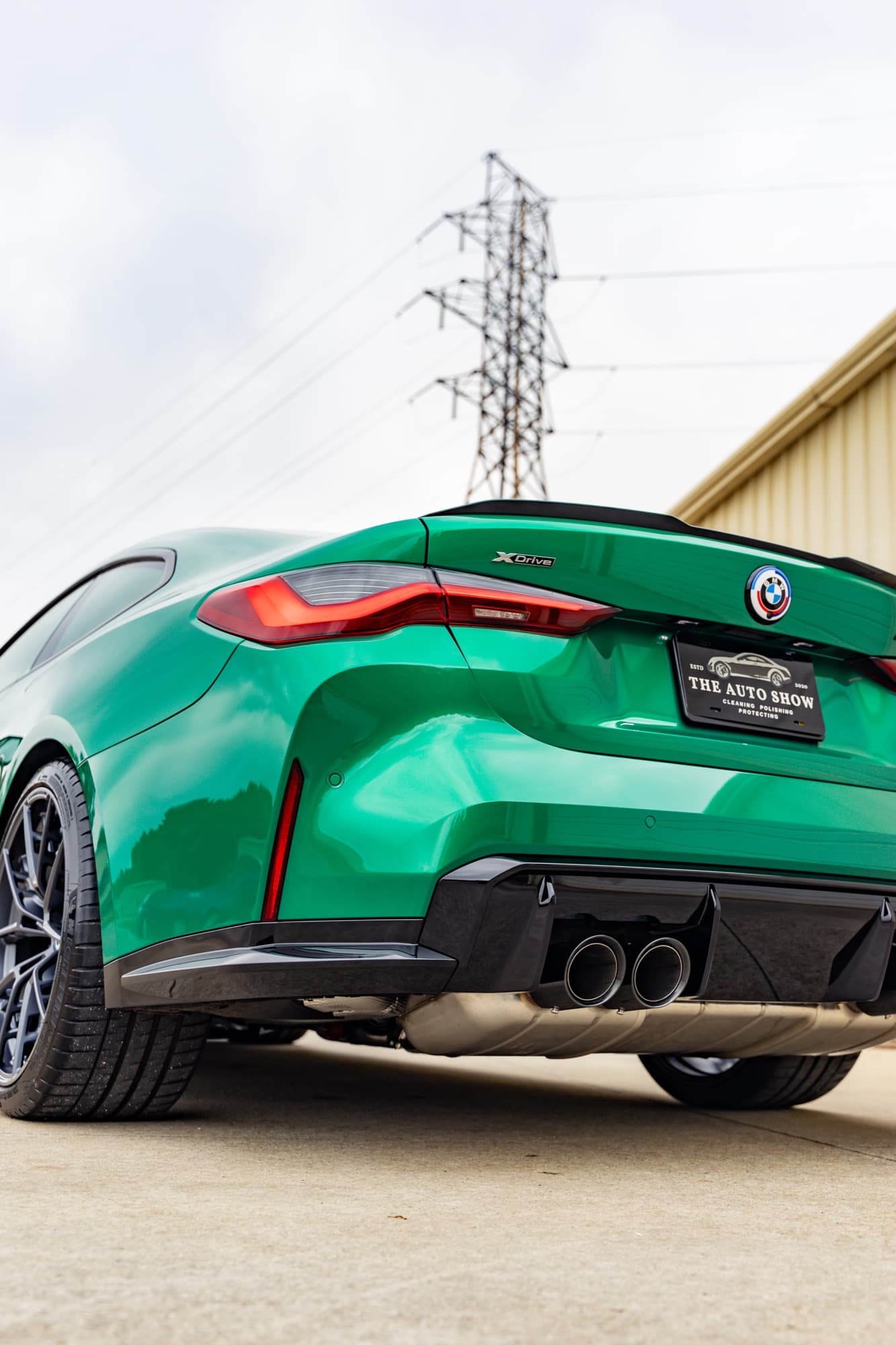
Ceramic Coating & PPF Guide: Get It Done
Keeping a Coating Performing: Your Maintenance Plan
A ceramic coating's rated years assume proper maintenance. That phrase hides most of the difference between a coating that still beads hard in year three and one that has gone flat by year one. The good news is that proper maintenance is mostly a sensible wash routine, plus a few jobs a year.
This plan is built for Upstate driving: pollen in spring, heat and bugs in summer, leaves and sap in fall, the odd brine-treated road in winter. Use it as a template and adjust for how much you drive and where you park. If you would rather hand it off, we offer a monthly maintenance program for coated vehicles; ask us about it.
The short answer
Maintain a ceramic coating by hand washing every one to two weeks with a pH-neutral shampoo, drying with clean microfiber, and removing droppings, bugs and sap quickly. Every few months, use a coating-safe topper to refresh slickness and beading. Decontaminate gently when water stops behaving or the paint feels rough. Have the coating inspected about once a year, and reapply when topping up no longer restores it.
Key points
- Washing rhythm matters more than products: regular, gentle hand washes keep the coating clean and working.
- IGL's Kenzo data sheet says to use cleaners in the pH 3 to 9 range; strong acids and alkalis are unnecessary.
- Toppers restore slickness and beading on top of the coating; they do not replace it.
- Each season brings its own contaminant in the Upstate: pollen, bugs, sap, brine.
- Ask about our monthly maintenance program if you want the upkeep done for you.
The rhythm
How often to wash
There is no single right number, but most coated daily drivers do well with a hand wash every one to two weeks. The goal is to remove dirt before it bonds and before it forms a film over the coating. A coating covered in road grime cannot bead or shed water, and it starts to look like it has failed when it is simply dirty.
Adjust for how the car lives. A commuter on I-85 or US-76 every day picks up road film and bugs fast. A garaged weekend car might go three or four weeks. A truck that runs gravel or red clay roads may need its lower panels rinsed between full washes.
- Daily commuterEvery 1 to 2 weeks
- Highway grime and bugs build up quickly. Rinse the front end between washes in summer. Protecting a daily commuter
- Parked outsideEvery 1 to 2 weeks
- Pollen, sap, droppings and sprinkler spots arrive whether you drive or not. Prompt removal matters more than mileage. Garage vs outdoor parking
- Garaged weekend carEvery 2 to 4 weeks
- Less exposure means fewer washes, but dust still needs a proper wash rather than a wipe.
- Work truck or gravel roadsAs needed
- Rinse wheel wells, rockers and tailgate area often; clay and grit sit there longest.
The wash
The routine that keeps a coating working
The basics are the same ones we give at pickup: hand wash with a pH-neutral shampoo, avoid automatic brush washes and dry with clean microfiber. IGL's data sheet for Kenzo specifies cleaners in the pH 3 to 9 range and notes that neutral cleaners are generally sufficient for coated vehicles, so there is no reason to reach for anything stronger.
Wash in the shade on a cool surface. Wheels first, with separate tools. Two buckets, top to bottom, rinse often. Dry with a plush microfiber towel or a blower. That is the entire secret, repeated consistently.
Toppers
Toppers and boosters: when and why
Over months, a film of road grime and minerals can dull a coating's water behavior even when the coating underneath is fine. A topper, sometimes called a booster or maintenance spray, adds a thin slick layer on top and brings back beading and slickness.
IGL's Ecoshine Hydrocoat is one example: IGL describes it as a spray applied to a wet car after washing and then rinsed off, safe on coated or uncoated paint, plastics, trim, wheels and glass, and meant to restore or enhance hydrophobic properties. IGL's directions say to use it only on wet, cool panels, out of direct sunlight. Whatever product you use, check that it is labeled for coated surfaces.
How often depends on the product and your conditions. Every couple of months is common for a car parked outside. A topper does not add years to the coating's rating and does not replace a coating that has worn away.
Decon
Gentle decontamination
Sometimes a wash and a topper do not bring water behavior back. That usually means something is bonded to the surface: iron particles from brake dust, mineral spots from sprinklers or hard water, tar. A coated car needs gentler decontamination than bare paint, but it still benefits from it once or twice a year, or whenever the paint feels rough after washing.
A pH-appropriate iron remover handles brake dust and rail dust. Water spots that have not etched in usually respond to a dedicated water spot remover made for coated surfaces. Clay should be used sparingly on a coating, with plenty of lubricant, and only when chemicals have not done the job. If you are unsure, ask us before you try anything abrasive.
Seasons
An Upstate year for a coated car
Spring: pollen
Pine pollen covers everything in a yellow layer. Rinse it off often, and never wipe it dry. A wash every week during heavy pollen keeps it from forming a film with morning dew.
Summer: heat and bugs
Wash early or late, not in midday sun. Get bugs off the front end within a day or two; soak them first. Watch for sprinkler spots that dry fast in the heat. A topper before summer helps bugs release.
Fall: leaves and sap
Wet leaves sitting on paint can stain, and sap from pines and other trees is sticky. Lift leaves off rather than letting them ride, and soften sap before removing it.
Winter: brine and cold
When roads are pre-treated before ice, rinse the lower panels, wheel wells and undercarriage afterward. Wash on milder days so water does not freeze in seams and door jambs.
Once a year
The annual check
About once a year, take a careful look at the coating, or have us do it. Wash the car, then check how water behaves on each panel: hood, roof and trunk lid take the most sun and usually show wear first. Feel the paint with a clean hand for roughness. Look for etching from droppings or water spots that the coating did not stop.
Then decide. If a wash and topper bring back strong beading, the coating is doing its job. If some panels behave and others do not, decontamination and a topper may be enough. If the coating no longer responds to any of that, it may be time to reapply, which usually means a light polish first so the new coating bonds properly.
- Glass coating: ours lasts about 20,000 miles, so check wiper performance in heavy rain and plan a reapplication around that mileage.
- Coated wheels: inspect the faces and barrels for brake dust that has bonded; decontaminate if so.
- Paperwork: if your coating has a manufacturer warranty, check IGL's document for any care or inspection requirements and keep records.
Our program
If you'd rather hand it off
We offer a monthly maintenance program for coated vehicles. The details and price are not published, so ask about it when you pick up the car or call us. It is a good fit if you do not have space to wash at home, if you live in an apartment, or if you simply want the upkeep done consistently by the people who applied the coating.
| Task | How often | Why |
|---|---|---|
| Hand wash, pH-neutral shampoo | Every 1 to 2 weeks for most drivers | Keeps grime from covering and wearing the coating |
| Spot cleaning (droppings, bugs, sap) | Within a day or two | Limits etching and staining |
| Topper or booster | Every couple of months, per product | Restores slickness and beading |
| Iron or water spot decon | Once or twice a year, or when needed | Removes bonded contamination |
| Inspection | About once a year | Decide: top up, decon or reapply |
| Glass coating reapply | About every 20,000 miles | Our glass coating's expected life |
Ask about our maintenance program
Want your coated car kept up for you? Ask us about our monthly maintenance program for coated vehicles, or book a coating if you are starting fresh.
Common questions
Do I need to wax a ceramic coated car?
No. Wax sits on top of the coating and can hide its water behavior, and it wears off within weeks. If you want extra slickness, use a topper made for coated surfaces instead. It bonds better to the coating and is designed to work with it rather than cover it.
Can I use a touchless car wash on a coated car occasionally?
Occasionally, it is far better than a brush wash. The trade-off is chemistry: touchless washes rely on strong detergents to clean without contact, and repeated use can wear a coating's water behavior faster. Use one when hand washing is not possible, and follow with a topper now and then.
How do I know if my coating needs a topper or a full reapplication?
Wash and decontaminate the car first. If beading and slickness return after a topper, the coating is still there and doing its job. If panels stay flat and grabby after a proper wash, decon and topper, the coating has likely worn on those panels, and reapplication is the next step.
Does maintenance affect a ceramic coating warranty?
It can. Coating warranties commonly require proper care and sometimes periodic inspections. The terms come from the manufacturer, so read IGL's warranty document for your product, keep records of washes or inspections it asks for, and ask us if anything in it is unclear.
Keep reading
Sources
- Technical Data Sheet: Ecocoat Kenzo K1, IGL Coatings (https://iglcoatings.com/wp-content/uploads/2023/09/tds_ecocoat_kenzo_K1_154343.pdf), accessed October 2026
- Ecoshine Hydrocoat, IGL Coatings (https://iglcoatings.com/products/ecoshine-hydrocoat/), accessed October 2026
- Ecocoat Kenzo, IGL Coatings (https://iglcoatings.com/products/ecocoat-kenzo-graphene-reinforced/), accessed October 2026
- Ecocoat Quartz, IGL Coatings (https://iglcoatings.com/products/ecocoat-quartz/), accessed October 2026
Prices on this page are The Auto Show’s published starting prices and are confirmed after we inspect the vehicle. Product ratings and warranty terms come from the manufacturers.