
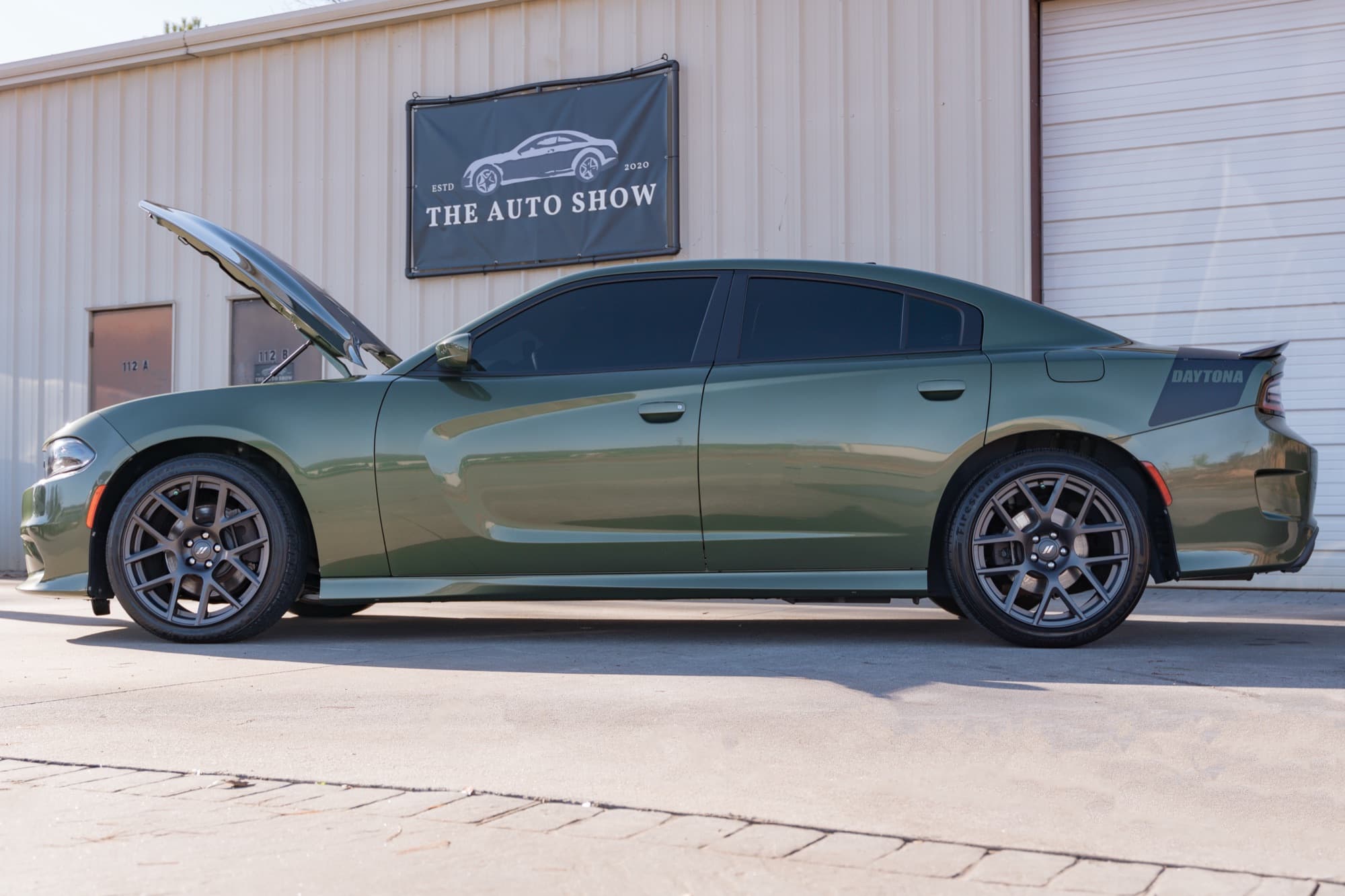
Window Tint Guide: Understand
Buying a Used Car With Dark Tint in South Carolina
Dark windows can make a used car look sharp in the listing photos. They can also be a fine waiting to happen, a removal job you did not budget for, and a clue about how the car was treated. In South Carolina, the statute's penalty falls on whoever owns or operates the car, which after the sale is you.
A few minutes of checking before you hand over money tells you whether the tint is an asset, a non-issue or a cost to negotiate.
The short answer
Before buying a used car with dark tint in South Carolina, check three things: whether each tinted window has a South Carolina certificate of compliance, what a tint meter reads on each regulated window (it must be at least 27% with glass and film combined), and whether the vehicle is a car, pickup or multipurpose passenger vehicle. Non-compliant film becomes the new owner's responsibility, and a seller's medical exemption does not transfer.
Key points
- South Carolina's tint penalty applies to the person who owns or operates the vehicle, so non-compliant film becomes the buyer's problem.
- Look for a South Carolina certificate of compliance at the inside lower right corner of each tinted window.
- A meter reading below 27% on a regulated window means the film needs replacing; MPV rear windows are exempt, pickup rear windows are not.
- A seller's medical affidavit is tied to a person, not the car, and does not cover you.
- Old film comes off with heat, steam and patience; the rear defroster lines are the part most at risk.
Why it matters
Who is responsible once the car is yours
Subsection (K) of § 56-5-5015 says a person who owns or operates a motor vehicle in violation of the section is guilty of a misdemeanor triable in magistrate's court, with a fine of up to two hundred dollars or up to thirty days. The law does not care who installed the film or when; once the car is registered to you and on the road, the windows are your responsibility.
There is one grandfather clause in the statute, and it is narrow. Subsection (D)(3) protected rear-most window film that met the older 20% rule when it was installed before January 1, 1993, for as long as the original film stays in place. That is unlikely to describe any car you are shopping for today.
Also remember that a dark car is not automatically an illegal one. Factory privacy glass with no film added is outside the light transmittance rules, and the windows behind the driver on multipurpose passenger vehicles are exempt from the darkness limit. The point of checking is to know which situation you are looking at.
Step one
Know what kind of vehicle it is
Federal rules require a certification label on the driver's door edge, door-latch post or hinge pillar, and that label lists the vehicle's type classification, such as truck or MPV. Take a photo of it during the test drive.
This decides which windows are regulated. On a passenger car, every side window and the back glass must meet 27% combined. On a vehicle whose label says MPV, the windows behind the driver are exempt from the darkness limit. On a pickup, South Carolina specifically keeps the rear side windows and back glass under the 27% rule, which surprises buyers coming from North Carolina, where pickups are exempt.
Step two
Read the stickers
Subsection (E) requires every vehicle with aftermarket film to carry a certificate of compliance at all times, attached on the inside lower right corner of each tinted window. Each certificate must show the light transmission allowed by the film, the installer's name, address and telephone number, and the date of installation.
A sticker tells you a lot. A South Carolina certificate naming a real shop suggests the film was installed with the law in mind. No sticker on a tinted window means the car is out of compliance on that point alone, regardless of darkness. A sticker from another state means the film was installed under different rules. And a sticker showing a film rating in the low 20s or below on a regulated window of a car is a strong hint that the combined reading will be too dark, since glass always lowers the number further.
Step three
Get the windows metered
The sticker shows the film's rating. The law cares about the combined figure for film and factory glass, and only a meter can tell you that. Many tint shops can read a window in seconds with a handheld meter; ask before the sale, or make the purchase conditional on a reading.
Clean the glass first and read each regulated window separately: front left, front right, rear sides and back glass. Readings in the 30s and up on a car are comfortably fine. Readings of 27 or 28 meet the statute's wording with no margin. Anything under 27 on a regulated window means the film should come off before you drive the car as your own.
Condition
Signs the film is near the end anyway
- Purple or brown castDye breakdown
- Older dyed films can lose their dye in the sun and drift toward purple. The color shift usually means the film is old and will only get worse. Why tint turns purple
- Bubbles and blistersAdhesive failure
- Bubbles in old film, as opposed to small water pockets in fresh film, point to adhesive letting go. They do not go away. When bubbles are normal
- Peeling edges and scratchesWear
- Lifting at the top edge of door glass or long scratches from seat belts and rings mean the film is worn. It cannot be patched.
- Haze and distortionVisibility
- Cloudy or wavy film makes night driving harder and suggests a low-grade product. Look through it toward headlights or a bright sky.
Removal
What taking old film off involves
Removing film is slower and fussier than putting it on. The usual approach is to soften the film and its adhesive with heat or steam, peel the film slowly so it comes off in large pieces, then clean the remaining adhesive from the glass. Old, sun-baked film tends to break into small flakes and leave more glue behind.
The back glass is the tricky window. The rear defroster's heating lines are printed on the inside of the glass, right under the film. Aggressive scraping or the wrong blade can lift or cut those lines and leave sections of the defroster dead. That is the main reason to have a professional handle a back glass with film that is old or flaking.
Prices vary with the number of windows, how old the film is and how much adhesive is left. Get a quote before you buy if the film clearly has to go, and use it in your negotiation.
Before you sign
A used-car tint checklist
Photograph the door label
Vehicle type (MPV, truck or passenger car) tells you which windows must meet 27%.
Check every tinted window for a South Carolina certificate
Lower right corner, inside. Note what film percentage it shows and who installed it.
Ask for a meter reading
Clean glass, each regulated window separately. Under 27% means replacement.
Look at the windshield
Film is allowed only above the AS1 line. A strip lower than that, or film across the whole windshield, has to come off.
Ask about a medical exemption
If the seller had one, it covered them, not you. You would need your own affidavit from a South Carolina licensed physician or optometrist.
Price the fix
Get a removal or replacement quote and factor it into your offer.
This is general information, not legal advice. For an unusual situation, check with SCDPS or a lawyer.
Bought a car whose tint has to change?
We check the legal shade for your vehicle before installing LLumar film and put the South Carolina certificate on each tinted window. We tint vehicles up to 8 years old, so mention the model year when you ask.
Common questions
Can a dealer sell a car with illegal tint in South Carolina?
The tint statute's penalty for non-compliant windows is aimed at the person who owns or operates the vehicle, and its separate sales provision deals with selling tint products, not cars. So whatever the dealer's position, once the car is yours, the windows are your responsibility. Ask the dealer to remove or replace non-compliant film as part of the deal, and get it in writing.
Does a previous owner's medical tint exemption transfer to me?
No. South Carolina's exemption covers a vehicle registered in the name of the person, or their legal guardian, who holds an affidavit from a South Carolina licensed physician or optometrist. The affidavit must be kept in the vehicle and updated every two years. When the car changes hands, the exemption does not follow it. You would need your own affidavit for your own condition.
Is dark tint on a used SUV legal?
Often, if the SUV is certified as a multipurpose passenger vehicle. South Carolina exempts windows behind the driver on MPVs from the darkness limit, so dark rear windows can be fine as long as the film is nonreflective and not red, yellow or amber, and each tinted window has a certificate. The front side windows still need to read at least 27% combined.
Can I leave the old tint and just put a sticker on it?
The certificate must identify the installer by name, address and phone number and the installation date, so it is meant to describe a real installation, not be added later by anyone. A sticker also does nothing about darkness: if the window reads under 27%, it is non-compliant whatever is printed on the label. The clean fix for non-compliant film is replacement.
Sources
- S.C. Code Ann. § 56-5-5015, South Carolina Legislature (https://www.scstatehouse.gov/code/t56c005.php), accessed October 2026
- 49 CFR § 567.4, Requirements for manufacturers of motor vehicles (certification label), Legal Information Institute (https://www.law.cornell.edu/cfr/text/49/567.4), accessed October 2026
- N.C. Gen. Stat. § 20-127, Windows and windshield wipers, North Carolina General Assembly (https://www.ncleg.gov/EnactedLegislation/Statutes/HTML/BySection/Chapter_20/GS_20-127.html), accessed October 2026
Prices on this page are The Auto Show’s published starting prices. Film ratings and warranty terms come from the manufacturer. This guide explains South Carolina law in plain words; it is not legal advice.