
Window Tint Guide: Compare
Cheap Tint vs Quality Film: What You're Paying For
Two tint quotes for the same car can be far apart, and from the curb both cars look the same on the day you drive away. The difference shows up later: a few summers in, at a traffic stop, or the first time you try to make a warranty claim.
This guide breaks a tint job into the parts you are actually paying for, explains which ones a low price usually skips, and helps you decide where saving money is reasonable and where it tends to cost more in the end.
The short answer
With tint, you are paying for four things: the film itself, the cut and installation, the legal check and compliance sticker, and the warranty behind it. Cheap jobs usually save on film construction, prep and paperwork. That can mean color that fades or turns purple, bubbles, edges that lift, or a shade that is not legal. A redo means paying again, plus removal of the failed film.
Key points
- Film construction matters: surface-applied dye is more likely to discolor, while color built into the film or ceramic particles holds up better.
- A large share of a tint price is labor: cleaning, cutting, shrinking film to curved glass and finishing edges.
- South Carolina requires a certificate of compliance on every tinted window, and installers face steep fines for skipping it.
- A manufacturer's warranty only helps if you know the brand and keep the paperwork, so a quote that names no brand is a risk.
- The cheapest job is the one you only pay for once, which is not always the lowest quote.
Part one
The Film Itself
Window film looks simple, but the construction decides how it ages. The least expensive films get their color from dye. LLumar points out that most other tint has dye applied only to the surface, which makes it more likely to discolor over time, and that its own dyed film uses integrated, color-stable dye for that reason. Discolored dye is what produces the purple, washed-out windows you see on older cars.
Better films build the color in or use different materials. Carbon film carries its color in the film rather than in a surface dye, so the charcoal shade stays true. Ceramic film adds nano-ceramic particles that reject more infrared heat without needing to be darker. Both cost more to make than surface-dyed film, and that is part of the price difference you see.
The film is also where a manufacturer's warranty comes from. LLumar says all of its tint products carry a manufacturer's lifetime limited warranty, with restrictions explained by the dealer. A no-name roll has no one behind it once the installer is gone.
Part two
The Cut and the Installation
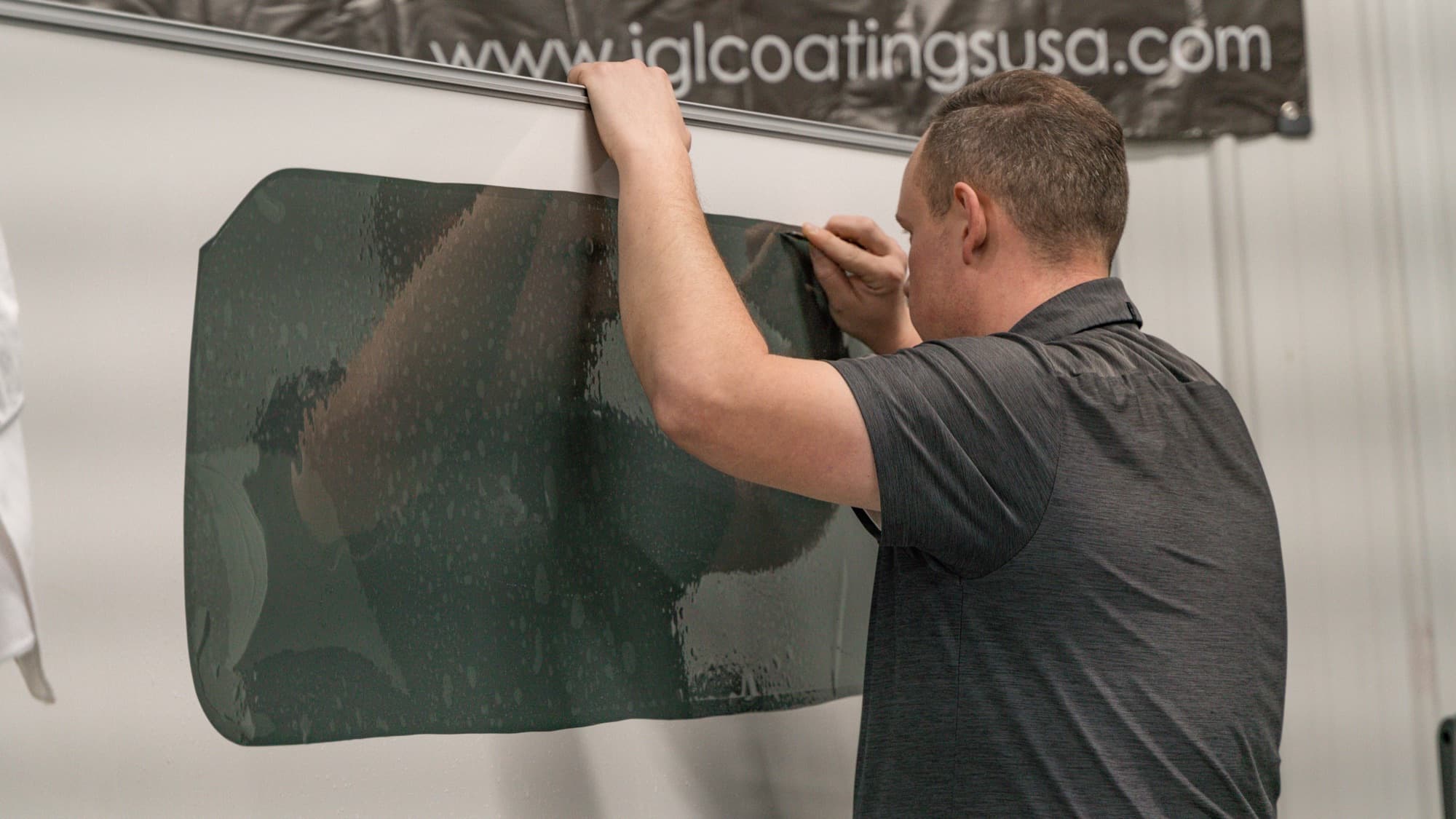
Most of what you pay a shop for is labor. The International Window Film Association describes the professional process: the glass is cleaned thoroughly, film is measured and cut to each window, a soapy solution lets the film be positioned, a squeegee removes trapped water and air, and heat is applied so the film conforms to curved glass. Then edges are trimmed and the work is checked for defects.
Each of those steps is a place to save time and lose quality. Rushed cleaning leaves dust and hair trapped under the film for good. Skipping careful heat-forming on a curved back glass leaves fingers and creases. Loose edge work leaves light gaps or film that catches the window seal and starts to lift.
Cutting is another difference. Computer-cut patterns are made for your specific vehicle, so the film is shaped before it ever touches the car. At The Auto Show, film is computer cut for the vehicle. Hand cutting can produce good results in skilled hands, but it means trimming with a blade close to the glass, seals and trim.
Part three
The Legal Check and the Sticker
South Carolina's tint statute, S.C. Code Ann. § 56-5-5015, sets two requirements that a cheap job is tempted to skip. First, film on the side and rear windows must be nonreflective, and its combined light transmission with the factory glass must not be less than 27 percent, except behind the driver on multipurpose passenger vehicles and a few other vehicle classes. Pickups are not exempt behind the driver.
Second, every vehicle with aftermarket film must carry a certificate of compliance on the inside lower right corner of each tinted window, showing the light transmission, the installer's name, address and phone number, and the date of installation. The statute says a professional tinter who skips the certificate or installs noncompliant film is guilty of a misdemeanor and must be fined not less than one thousand dollars or imprisoned up to thirty days, or both, for each offense.
The owner is on the hook too. The statute says a person who owns or operates a vehicle in violation is guilty of a misdemeanor, with a fine of up to two hundred dollars or up to thirty days. A cheap job that installs a shade darker than the law allows, with no sticker, hands that risk to you.
This is a summary of the statute, not legal advice. For an unusual situation, check with SCDPS or a lawyer.
Part four
The Paperwork and the Follow-Up
A good tint job comes with three pieces of information: which brand and film line went on the car, the shade, and how to make a warranty claim. Keep the invoice that shows them. If the film bubbles or discolors years later, that paperwork is what lets you use the manufacturer's warranty instead of paying out of pocket.
Ask what happens if something is wrong in the first weeks. Some haze and small water pockets are normal while film cures. A shop that explains this, tells you how long to keep windows up, and invites you back to look at anything that does not clear is giving you something a bargain job usually does not.
Failure modes
What a Cheap Job Tends to Look Like Later
- Purple or brown color as surface dye breaks down in the sun.
- Bubbles that do not go away after curing, a sign of adhesive failure or contamination rather than trapped water.
- Peeling corners and top edges, often where the film was cut too close or rolled windows caught it early.
- Specks, hair or grit trapped under the film from rushed cleaning.
- Creases or fingers on the back glass where the film was not shrunk to the curve.
- No sticker, or a shade too dark for the window, which becomes your problem at a traffic stop or when you sell the car.
Redo math
Why the Second Job Costs More Than the First
When cheap film fails, you do not simply put new film on top. The old film and its adhesive have to come off first, usually with heat or steam and a lot of patient scraping and cleaning. On the back glass, that work happens over the defroster lines, which can be damaged if the job is rushed.
So a failed job means paying for removal labor plus a new installation, and losing the money you spent the first time. That is why a lower quote is only a saving if the film and workmanship last as long as you keep the car. If you are planning to keep the car for years, it is usually cheaper to pay once for a film built not to discolor.
Save smart
Where Saving Money Is Reasonable
Not every saving is a corner cut. You can choose a carbon film instead of ceramic if your priority is looks and privacy rather than maximum heat rejection. You can tint only the front pair if the rear windows already have factory privacy glass you are happy with. And you can skip upgrades you do not need, such as a darker shade than you will enjoy driving at night.
At The Auto Show those choices are plain: LLumar Carbon from $125.99 and LLumar Ceramic from $199.99 for the two front side windows, with full-vehicle coverage by quote. Both are LLumar films, both are computer cut, and every tinted window gets the South Carolina certificate of compliance sticker. Choosing carbon saves money without giving up any of the parts that keep the job legal and lasting.
| Part of the job | Quality job | Bargain shortcut | Risk later |
|---|---|---|---|
| Film | Named brand; color built in or ceramic | Surface-dyed, unbranded | Fading, purple color |
| Cutting | Patterns for your vehicle | Rushed trimming | Gaps, uneven edges |
| Prep and install | Deep clean, heat-formed curves | Quick wipe, no shrinking | Specks, creases, peeling |
| Legal check | Shade checked with factory glass | Whatever you ask for | Ticket, failed sale |
| Compliance sticker | On every tinted window | Missing | Owner and installer violations |
| Warranty | Manufacturer paperwork | Verbal or none | Paying twice |
Pay Once for Tint That Lasts
LLumar Carbon or LLumar Ceramic, computer cut for your vehicle, legal shade checked, sticker on every window. Book online or ask for a full-car quote.
Common questions
Why are some window tint quotes so much cheaper?
Usually because of the film and the time spent. Surface-dyed, unbranded film costs far less than carbon or ceramic film, and a fast installation with minimal cleaning and no heat-forming takes far less labor. Some low quotes also skip the legal shade check or the compliance sticker. Ask what brand and line you are getting before comparing prices.
How can I tell if my tint is good quality?
Look for clean, even edges, no specks or creases once curing is done, a true charcoal color rather than purple or brown, and a compliance sticker on each tinted window. Check your invoice for the brand, film line and shade. If you have no idea what film is on the car, you cannot use a manufacturer warranty.
Is cheap tint illegal in South Carolina?
Price has nothing to do with legality. Any film is legal on regulated windows if it is nonreflective, not red, yellow or amber, leaves at least 27% combined light transmission where that rule applies, and has a certificate of compliance on each window. Cheap jobs simply skip those steps more often.
Can you put new tint over old tint?
It is not a good idea. Layering film adds another adhesive layer, darkens the glass further, often past the legal limit, and traps any bubbles or discoloration in the old film underneath. The statute also refers to a single sunscreening device on the side windows. Failed film should come off before new film goes on.
Does better film mean the installation matters less?
No. The best film installed over dust, with poor edges or without heat-forming on curved glass, will still look bad and can still peel. Film quality decides how the tint ages; installation quality decides how it looks on day one and whether it stays put.
Keep reading
Sources
- S.C. Code Ann. § 56-5-5015, South Carolina Legislature (https://www.scstatehouse.gov/code/t56c005.php), accessed October 2026
- Customize Your Drive with LLumar Dyed Window Tint, LLumar (https://llumar.com/en/tint/dyed/), accessed October 2026
- Automotive Window Tint Frequently Asked Questions, LLumar (https://llumar.com/en/resources/automotive-window-tint-frequently-asked-questions/), accessed October 2026
- Automotive Installation Process, International Window Film Association (https://iwfa.com/automotive-installation-process/), accessed October 2026
- Elite Heat Rejection with Ceramic Window Tint, LLumar (https://llumar.com/en/tint/ceramic/), accessed October 2026
Prices on this page are The Auto Show’s published starting prices. Film ratings and warranty terms come from the manufacturer. This guide explains South Carolina law in plain words; it is not legal advice.