
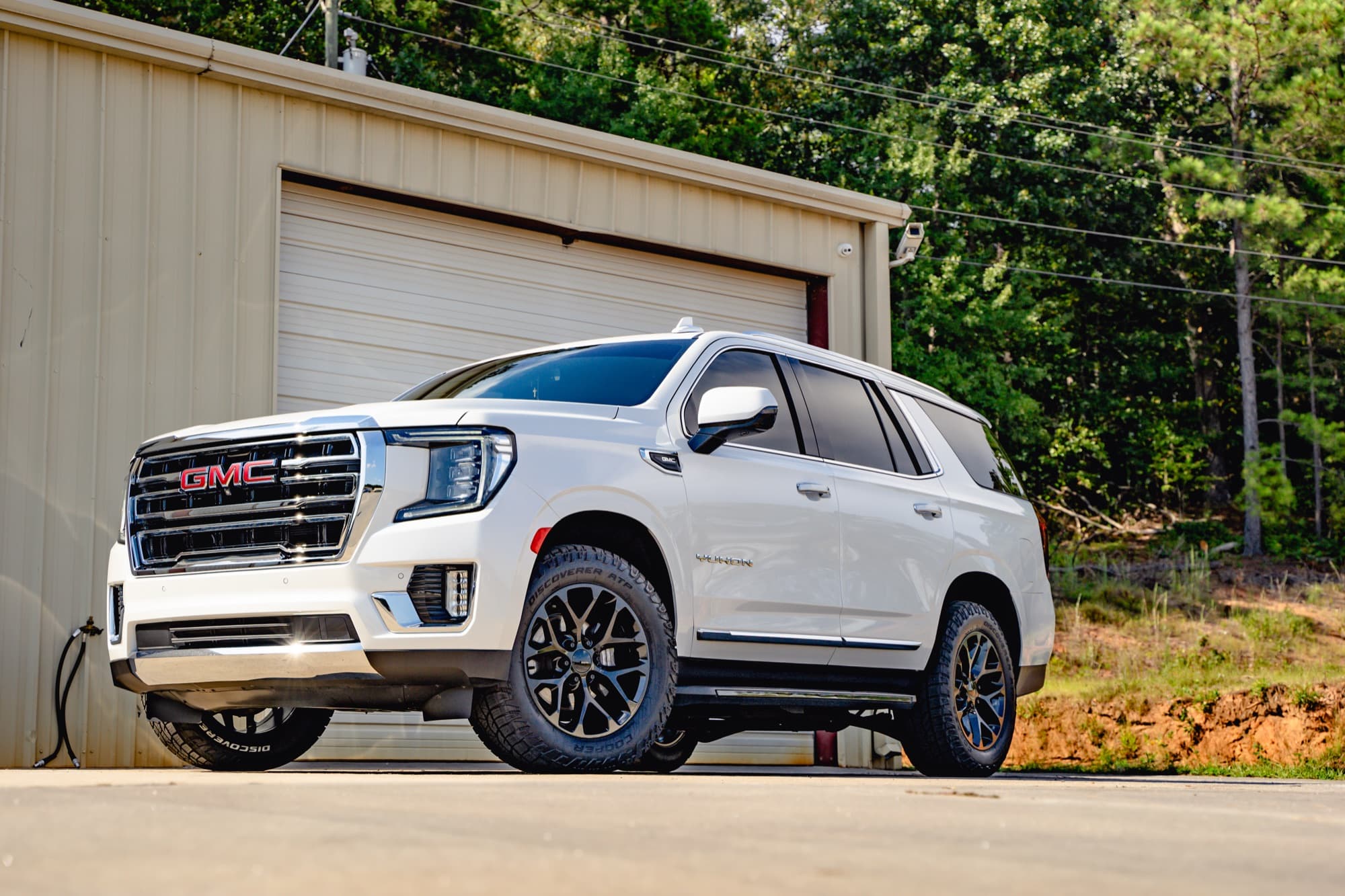
Window Tint Guide: Understand
Tint, Kids and Pets: Comfort, Not a Safety Net
Parents and dog owners are some of the most motivated people to tint a car. Kids in rear-facing car seats cannot turn away from the sun, toddlers fall asleep with the light on their faces, and dogs pant through every summer errand. Tint genuinely helps with all of that while the car is moving.
But there is a line that matters more than any film spec. A tinted car is still a car, and a parked car in the South Carolina sun heats to dangerous temperatures within minutes. This guide covers the real comfort benefits of tint for kids and pets, and the habits that keep a cooler cabin from turning into false confidence.
The short answer
Window tint makes the back seat more comfortable for children and pets while you drive: less direct sun, less glare and, with LLumar film, up to 99% of UV blocked according to the manufacturer. It does not make a parked car safe. A closed car gains about 40°F in an hour in the sun, tinted or not, and children and pets should never be left inside, even for a minute.
Key points
- Rear windows on many cars, and almost every rear window on a sedan, have no factory privacy glass, so children in the back sit in direct sun.
- Film reduces sun, glare and UV on young passengers, which helps sleep and comfort on the drive.
- NoHeatStroke.org counts 1,070 U.S. children who have died of vehicular heatstroke since 1998, including 25 in South Carolina through 2025.
- A tinted, parked car can still reach deadly temperatures; cracked windows and shade do not make it safe either.
On the road
What Tint Does for Kids in the Back Seat
A child in a car seat sits close to the side window and often cannot move out of the sun. A rear-facing infant has the light coming in from the side window and the rear glass. On a long drive up I-85 or a summer afternoon at Lake Hartwell, that is a lot of sun on a small face.
Window film cuts the visible light that causes squinting and fussing, and it reduces the infrared heat that makes one side of a child hot while the A/C blows on the other side. LLumar rates its films to block up to 99% of UV rays, and the International Window Film Association notes that ordinary glass does not screen UVA, the long-wave ultraviolet linked to skin aging and skin cancer.
Tint does not replace sunscreen or a hat for long drives, but it makes the cabin a better place for children who cannot choose where to sit. A cooler, dimmer back seat also tends to mean better naps, which every parent on a road trip will appreciate.
Pets
What Tint Does for Dogs and Other Pets on the Move
Dogs shed heat mostly by panting rather than sweating, and they cannot ask you to turn up the fan. A dog riding in a sunny cargo area or back seat is working harder to stay cool than the people up front with the vents pointed at them.
Tint on the rear side windows and back glass cuts the direct sun on that part of the cabin, which is often the farthest from the air vents. In SUVs and minivans, South Carolina law allows darker film behind the driver, which can make the cargo area noticeably shadier. More on that below.
Comfort on the move is where tint's job ends. A dog left in a parked car with the engine off is in the same danger as a child, whatever is on the windows.
The hard truth
Why a Tinted Car Is Still No Place to Leave Anyone
A study published in Pediatrics measured a dark sedan parked in the sun on days from 72°F to 96°F. The cabin gained about 40°F in an hour, with 80% of that rise in the first 30 minutes. Even on the coolest day, the inside reached 117°F. Windows cracked 1.5 inches made almost no difference.
Arizona State University researchers found that shade lowers the numbers but does not make a car safe. Cars parked in the shade still reached close to 100°F inside after an hour, and the team concluded that even a shaded vehicle can be lethal to a small child. Tint works like partial shade on the side glass. It does not cover the windshield, and it cannot stop a closed cabin from heating.
The National Weather Service warns that it is never safe to leave a toddler, disabled person or pet locked in a car, even in winter, and that hyperthermia can happen on a mild day with temperatures in the 70s. Young children are at greater risk because their bodies are less able to regulate heat.
The numbers
How Hot Car Deaths Actually Happen
NoHeatStroke.org, maintained by meteorologist Jan Null at San Jose State University, tracks every pediatric vehicular heatstroke death reported in the U.S. As of September 2026, it counted 1,070 deaths since 1998, an average of 37 a year, including 25 in 2026 and 35 in 2025. South Carolina has recorded 25 of those deaths from 1998 through 2025.
The circumstances are what make this relevant to every parent, not just careless ones. Of the 1,041 deaths from 1998 through 2025, 52.9% involved a child forgotten by a caregiver, 23.8% a child who got into a car on their own, and 21.9% a child knowingly left. More than half of the children who died were under 2.
In other words, most of these tragedies happen to families who never intended to leave a child in a car. A change in routine, a sleeping baby and a distracted parent are the common thread, which is why habits matter more than equipment.
Habits
Habits That Prevent Hot Car Tragedies
Never leave a child or pet in the car, even for a minute
Not to run into the post office, not with the windows cracked, not in the shade. If you would not leave them alone at home, do not leave them in the car.
Look in the back every time you get out
NoHeatStroke.org recommends making a check of the back seat a routine whenever you leave the car. Put your phone, bag or employee badge in the back so you have to open the rear door.
Use a reminder in the car seat
Keep a stuffed animal in the empty car seat and move it to the front passenger seat when your child is buckled in. It is a visual cue that someone is in the back.
Lock the car at home
About a quarter of child deaths involve children who climbed into a car on their own. Lock the car in the driveway and keep keys and remotes out of reach.
Agree on a call from daycare
Ask your childcare provider to call you if your child does not arrive as expected. It is a backstop if a routine changes.
Call 911 if you see a child alone in a hot car
NoHeatStroke.org's first recommendation for bystanders is to call 911 right away.
The law
South Carolina Tint Rules for Family Cars
- Sedans and coupes27% combined everywhere
- On a car, the side windows behind the driver and the rear-most window follow the same rule as the front sides: the film and glass together must let at least 27% of light through, and the film must be nonreflective.
- SUVs, minivans and most crossoversRear exception
- Subsection (I) of the tint law says the light transmittance requirement does not apply to windows behind the driver on multipurpose passenger vehicles. Many SUVs and minivans fall into that category, which allows darker film over the second row and cargo area. The front side windows still must meet 27%. SC tint law for SUVs, vans and pickups
- PickupsNo exception
- Pickup trucks are specifically named: the 27% rule applies to the windows behind the driver on a pickup, including crew cab rear doors.
- A child with a medical needAffidavit required
- The law exempts a vehicle registered to a person, or the person's legal guardian, who has an affidavit from a South Carolina licensed physician or optometrist stating a physical condition that requires darker film. It must be in the car and renewed every two years. This is not legal advice; check with SCDPS or a lawyer for your situation. How the medical exemption works
Shade the back seat the legal way
We check the legal shade for your vehicle, including whether the rear exception applies, and install LLumar Carbon or LLumar Ceramic film computer cut for your car. Ask us about the family hauler.
Common questions
Does window tint protect a baby's skin from the sun in the car?
It helps a lot. Glass alone lets most UVA through, and LLumar rates its films to block up to 99% of UV rays. That makes tint a strong layer of protection for a baby who sits by a side window. It does not cover the windshield, and pediatric sun advice still applies on long drives, so use shade and clothing too.
Are window shades or tint better for kids in car seats?
They solve different problems. Cling or suction shades are cheap and can block more light on one window, but they leave gaps, can fall off and may block the driver's view. Tint covers the whole window, stays put and also cuts UV and heat on the rear glass. Many families use both on long summer trips.
Can I leave my dog in a tinted car with the A/C running?
It is risky. Engines can stall, A/C systems can fail, and a dog can bump a control or shift lever. Some electric cars offer pet or climate-keep modes, but they depend on battery charge and settings. The National Weather Service's guidance is simple: never leave pets in parked vehicles. Take the dog with you or leave it at home.
Do rear-seat reminder systems make hot car deaths impossible?
No system is perfect. Many newer cars remind the driver to check the back seat if a rear door was opened before the trip, but they can be turned off and may not trigger in every situation. Treat them as a backup to your own habit of looking in the back every single time you leave the car.
Keep reading
Sources
- Heatstroke Deaths of Children in Vehicles, NoHeatStroke.org, Jan Null, San Jose State University (https://www.noheatstroke.org/), accessed October 2026
- Pediatric Vehicular Heatstroke Deaths by State, NoHeatStroke.org (https://www.noheatstroke.org/deaths-by-state), accessed October 2026
- Safety Recommendations, NoHeatStroke.org (https://www.noheatstroke.org/safety-recommendations), accessed October 2026
- Children, Pets and Vehicles, National Weather Service (https://www.weather.gov/safety/heat-children-pets), accessed October 2026
- McLaren C, Null J, Quinn J. Heat Stress From Enclosed Vehicles: Moderate Ambient Temperatures Cause Significant Temperature Rise in Enclosed Vehicles, Pediatrics 2005 (https://doi.org/10.1542/peds.2004-2368), accessed October 2026
- Study: Hot cars can hit deadly temperatures in as little as one hour, Arizona State University News (https://news.asu.edu/20180516-discoveries-asu-study-hot-cars-can-hit-deadly-temperatures-within-one-hour), accessed October 2026
- Window Film and Your Car, International Window Film Association (https://iwfa.com/automotive/), accessed October 2026
- Automotive Window Tint Frequently Asked Questions, LLumar (https://llumar.com/en/resources/automotive-window-tint-frequently-asked-questions/), accessed October 2026
- S.C. Code Ann. § 56-5-5015, South Carolina Legislature (https://www.scstatehouse.gov/code/t56c005.php), accessed October 2026
Prices on this page are The Auto Show’s published starting prices. Film ratings and warranty terms come from the manufacturer. This guide explains South Carolina law in plain words; it is not legal advice.