
Window Tint Guide: Understand
How Hot Does a Car Get in a South Carolina Summer?
Anyone who has opened a car door in an Anderson parking lot in July knows the blast of air that comes out. The steering wheel is too hot to hold, the seat belt buckle stings and the air conditioning takes most of the drive to catch up.
This guide puts numbers on that feeling: what the Upstate's summer climate actually looks like, how fast a closed car heats in the sun, how hot the surfaces inside get, and where window tint fits in. It also covers what tint cannot do, because a cooler cabin is not the same thing as a safe one.
The short answer
On a typical Upstate summer afternoon around 90°F, a closed car parked in the sun can reach about 130°F inside within an hour, and dark dashboards and seats can climb far higher. Research shows a parked car gains roughly 40°F in an hour, mostly in the first 30 minutes. Window tint reduces the solar heat coming through the glass, but a tinted car still gets dangerously hot.
Key points
- Anderson's 1991 to 2020 climate normals show a July average high of 90.3°F and about 55 days a year at 90°F or hotter.
- A Pediatrics study measured an average rise of about 40°F in a closed car over one hour, with 80% of the rise in the first 30 minutes.
- Sunlight heats the dashboard, wheel and seats first; those surfaces then heat the air, which is why a car in the sun runs much hotter than one in shade.
- Tint cuts the solar energy entering through the side and rear glass and helps the air conditioning catch up faster, but it does not make a parked car safe for people or pets.
The climate
What an Upstate Summer Actually Looks Like
NOAA's official climate normals for the Anderson County Airport, averaged over 1991 to 2020, put the normal daily high at 87.2°F in June, 90.3°F in July and 88.8°F in August. September still averages 83.2°F. Those are averages, so half the days run hotter.
The same normals count about 55 days a year with a high of 90°F or more, including roughly 19 in July and 15 in August. Days of 100°F are rare, about one a year on average, but you do not need extreme heat for a parked car to get dangerous. The numbers below show that the sun, not the thermometer, does most of the work.
Summer nights stay warm too. The normal July low in Anderson is about 70°F, so a car that sat in the sun all afternoon does not cool off much before the next morning's commute, and an early start is no guarantee of a cool cabin.
The rate
How Fast a Closed Car Heats Up
The most cited measurement comes from a study published in Pediatrics in 2005. Researchers parked a dark sedan in the sun on 16 clear days with outside temperatures from 72°F to 96°F and logged the cabin temperature for an hour.
The rate of rise was about the same no matter how warm the day started: an average of 3.2°F every five minutes, with about 80% of the total rise happening in the first 30 minutes. Over an hour, the cabin gained roughly 40°F. Even on the coolest test day, the inside of the car reached 117°F.
Apply that to a normal Anderson July afternoon of 90°F and you get a cabin near 130°F within an hour. The study also tested windows cracked open 1.5 inches. It made no meaningful difference to the rate of rise or the final temperature.
Sun vs shade
The Surfaces Get Hotter Than the Air
A 2018 study by Arizona State University and UC San Diego measured six cars parked in sun and shade on summer days in the 100s in Tempe, Arizona. After an hour in the sun, cabin air averaged 116°F, dashboards averaged 157°F, steering wheels 127°F and seats 123°F. In the shade, the cabin was closer to 100°F, with dashboards around 118°F, wheels 107°F and seats 105°F.
Arizona is drier and hotter than the Upstate, so treat those as an illustration rather than a local forecast. The pattern still holds here: the sun striking the interior matters more than the air temperature outside. The same study found that even a shaded car can become deadly for a small child.
The National Weather Service notes that a dark dashboard or seat can reach 180°F to over 200°F in direct sun. That is why vinyl and leather can burn skin, why phone screens shut down on the dash and why child seat buckles need checking before a child goes in.
The physics
Why a Parked Car Acts Like an Oven
Glass lets most of the sun's shortwave energy through. That energy is absorbed by whatever it hits: the dash, the seats, the steering wheel, the carpet. Those surfaces heat the air around them by contact and also give off longwave infrared heat, which does not pass back out through the glass as easily. The air trapped inside keeps warming.
The windshield is the biggest piece of glass in most cars, it faces the sun at a steep angle, and it sits right over the darkest surface in the cabin. South Carolina law allows film on the windshield only above the AS-1 line near the top, so the main heat path stays mostly untreated. That is why a reflective windshield shade still matters on a tinted car.
What tint changes
Where Window Tint Helps
- Less solar energy through the side and rear glassReal, but partial
- Film absorbs or rejects part of the visible light and infrared energy before it reaches the interior. Ceramic films are built to reject more infrared heat at a given shade than dyed or carbon films. The windshield remains the largest untreated opening. Does tint really keep a car cooler?
- Cooler seats and surfaces where the sun landsMost noticeable
- The part people notice first is less heat on the arm and leg nearest the side window, and seats and door panels that are not quite as hot to touch. Rear passengers benefit most, since rear windows are often left untreated on cars without factory privacy glass.
- Faster cool-down once you start drivingHelps the A/C
- National Renewable Energy Laboratory testing found that solar control glass packages cut cooling energy by up to 42% during the cool-down period in one test vehicle. That was factory glass, not aftermarket film, but the principle is the same: less solar load means the system catches up sooner. Does tint save fuel or EV range?
- UV protection for skin and interiorSeparate from heat
- LLumar rates its films to block up to 99% of UV rays. UV is a small part of the sun's energy and not the main cause of cabin heat, but it is the main cause of fading and contributes to cracking dash materials. Tint and interior fading
What it doesn't
What Tint Does Not Change
- A tinted car parked in the sun still heats up fast. No published study shows film keeping a closed car at a safe temperature on a hot day.
- Children, older adults and pets can never be left in a parked car, tinted or not, for any length of time. Cracked windows do not help either.
- The windshield and any untreated glass still let the full sun in. In South Carolina, film on the windshield is limited to the area above the AS-1 line.
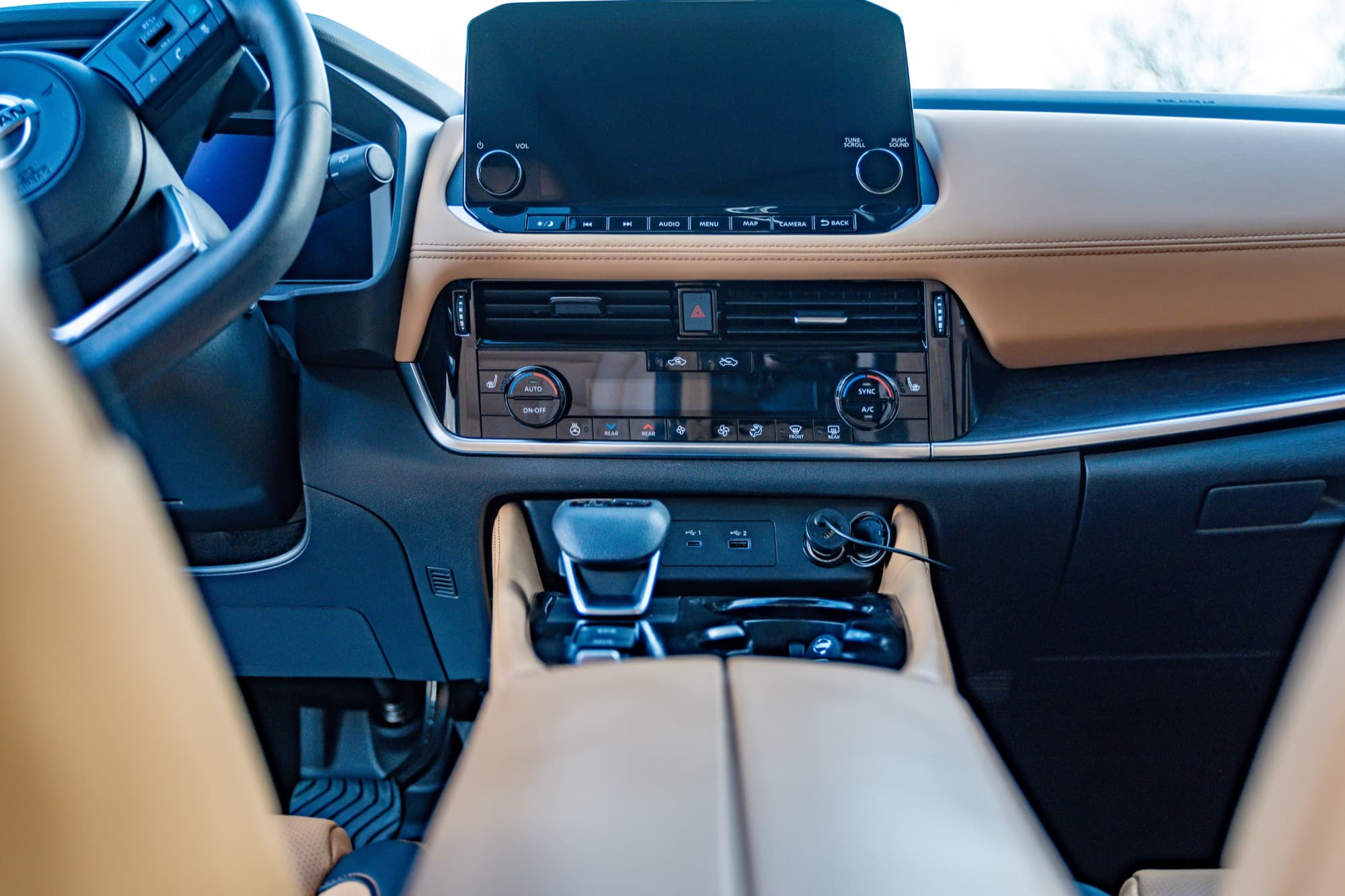
- Dark interiors still run hotter than light ones. Black leather in the sun will burn regardless of the film on the windows.
- Going darker than the law allows is not the answer. South Carolina requires at least 27% combined light transmission on regulated windows, and heat rejection depends more on the film's technology than its darkness.
Practical steps
Keeping a Car Bearable Through an Upstate Summer
Park for the afternoon sun
Shade makes the biggest single difference, as the Arizona study showed. If there is no shade, point the windshield away from where the sun will be in the afternoon, usually away from the west.
Use a windshield shade
A reflective shade blocks the largest opening, which film cannot legally cover in South Carolina. It works with tint, not instead of it.
Vent before you cool
Open the doors or windows for a moment to dump the hottest air, then drive with the A/C on. Fueleconomy.gov recommends letting the hot air out briefly before relying on the air conditioning.
Check surfaces before anyone sits
Touch the buckle, the child seat and any dark leather or metal trim before a child or pet makes contact. Those surfaces run far hotter than the air.
Choose film for heat rejection, not darkness
If heat is the main reason you want tint, ask about the film's published infrared and total solar energy rejection, and about ceramic film at a legal shade.
| Month | Normal daily high | Normal daily low | Average days at 90°F or more |
|---|---|---|---|
| May | 80.5°F | 58.4°F | 2.8 |
| June | 87.2°F | 66.5°F | 11.5 |
| July | 90.3°F | 70.2°F | 18.9 |
| August | 88.8°F | 69.5°F | 15.3 |
| September | 83.2°F | 63.4°F | 6.0 |
Source: NOAA National Centers for Environmental Information, U.S. Climate Normals, station USW00093846. Annual average: 54.9 days at 90°F or more.
Want a cooler cabin without breaking the law?
We check the legal shade for your vehicle and install LLumar Carbon or LLumar Ceramic film, computer cut for your car. Ceramic is the one to ask about if heat is your main complaint.
Common questions
How hot does it get inside a car when it's 90 degrees outside?
Measurements in a dark sedan found cabins gain about 40°F in an hour in the sun, so a 90°F afternoon can push the air inside toward 130°F. Dark surfaces like the dashboard and seats run much hotter than the air, often well above 150°F. Shade lowers those numbers a lot, but a shaded car still gets hot enough to harm a child or pet.
Does cracking the windows keep a parked car cooler?
Not in any meaningful way. The 2005 Pediatrics study tested windows open 1.5 inches and found almost no change in how fast the car heated or how hot it got. The National Weather Service gives the same warning. Opening the doors or windows fully for a minute before you drive does help clear the hottest air.
Can heat damage things left in a car?
Yes. With dashboards in the sun reaching 150°F to 200°F, anything left on the dash or seats is sitting in that heat. Phones commonly overheat and pause charging or shut down, and pressurized cans and many medicines carry warnings against high storage temperatures. Check the label, and keep electronics, medicine and aerosol cans out of a parked car on hot days, tinted or not.
Is a light-colored interior cooler than a dark one?
Generally, yes. Dark materials absorb more of the sun's energy, so a black dash or black leather gets hotter to the touch than tan or gray. Jan Null, a co-author of the Pediatrics measurements, lists interior color as probably the biggest factor in how hot a car gets. Tint helps either way, but it will not make black leather cool in direct sun.
Does a car get hot in the Upstate outside of summer?
Yes. The measured rise of about 40°F in an hour happened even on days starting at 72°F, and Anderson's normal high is above 80°F from May through September. A sunny spring or fall afternoon can still push a closed car past 110°F inside, so the habits in this guide apply most of the year.
Sources
- U.S. Climate Normals 1991 to 2020, Anderson County Airport (USW00093846), NOAA National Centers for Environmental Information (https://www.ncei.noaa.gov/access/services/data/v1?dataset=normals-monthly-1991-2020&stations=USW00093846&format=csv), accessed October 2026
- McLaren C, Null J, Quinn J. Heat Stress From Enclosed Vehicles: Moderate Ambient Temperatures Cause Significant Temperature Rise in Enclosed Vehicles, Pediatrics 2005 (https://doi.org/10.1542/peds.2004-2368), accessed October 2026
- Study: Hot cars can hit deadly temperatures in as little as one hour, Arizona State University News (https://news.asu.edu/20180516-discoveries-asu-study-hot-cars-can-hit-deadly-temperatures-within-one-hour), accessed October 2026
- Vanos JK et al. Evaluating the impact of solar radiation on pediatric heat balance within enclosed, hot vehicles, Temperature 2018 (https://doi.org/10.1080/23328940.2018.1468205), accessed October 2026
- Vehicle Heating, NoHeatStroke.org, Jan Null, San Jose State University (https://www.noheatstroke.org/vehicle-heating), accessed October 2026
- Children, Pets and Vehicles, National Weather Service (https://www.weather.gov/safety/heat-children-pets), accessed October 2026
- Thermal Load Reduction System Development in a Hyundai Sonata PHEV, National Renewable Energy Laboratory via OSTI (https://www.osti.gov/biblio/1352133), accessed October 2026
- Fuel Economy in Hot Weather, U.S. Department of Energy fueleconomy.gov (https://www.fueleconomy.gov/feg/hotweather.shtml), accessed October 2026
- Automotive Window Tint Frequently Asked Questions, LLumar (https://llumar.com/en/resources/automotive-window-tint-frequently-asked-questions/), accessed October 2026
- S.C. Code Ann. § 56-5-5015, South Carolina Legislature (https://www.scstatehouse.gov/code/t56c005.php), accessed October 2026
Prices on this page are The Auto Show’s published starting prices. Film ratings and warranty terms come from the manufacturer. This guide explains South Carolina law in plain words; it is not legal advice.