
Window Tint Guide: Understand
How Tint Protects Your Interior From Fading and Cracking
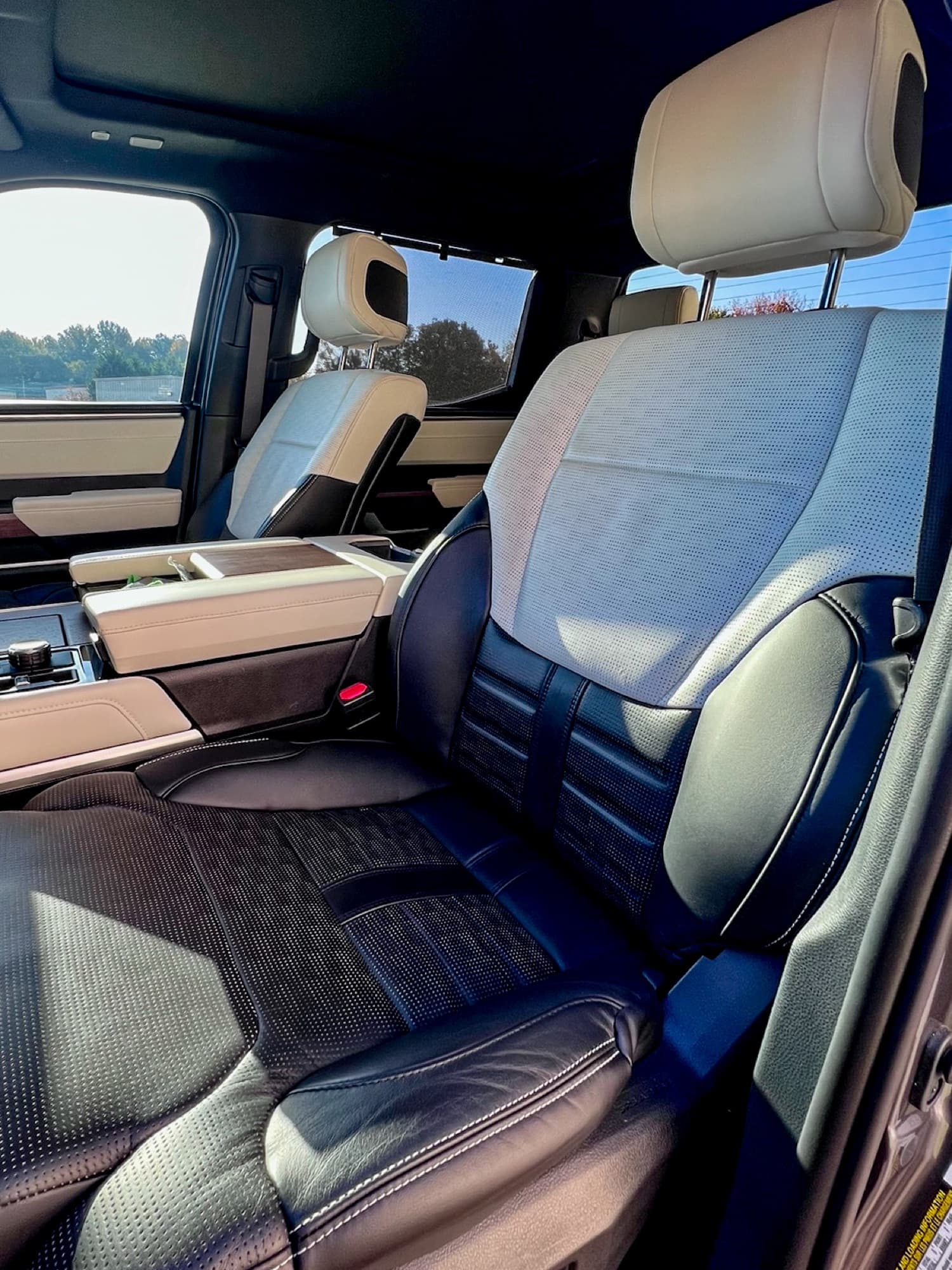
The top of a rear seat that has gone a shade lighter than the rest, a dashboard that feels chalky, leather that has dried and creased on the side facing the window: these are the slow results of sunlight hitting the same surfaces day after day. In a South Carolina summer, that exposure adds up quickly.
Window film is one of the most effective ways to slow it down. It is worth understanding what part of the problem film solves and what part it does not, so you can fill the gaps.
The short answer
Yes, window tint slows interior fading by blocking almost all ultraviolet light, which is a major cause of fading in fabrics, leather and plastics; LLumar rates its films to block up to 99% of UV. But visible light and heat also contribute, so film reduces fading rather than stopping it. Darker or heat-rejecting films help more, and the windshield, which South Carolina limits film on, remains a source of exposure.
Key points
- UV radiation is a major contributor to fading, and quality film blocks nearly all of it.
- Visible light and heat also play a role, so a UV-blocking film reduces fading but does not stop it.
- Heat-rejecting film lowers peak cabin temperatures, which reduces the heat stress on dashboards and leather.
- In South Carolina, the windshield below the AS1 line cannot be filmed, so the dash still needs a sunshade.
The causes
What actually fades and cracks an interior
Fading happens when light breaks down the dyes and pigments in a material. Glass maker Cardinal describes UV radiation as a major contributor to the fading of fabrics and other materials, and adds that visible light and heat also play a role. In other words, UV is the biggest single lever, but it is not the only one.
The window industry measures this with a figure called damage-weighted transmittance. The current method, Tdw-ISO, uses a weighting function recommended by the International Commission on Illumination that assigns each wavelength of UV and visible light, from 300 to 700 nanometers, a value based on how much it contributes to fading. Lawrence Berkeley National Laboratory's window software notes that a plain UV transmittance figure does not even cover the full range in which damage occurs.
Cracking and stiffness are a related problem. Long hours of heat dry out leather and vinyl, and dashboards sit through repeated cycles of hot afternoons and cooler nights. Sunlight wears down surface finishes over time, and a worn finish leaves the material underneath more exposed.
What film blocks
How window film addresses each cause
- UVNearly all blocked
- LLumar rates its films to block up to 99% of UV, and says its tint blocks the UV rays that damage car interiors. Its spec sheet lists greater than 99% UV protection for both clear and dark films.
- Visible lightReduced by darker film
- This is the part that depends on shade. A darker film lets less visible light reach the seats and dash. Cardinal advises that once UV is blocked, reducing visible light further reduces fading risk. Choosing a shade
- HeatReduced by heat-rejecting film
- Films with higher total solar energy rejection keep surfaces cooler. NREL testing found solar-reflective glazing and film lowered peak cabin temperatures in parked vehicles. Tint and heat
Surfaces
Which parts of the cabin take the most sun
- Dashboard top: sits right under the windshield and gets the most direct sun of any surface. It is also the area window film covers least in South Carolina.
- Rear deck and top of the rear seat: the back glass faces the afternoon sun whenever you park nose-in. Fading lines on rear headrests are common.
- Door panels and armrests: the side facing the window lightens first, especially on the driver's door.
- Leather seat bolsters: the outer bolster nearest the window dries and creases sooner than the center.
- Screens and electronics: heat is the bigger concern here, so a cooler cabin is what helps most.
The windshield
The gap South Carolina law leaves
The single largest source of sun on your dashboard is the windshield. South Carolina allows film only along the top of the windshield, not below the AS1 line, and none if the AS1 line is not visible. The statute does not make an exception for clear film. That means the dashboard keeps getting direct sun through untreated windshield glass no matter how good your side window film is.
Laminated windshields already block most UVA. A 2016 study in JAMA Ophthalmology found windshields blocked 96% of UVA on average, compared with 71% for side windows. So the windshield's contribution to dash fading comes mostly from visible light and heat. A reflective sunshade when parked is the simplest way to cover it, and it pairs well with film everywhere else.
Spec sheets
Reading a film's numbers with your interior in mind
Three figures on a manufacturer's spec sheet tell you most of what you need. Ultraviolet protection shows how much UV the film keeps out; on LLumar's published sheet it reads greater than 99% across its automotive films, so it rarely separates one quality film from another. Visible light transmission shows how much visible light gets through, which is the part of fading that darker film reduces. Total solar energy rejected shows how much of the sun's overall energy, including infrared heat, the film keeps out.
For an interior that sits in the sun, the last two numbers are where films differ. As an example from LLumar's own data, its CTX 35 ceramic film lists 37% visible light transmission and 48% total solar energy rejected, while its ATC 35 dyed film lists 38% and 35%. Similar darkness, very different heat. Remember that these numbers are measured on single-pane clear glass and the result on your car will differ, and that South Carolina's 27% combined minimum applies on regulated windows whatever the spec sheet says.
Realistic
What to expect from tint, honestly
Film slows fading; it does not freeze an interior in time. With UV largely removed from the side and rear glass, the remaining fading comes from visible light and heat, which happen more slowly. Expect interior surfaces near tinted windows to age more slowly than they would behind bare tempered glass.
The benefit is biggest where exposure is highest: cars parked outside every day, long summer commutes, and light-colored interiors that show fading sooner. If your car lives in a garage and does short trips, the interior benefit is smaller, and comfort and UV protection for your skin may be the better reasons to tint.
A full plan
Protecting the interior beyond tint
Film the side and rear glass
This removes nearly all UV from the windows that face seats, doors and the rear deck.
Use a windshield sunshade when parked
It covers the dash, which South Carolina law keeps film off below the AS1 line.
Park with the sun in mind
Shade first. If you cannot find it, point the windshield away from the afternoon sun.
Clean and condition leather and vinyl
Dry, dirty leather cracks sooner. Use products the vehicle maker recommends for your interior materials.
Consider an interior protection coating
Coatings for leather and fabric help with stains and wear; they work alongside film, not instead of it.
Slow down sun damage to your interior
LLumar Carbon and LLumar Ceramic both block UV and reduce glare; ceramic also rejects more of the sun's infrared heat. Ask us which suits how and where you park.
Common questions
Does 99% UV blocking mean my interior won't fade?
No. UV is a major cause of fading, so blocking nearly all of it makes a real difference, but visible light and heat also contribute. That is why fading slows rather than stops behind UV-blocking film. A darker or heat-rejecting film reduces those other factors, and a windshield sunshade covers the dashboard, which film below the AS1 line cannot reach in South Carolina.
Do I need dark tint to protect my interior?
Not for UV. Clear and light films can block more than 99% of UV, according to LLumar's published data. Darker films do add protection against visible light, which also contributes to fading, and heat-rejecting films keep surfaces cooler. On regulated windows in South Carolina you cannot go below 27% combined, so a ceramic film is often the better way to add protection without going darker.
Can tint stop my dashboard from cracking?
Tint on the side and rear windows helps, but the dashboard sits under the windshield, and South Carolina allows film there only above the AS1 line. Windshields already block most UVA, so the dash mostly suffers from heat and visible light. A reflective sunshade when parked, shade, and regular cleaning with products made for your dash material do more for the dashboard than side window film.
Is tint worth it just to protect leather seats?
It depends on how the car is parked. A car that sits outside every day in Upstate summers, especially with light leather, benefits the most. A garaged car that does short trips sees less benefit. Most owners tint for a mix of reasons: interior protection, cabin comfort, UV protection for skin and privacy. If interior protection is the only goal, a sunshade and good conditioning go a long way.
Sources
- Fade Resistance (glossary), Cardinal Glass Industries (https://www.cardinalcorp.com/glossary/fade-resistance/), accessed October 2026
- UV Transmittance Values Reported in Berkeley Lab WINDOW, Lawrence Berkeley National Laboratory (https://windows.lbl.gov/node/87), accessed October 2026
- Ceramic Window Tint, LLumar (https://www.llumar.com/en/tint/ceramic/), accessed October 2026
- LLumar Window Film Performance Data (LL0116NAEN), Eastman Performance Films (https://www.llumar.com/content/dam/eastman/performance-films/llumar/documents/LL0116NAEN_AutoSpecs_screen.pdf), accessed October 2026
- Rugh, Farrington and Boettcher, The Impact of Metal-free Solar Reflective Film on Vehicle Climate Control (SAE 2001-01-1721), SAE International (https://saemobilus.sae.org/content/2001-01-1721/), accessed October 2026
- Boxer Wachler BS, Assessment of Levels of Ultraviolet A Light Protection in Automobile Windshields and Side Windows, JAMA Ophthalmology 2016;134(7):772-775, PubMed (https://pubmed.ncbi.nlm.nih.gov/27258091/), accessed October 2026
- S.C. Code Ann. § 56-5-5015, South Carolina Legislature (https://www.scstatehouse.gov/code/t56c005.php), accessed October 2026
Prices on this page are The Auto Show’s published starting prices. Film ratings and warranty terms come from the manufacturer. This guide explains South Carolina law in plain words; it is not legal advice.