
Window Tint Guide: Compare
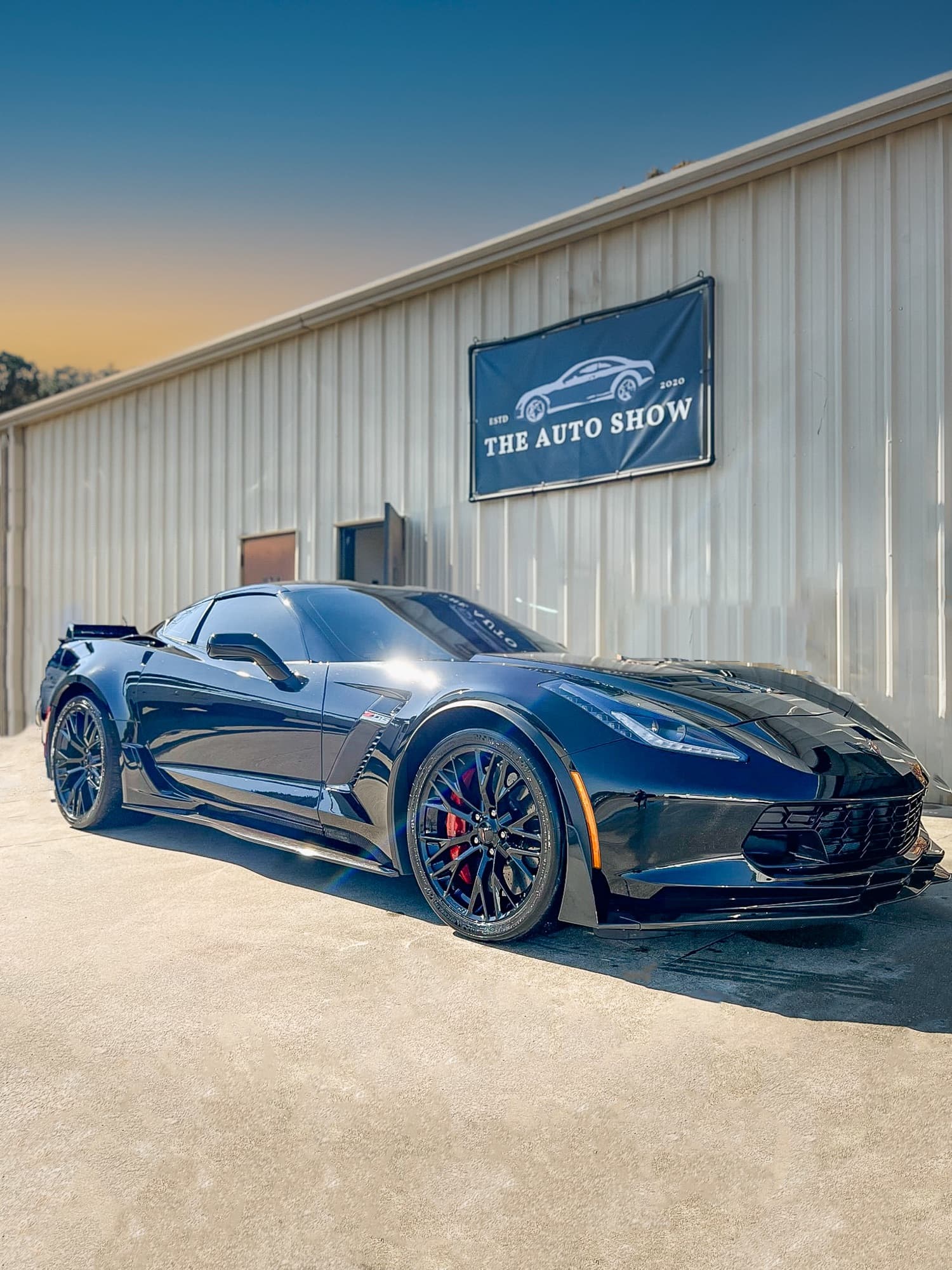
Window Tint for Sports Cars and Coupes
Sports cars and coupes are some of the most satisfying cars to tint and some of the most demanding. The glass is small, steeply raked and often curved in two directions. Many have frameless doors where the window drops a little every time you open the door. And the owners usually notice every edge.
This guide covers what makes performance cars different to tint, what to ask an installer, how to get a dark, finished look without crossing South Carolina's limits, and why a small cabin with a big windshield gets so hot.
The short answer
Sports cars can be tinted like any car, but the work is harder: back glass is steep and curved, so film must be heat-formed to fit, and frameless doors drop the glass slightly when opened, so the top edge has to be cut to clear the seal. Coupes and sports cars are passenger cars under South Carolina law, so every side and rear window must meet the 27% combined limit.
Key points
- Steep, curved back glass needs film heat-shrunk to its shape before installation.
- Many frameless-door cars lower the window a small amount when the door opens; the film's top edge has to clear the seal every time.
- Small quarter windows and tight door panels leave little room for error on edges.
- A coupe is not a multipurpose passenger vehicle, so its rear side windows and back glass are regulated at 27% combined.
- Ceramic film helps most in a small cabin under a large, steeply raked windshield.
The glass
Why Sports Car Glass Is Harder to Tint
Window film is flat when it comes off the roll. Glass on a sports car is anything but. Back glass on a coupe or fastback is often long, steeply angled and curved both side to side and top to bottom. To make flat film lie on that shape without creases, an installer lays it on the outside of the glass, uses heat to shrink the film to the curve, trims it, then moves it inside for the final installation. The International Window Film Association describes heat as part of how film is made to conform to a window's curvature.
Rear glass on many sports cars also sits under a low roof and behind seats that do not fold, so the installer works at awkward angles with little room to squeegee. Small quarter windows behind the doors leave almost no margin: a film edge a little short shows a line of light, and a little long catches the trim.
Computer cutting helps here. When patterns are cut by machine for the exact vehicle, the installer starts with film shaped for that glass instead of trimming large sheets by hand on the car.
Frameless doors
Frameless Doors and Window Indexing
Many coupes and convertibles have no metal frame around the side glass. To let the door open and close against the weatherstrip, the car lowers the window a small amount when the door opens and raises it fully when it closes. General Motors' service bulletin for the Chevrolet Camaro calls this window indexing and explains that the glass only indexes down once the door has been opened between 1 and 7.5 millimeters.
For tint, that means the top edge of the film rubs past a seal every single time you get in or out. If the film runs too close to the top edge of the glass, or the edge is not sealed down before the first door opening, the seal can catch and lift it. Good installers cut the top edge with care for this and tell you how to treat the door in the first days.
The same bulletin notes that opening the door too quickly can keep the glass from fully indexing down, so it can still catch the weatherstrip. That is worth knowing whether or not you tint: open frameless doors smoothly, especially while new film is curing.
The law
Getting the Look Within South Carolina Law
A coupe or sports car is a passenger car, not a multipurpose passenger vehicle or a truck. That means the rear-window exception in subsection (I) of S.C. Code § 56-5-5015 does not apply. The front side windows, any side windows behind the driver and the rear-most window all need combined light transmission of at least 27 percent with the factory glass. The windshield can take film only above the AS-1 line.
The statute also requires film to be nonreflective and bans red, yellow and amber. Mirror-finish film is out. That leaves plenty of room for a dark, uniform look: a neutral charcoal at a legal shade on every window, with a visor strip on the windshield, reads as finished on a black or dark-colored car.
Remember that factory glass already removes some light, so a film's printed rating is not what a meter will read once it is installed. On a car with slightly tinted factory glass, a film that sounds legal on the box can measure below 27 percent. Ask for the measurement, not the label.
Heat
Small Cabin, Big Windshield
Sports cars trap heat. A low, steeply raked windshield acts like a large skylight over the dashboard, the cabin volume is small, and black leather or synthetic suede soaks up sun. On a parked car in an Upstate summer, the seats and steering wheel can become painful to touch.
Ceramic film uses nano-ceramic particles to reject more infrared heat without needing the darkest shade, which suits cars where the law and your night vision cap how dark you can go. On cars with a glass roof or targa panel, ask whether that glass can be filmed too; it adds to the heat load more than many owners expect.
Visibility
Low Seats, Big Blind Spots
Sports cars already have narrow rear windows, thick pillars and low seating positions. Dark film on the back glass and quarter windows makes reversing out of a parking space at night harder still. A backup camera helps, but the side mirrors carry more of the load.
South Carolina requires one right and one left outside rearview mirror if film is used on the rear-most window. Every modern sports car has both, but keep them adjusted and clean. If you drive mostly at night, a lighter legal shade on the rear glass is a reasonable tradeoff.
Ask first
Questions to Ask Before Tinting a Performance Car
How will you handle the back glass?
Listen for heat forming and a plan for working under a low roof. Ask whether any trim or the third brake light has to come off.
How do you finish the top edge on frameless glass?
You want a clean edge that clears the seal when the window indexes, and instructions for the first days.
What will the combined reading be?
Ask for the measured result on your glass, not just the film rating, so you know the car is at 27 percent or lighter.
Which film and which warranty?
Get the brand and product line in writing and ask to see the film warranty document.
Is my car within your age limit?
Some shops, including The Auto Show, do not tint vehicles more than 8 years old because seals and trim become brittle. Older and classic sports cars may not qualify.
Film choice
Carbon or Ceramic on a Sports Car
- CarbonCharcoal look that stays true
- Carbon film carries its color in the film, so the charcoal shade does not fade or turn purple. It suits owners who mainly want looks and privacy. At The Auto Show, LLumar Carbon starts at $125.99 for the two front side windows.
- CeramicHeat control without going darker
- Ceramic rejects more infrared heat, which matters in a small, sun-soaked cabin. LLumar Ceramic starts at $199.99 for the front pair. Full-vehicle coverage, including curved back glass, is quoted per car. Carbon vs ceramic
| Feature | Why it matters | What to ask |
|---|---|---|
| Steep, curved back glass | Flat film must be heat-formed to fit | How do you shape the back glass? |
| Frameless doors | Glass drops and rubs the seal each time the door opens | How is the top edge finished? |
| Small quarter windows | Very little margin on edges | Are patterns computer cut for this car? |
| Low roof, fixed seats | Hard to reach the rear glass | Does any trim have to come off? |
| Large raked windshield | Big heat source; only a strip is legal | Would a visor strip help? |
| Passenger car status | All side and rear glass at 27% combined | What is the measured reading? |
Tinting a sports car or coupe?
We computer cut LLumar Carbon or LLumar Ceramic for your car, check the legal shade on your factory glass and add a compliance sticker to every tinted window. Send us your year and model for a full-car quote.
Common questions
Can frameless windows be tinted without the film peeling?
Yes. The key is how the top edge is cut and finished, because the glass drops and rubs the seal whenever the door opens. Open and close the doors gently while the film cures and follow the installer's instructions about the windows. Peeling at the top edge in the first days is something to report to the installer right away.
Will tint affect my heads-up display?
Side window tint has no effect on a heads-up display, which projects onto the windshield. South Carolina only allows film along the top of the windshield above the AS-1 line, so the area your display uses stays untouched. If you add a visor strip, make sure it stays above that line.
Can I tint the plastic rear window on my convertible?
Some convertible tops use a flexible plastic rear window rather than glass, and window film is designed for glass. Ask the installer before assuming it can be filmed. Convertibles with a glass rear window built into the top are a different case, but the curve and the folding top make that window harder to tint.
Is ceramic tint necessary on a weekend car?
Not necessary. If the car mostly sits in a garage and comes out for evening drives, carbon gives you the look and UV protection for less. If you drive it on hot afternoons or park it outside at events, ceramic's extra heat rejection makes the cabin noticeably more comfortable.
Keep reading
Sources
- S.C. Code Ann. § 56-5-5015, South Carolina Legislature (https://www.scstatehouse.gov/code/t56c005.php), accessed October 2026
- Service Bulletin 09-08-64-014D, Information on Side Window Glass Not Clearing Molding When Indexing Down During Door Opening, General Motors, via NHTSA (https://static.nhtsa.gov/odi/tsbs/2021/MC-10195151-9999.pdf), accessed October 2026
- Automotive Installation Process, International Window Film Association (https://iwfa.com/automotive-installation-process/), accessed October 2026
- Ceramic Window Tint, LLumar (https://llumar.com/en/tint/ceramic/), accessed October 2026
- 49 CFR § 571.3 Definitions, Legal Information Institute, Cornell Law School (https://www.law.cornell.edu/cfr/text/49/571.3), accessed October 2026
Prices on this page are The Auto Show’s published starting prices. Film ratings and warranty terms come from the manufacturer. This guide explains South Carolina law in plain words; it is not legal advice.