
Window Tint Guide: Understand
Hazy Window Tint After Installation: What's Normal
You pick the car up, the tint looks great from outside, and then you sit in the driver's seat and notice the side windows look slightly cloudy, like a bathroom mirror after a shower. Some people see small watery pockets too. It is one of the most common worries after a tint job.
In most cases it is simply water that has not dried out yet. Here is why it happens, how long it usually takes to clear, and how to tell normal drying haze from a problem worth a phone call.
The short answer
Some haze right after installation is normal. Window film is applied wet, and a thin layer of water stays trapped between the film and the glass until it evaporates through the film. That moisture makes the window look cloudy or milky. Gila, an Eastman film brand, says its films cure over a week to 10 days, faster in dry sunny weather and slower when it is cold and wet. Haze that never improves deserves a call.
Key points
- Tint is installed with a water and slip solution, and the leftover water causes temporary haze while it dries.
- The industry inspection guideline says water haze and water distortion during drying are not defects.
- Warm, dry, sunny weather clears haze faster; cold, damp weeks and garage parking slow it down.
- Keep the windows up and do not press, poke or wipe the film while it dries.
- Haze that is patchy, worsening, or still there after the film should have dried is worth showing to your installer.
Why it happens
Tint goes on wet, and the water has to leave
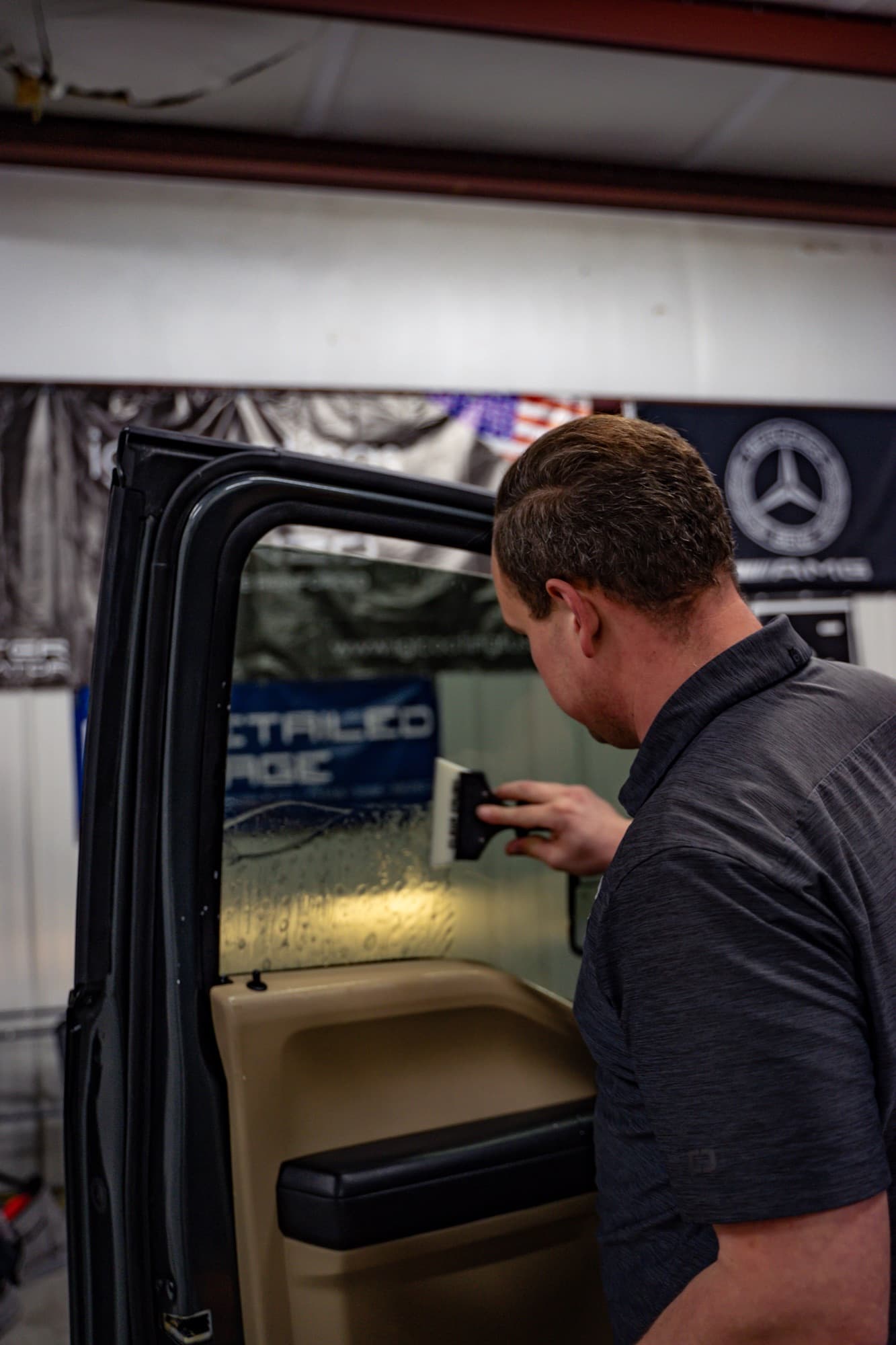
Professional automotive film is not stuck on dry. The installer sprays the glass with a solution of water and a small amount of slip agent, floats the film into position, and squeegees most of the liquid out. The slip solution is what lets the film be positioned precisely and pushed flat without trapping air.
The squeegee cannot remove every drop. The International Window Film Association (IWFA) says plainly in its automotive inspection guideline that some residual water will inevitably remain between the film and the glass. That water affects visual clarity and adhesion at first. The IWFA notes that what people call the adhesive cure time on car film is really the drying time of that leftover moisture.
While it dries, the moisture scatters light a little. That is the milky, soft look you notice most when you look through the window toward a bright sky or at oncoming headlights at night.
Timing
How long haze usually lasts
There is no single number, because drying depends on the film, the glass and the weather. Gila, a do-it-yourself film brand made by Eastman (the company behind LLumar), says its automotive films fully cure over the next week to 10 days, and that the film may look hazy or cloudy during that time before the effect disappears with time or heat. Another film maker's care card tells owners to expect a slight haze shortly after installation and says the trapped moisture will dry and disappear.
LLumar's own window film guidance says the number of days film needs to dry out varies with weather, glass type and product type. The IWFA adds that films with special high-performance coatings may take longer, and that typical cure times stretch or shrink with climate and where the car is stored.
In practice, many cars look clear within days in warm weather. A car tinted in a cool, wet stretch of an Upstate winter, then parked in a garage every night, can take noticeably longer. Thicker or multilayer films can also hold moisture longer than thin ones.
Speed factors
What makes haze clear faster or slower
- Sun and warmth
- Heat drives the moisture out through the film. Parking in the sun on dry days is the easiest way to speed things up. Gila specifically says dry, sunny weather speeds curing.
- Cold and humidity
- Cold, damp weather slows evaporation. The same film can look clear in a few days in a hot South Carolina summer and take much longer in a gray, rainy January week.
- Film construction
- The IWFA notes that cure time relates to the thickness of the film and the specialized coatings on it. Films with heavy performance coatings may dry more slowly, so ask your installer what to expect for the specific film.
- Garage or carport parking
- A shaded, cool garage protects the car, but it also keeps the glass from warming. If haze is lingering, a few sunny afternoons outside can help.
- Window position
- The rear glass and windows that face the sun more often tend to dry first. A front door window that sits in the shade of a carport can lag behind.
Normal or not
Drying haze versus a real defect
The IWFA guideline is clear that certain things seen during clearing and drying, specifically water distortion and water haze, are not to be regarded as defects. Small water pockets usually belong in the same category. Gila explains that most small water bubbles dry out in a few days, while trapped air bubbles will not go away on their own.
What you want to see is steady improvement. Haze that fades a little each day, evenly across the window, is drying moisture. A few watery blisters that shrink over a week are the same thing.
- Normal: an even, milky look across the whole window that slowly fades.
- Normal: small, soft-looking water pockets that shrink day by day.
- Worth a call: haze that is getting worse, not better, after the expected drying time.
- Worth a call: one cloudy patch with a hard edge while the rest of the window is clear, which can point to contamination or a problem with the adhesive.
- Worth a call: bubbles that stay the same size for weeks, have a crisp outline, or contain a visible speck.
- Worth a call: lifting or peeling at an edge, which is not a drying issue.
While it dries
What to do, and what not to do, during the first days
Keep the windows up
Lowering a window drags the top edge of wet film past the door seal and can lift or crease it. Follow the timing your installer gives you, which is based on the film and the weather. Gila tells do-it-yourselfers not to roll windows down during the curing period.
Leave the film alone
Do not press on bubbles, try to push water to the edge, or poke them with a pin. A care card from one film manufacturer warns that piercing water bubbles during curing damages the film. Pressure from fingers can also leave dents in soft adhesive.
Hold off on cleaning the inside
Gila says to wait at least 3 days before cleaning its film; other makers set their own waits. Wiping wet film can shift it or scratch the soft surface. The outside of the glass can be washed as usual.
Park in the sun when you can
Warmth is the most effective way to drive out moisture. If the forecast is cold and damp, expect the haze to take longer and do not worry about it in the first week.
Take a photo on day one
A quick photo of each window in daylight gives you something to compare against. If you need to call your installer later, it shows clearly whether the haze has improved or not.
Night driving
Haze and visibility in the first week
Drying haze is most noticeable at night, when headlights and streetlights bloom slightly through the side windows. That is temporary, but it is still worth being careful. Rely on your mirrors, take an extra look before changing lanes, and avoid long night drives on unfamiliar roads for the first few days if the haze bothers you.
Your windshield should not be hazy at all from tint, because South Carolina law only allows a sunscreening device along the top of the windshield above the AS1 line. If you see haze across the main viewing area of the windshield, it is not tint drying; it is usually grime or cleaner residue on the inside of the glass, and it should be cleaned off before you drive at night.
Still hazy?
When haze lasts too long
If the film has had a reasonable drying period for the season and the haze has not improved at all, or it is patchy and getting worse, call the shop that installed it. Describe which windows, when you first noticed it, and whether it has changed. Your photos from day one help.
Long-lasting haze can come from several causes: very heavy moisture left under the film, contamination trapped during installation, a film that is not suited to the glass, or an adhesive problem with the film itself. A reputable installer will look at it in daylight, which is how the IWFA guideline says installed film should be judged, and explain what they see. Manufacturer coverage for film defects is set out in the manufacturer's warranty document, so keep your paperwork and ask what applies.
Drying times quoted here come from manufacturer guidance for their own films. Your installer's instructions for your film and season take priority.
| What you see | Likely cause | What to do |
|---|---|---|
| Even milky look, fading daily | Normal moisture drying out | Wait, park in the sun, keep windows up |
| Small soft water pockets that shrink | Normal trapped water | Leave alone; do not press or pierce |
| Bubble with a speck in the middle | Dust or debris under the film | Show your installer after drying |
| Hard-edged cloudy patch, rest clear | Contamination or adhesive problem | Call your installer |
| Haze unchanged after the drying period | Excess moisture or film issue | Call your installer with photos |
| Edge lifting or peeling | Not drying; edge or adhesion problem | Keep windows up and call |
Questions about new tint?
If you are planning tint and want to know what to expect in the first week, or you want a legal shade checked for your vehicle before installation, ask us. We install LLumar film with the South Carolina compliance sticker on every tinted window.
Common questions
Why does my new tint look cloudy only at night?
Light from headlights and streetlights scatters through the thin layer of moisture still under the film, so the haze shows up more in the dark than in daylight. As the water evaporates, the bloom around lights fades. Drive with extra care and lean on your mirrors until the windows clear.
Can I use a hair dryer or the defroster to dry tint faster?
Gentle warmth from parking in the sun is the safest way to speed drying. Blasting a small area with a hair dryer or heat gun can heat the film unevenly. Running the car's heater on a cold day is fine. Ask your installer before trying anything more aggressive on new film.
Is hazy tint a sign of cheap film?
Not by itself. Every wet-applied film looks hazy while it dries, including premium films, and some high-performance films take longer to clear. Haze that never goes away, or film that turns cloudy years later, is a different matter and can point to a film or adhesive problem.
Should the rear window be hazy too?
It can be. The rear glass often sits at a steep angle to the sun, so it may clear sooner than a shaded door window, but every car is different. If the back glass is hazy only in a band along the defroster lines, mention it to your installer after the drying period.
Does rain or a car wash slow down drying?
Washing the outside of the glass does not reach the film, which is on the inside. Cool, rainy weather in general slows evaporation, though, so a wet week will usually mean the haze lasts longer than it would in dry sunshine.
Keep reading
Sources
- Automotive Visual Inspection Guideline For Applied Window Film (January 1, 2020), International Window Film Association (https://iwfa.com/wp-content/uploads/2024/04/Automotive-Visual-Inspection-Guideline-For-Applied-Window-Film.pdf), accessed October 2026
- Automotive Frequently Asked Questions, Gila Window Film / Eastman Performance Films (https://gilafilms.com/en/automotive-window-tint/faq/), accessed October 2026
- Window Film Frequently Asked Questions, LLumar / Eastman Performance Films (https://llumar.com/en/resources/architectural-film-frequently-asked-questions/), accessed October 2026
- Automotive Window Tint Warranty Card (Care and Maintenance), IDS Automotive (https://idsfinishes.com/automotive/wp-content/uploads/sites/2/2023/08/IDS-Automotive-Window-Tint-Warranty-Card.pdf), accessed October 2026
- S.C. Code Ann. § 56-5-5015, South Carolina Legislature (https://www.scstatehouse.gov/code/t56c005.php), accessed October 2026
Prices on this page are The Auto Show’s published starting prices. Film ratings and warranty terms come from the manufacturer. This guide explains South Carolina law in plain words; it is not legal advice.